Understanding light sources Normal Science Worksheets for 7-Year-Olds
3 filtered results
-
From - To
Dive into the fascinating world of light with our "Understanding Light Sources" Normal Science Worksheets for 7-Year-Olds. Curated to spark curiosity, these engaging worksheets help young learners identify different light sources, from the sun to flashlights and beyond. Through fun activities and clear illustrations, children develop a solid understanding of how light works and its importance in our everyday lives. Designed to align with early science curricula, these printable resources encourage critical thinking and hands-on learning. Perfect for classroom use or at-home enrichment, our worksheets are the ideal tool to illuminate young minds!
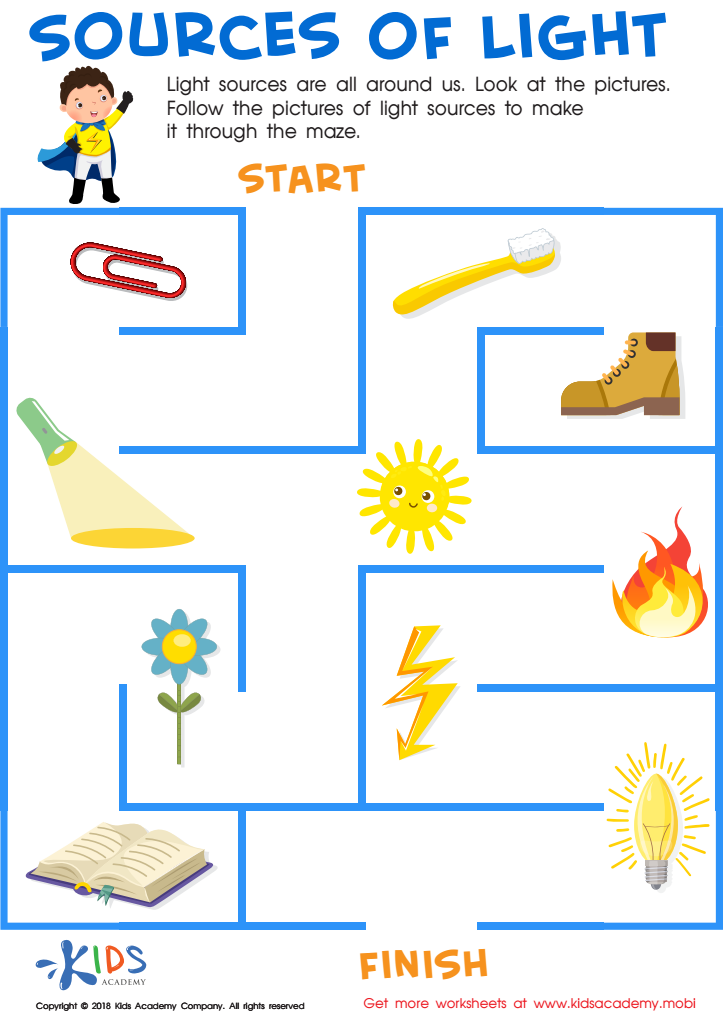
Sources of Light Worksheet
 Assign to My Students
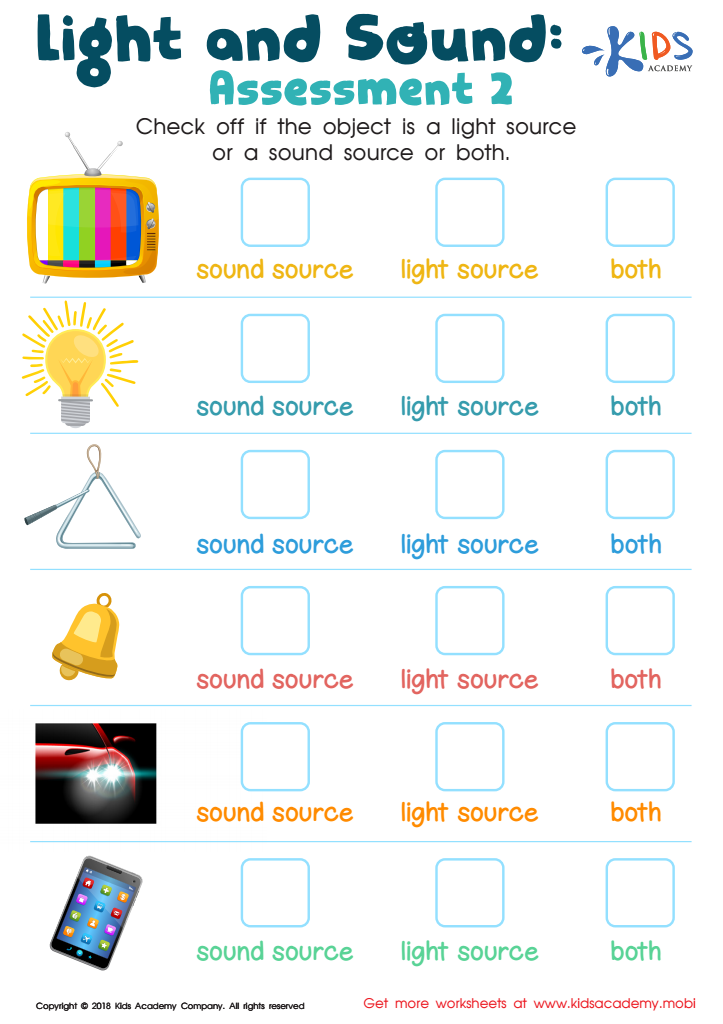
Light and Sound: Assessment 2 Worksheet
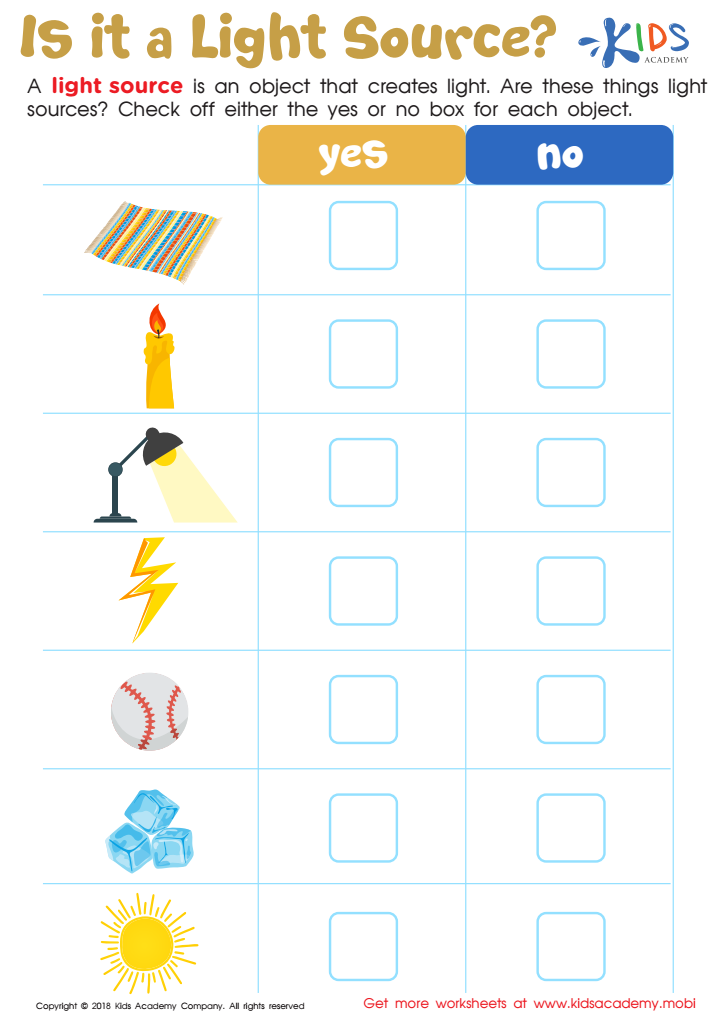
Is It a Light Source? Worksheet





.jpg)
Understanding light sources is fundamental for 7-year-olds as it opens the door to essential early science concepts and encourages curiosity about the world around them. Parents and teachers should care about teaching this topic because it lays the groundwork for learning in various scientific disciplines. By grasping the basic science of light, children start to understand how we see objects, the significance of the sun, and the difference between natural and artificial light sources.
This knowledge is not just academically beneficial; it also has practical implications in daily life. For instance, recognizing the importance of sunlight in regulating our daily routines promotes better sleep and overall health. Furthermore, understanding artificial light can lead to safer behaviors around electrical appliances and awareness of energy conservation.
Teaching light sources ignites curiosity. When children ask questions about how shadows form or why the moon glows, they engage in critical thinking and problem-solving. These skills are vital in all areas of education and personal development. Parents and teachers who invest time in exploring light theory help foster an environment where children are eager to learn, experiment, and explore. This foundational knowledge in light never dims but rather lights up a path for future scientific exploration and an appreciation of the natural world.







