
Understanding forces Normal Physical Science Worksheets for 7-Year-Olds
3 filtered results
Difficulty Level
Grade
Age
-
From - To
Subject
Activity
Standards
Discover an engaging way to teach your 7-year-old about physical science with our "Understanding Forces: Normal Physical Science Worksheets." These expertly crafted worksheets help young learners grasp essential concepts like gravity, friction, and push-pull dynamics through fun, interactive exercises. Each worksheet is designed to make complex ideas accessible and enjoyable, fostering a love for science and independent exploration. With easy-to-follow instructions and colorful illustrations, your child will develop critical thinking skills while better understanding the forces that shape our world. Perfect for parents and teachers alike, these worksheets are an invaluable resource for inspiring scientific curiosity.
Favorites
With answer key
Interactive
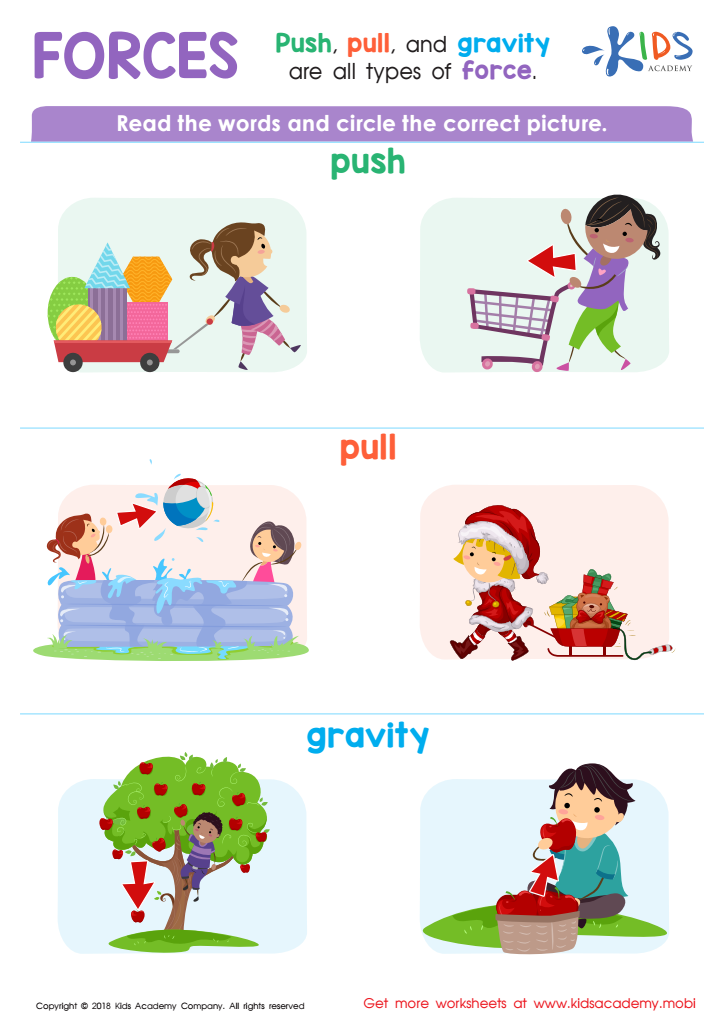
Forces Worksheet
Teach your child about forces! Ask them to identify which of six pictures shows push, pull or gravity. Read the words beside each picture and have them circle the correct one. It's a great way to learn about forces; push, pull and gravity!
 Assign to My Students
Forces Worksheet
Worksheet
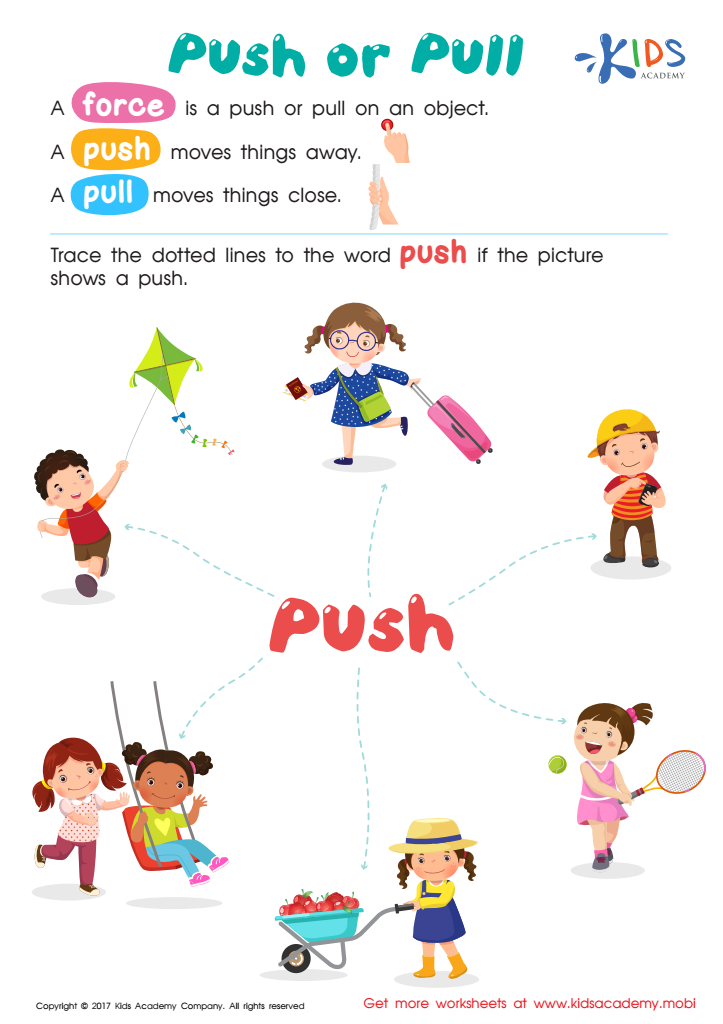
Push or Pull Worksheet
and which involve pulling! With this fun worksheet, your child will learn about force and its simple application in everyday activities. Get them started with Push or Pull! (80 words)
Push or Pull Worksheet
Worksheet
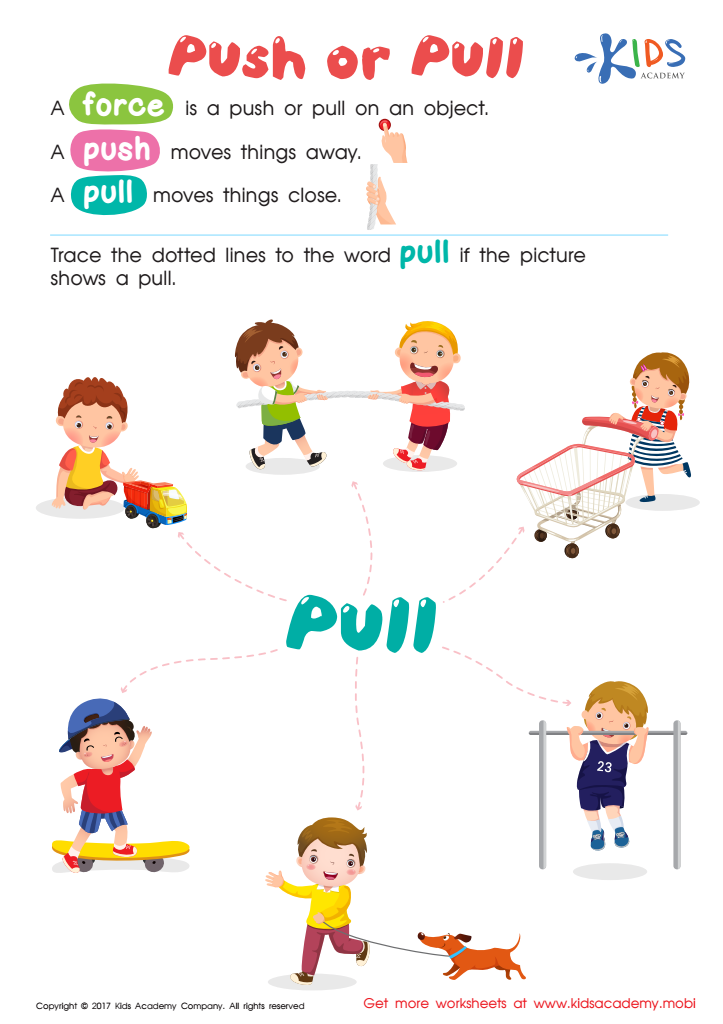
Pull or Push Worksheet
With this fun worksheet, they'll explore physics by sorting objects into categories according to their mode of motion. It's a great way to get them interested in science.
Pull or Push Worksheet
Worksheet
Join Kids Academy for Free
Who is primarily going to use this learning content?




.jpg)



Understanding the concept of forces in physical science is essential for seven-year-olds as it lays the foundation for their future learning and critical thinking skills. Forces are a fundamental part of the physical world, influencing everything from the movement of a child's favorite toy to the way they walk. By learning about forces, children start to comprehend cause and effect, which enhances their problem-solving abilities and curiosity about the world around them.
For parents and teachers, it is crucial to foster this understanding early on. When children grasp the basics of forces, such as pushes, pulls, gravity, and friction, they begin to see patterns and relationships in everyday activities. For example, they might understand why it's harder to ride a bike uphill due to gravity or why their playground slide makes them go faster than the grass. This practical knowledge boosts their engagement and enthusiasm for science.
Additionally, introducing these concepts in an age-appropriate manner nurtures a child's natural curiosity, leading them to ask more questions and seek out answers. It also helps in developing their motor skills and cognitive abilities as they experiment and observe outcomes. Therefore, a solid grounding in basic physical science concepts like forces sets the stage for lifelong learning and has a positive impact on a child's educational journey.







