Spatial awareness Normal Space Worksheets for 7-Year-Olds
3 filtered results
-
From - To
Enhance your 7-year-old's spatial awareness with our engaging Normal Space Worksheets! Designed by educational experts, these worksheets help children understand spatial relationships and improve their cognitive development. Packed with fun, interactive activities, these resources teach kids to navigate, visualize, and comprehend the spaces around them. From identifying shapes and patterns to solving puzzles, our worksheets offer a stimulating and productive learning experience. Ideal for both classroom and at-home use, they support the overall growth of essential spatial skills. Equip your child with the tools they need to explore and master spatial awareness in a fun and effective way!
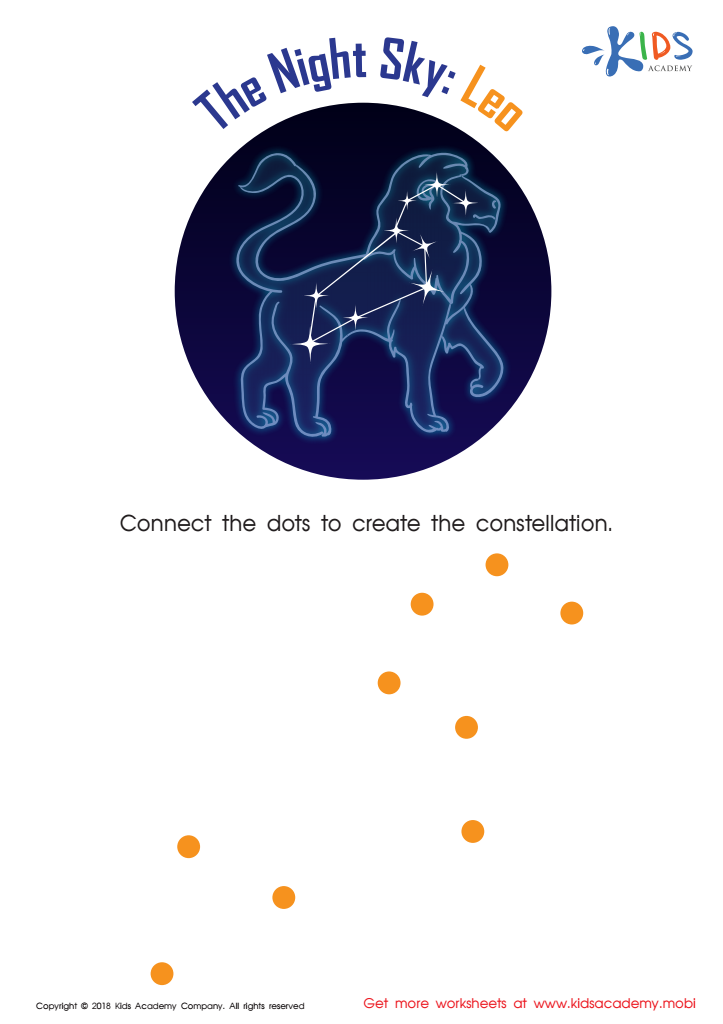
The Night Sky: Leo Worksheet
 Assign to My Students
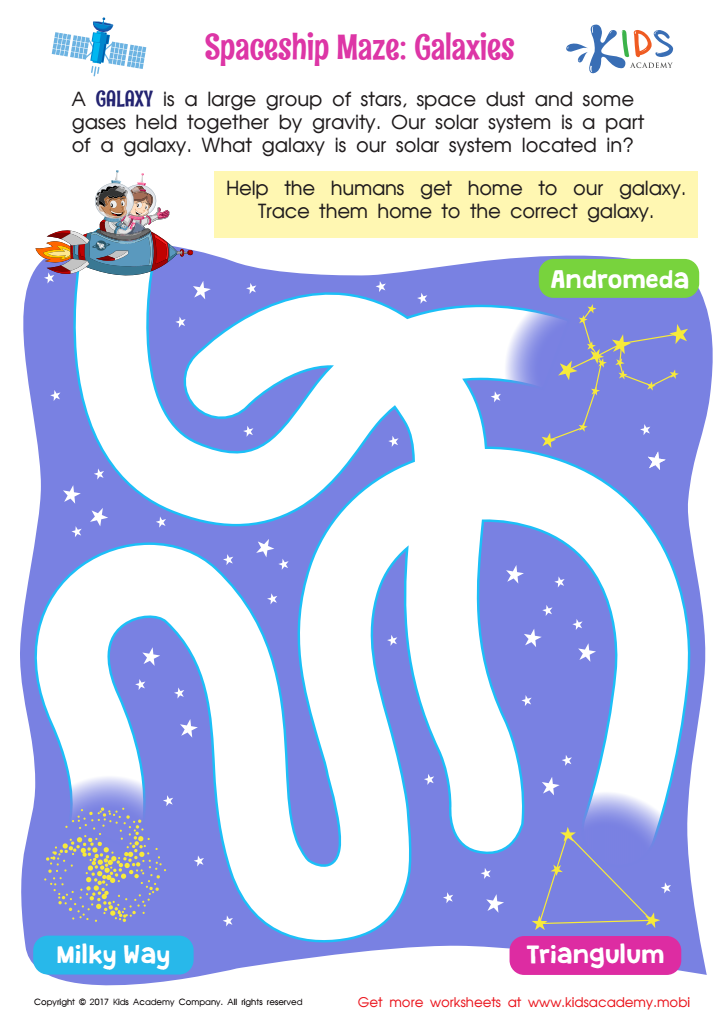
Spaceship Maze: Galaxies Worksheet
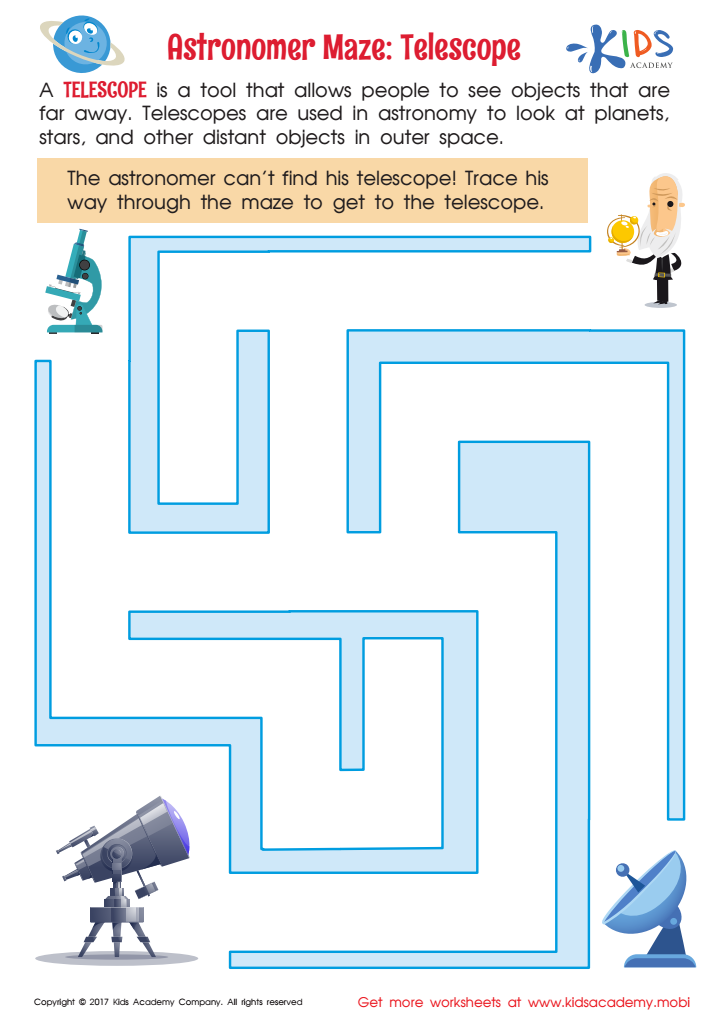
Astronomer Maze: Telescope Worksheet







Spatial awareness is a fundamental skill that significantly impacts a child's overall development, especially around the age of 7, which is a crucial period for cognitive and physical growth. Parents and teachers should care about nurturing this ability for several compelling reasons.
First, spatial awareness forms the cornerstone of many academic subjects, particularly in mathematics and reading. It helps children understand geometry, measurement, and the relationship between objects, which are essential for solving problems and comprehending text. For example, when children grasp the spatial relationship between letters and words, they improve their reading and writing skills.
Second, spatial awareness is vital for physical coordination and motor skills. Whether children are navigating classroom spaces, playing sports, or simply walking, understanding their positioning and movement in space helps prevent accidents and injuries. It also enhances their ability to engage in activities that require fine motor skills, such as drawing and building with blocks.
Lastly, strong spatial awareness can boost a child's confidence and independence. Children who can efficiently interact with their environment feel more secure and are more likely to explore and learn from it. They become better at following directions and solving everyday problems, laying the groundwork for effective learning and personal growth.
Thus, fostering spatial awareness is not just about academic success; it's about equipping children with essential life skills that promote holistic development.







