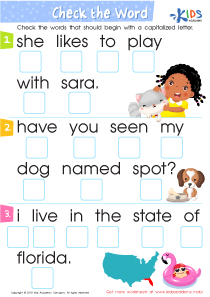
Capitalization rules Normal Writing Worksheets for 7-Year-Olds
3 filtered results
-
From - To
Our Capitalization Rules Normal Writing Worksheets for 7-Year-Olds are expertly designed to help young learners master the basics of proper capitalization. Through fun, engaging exercises and activities, children are taught when to capitalize letters in sentences, including at the beginning of sentences and with proper nouns. These worksheets are tailored for early learners to ensure that essential writing skills are comprehensively covered, making learning both enjoyable and effective. Foster your child's language development and build their confidence in writing with our interactive capitalization worksheets designed specifically for 7-year-old writers. Visit Kids Academy to start your child's learning adventure today!
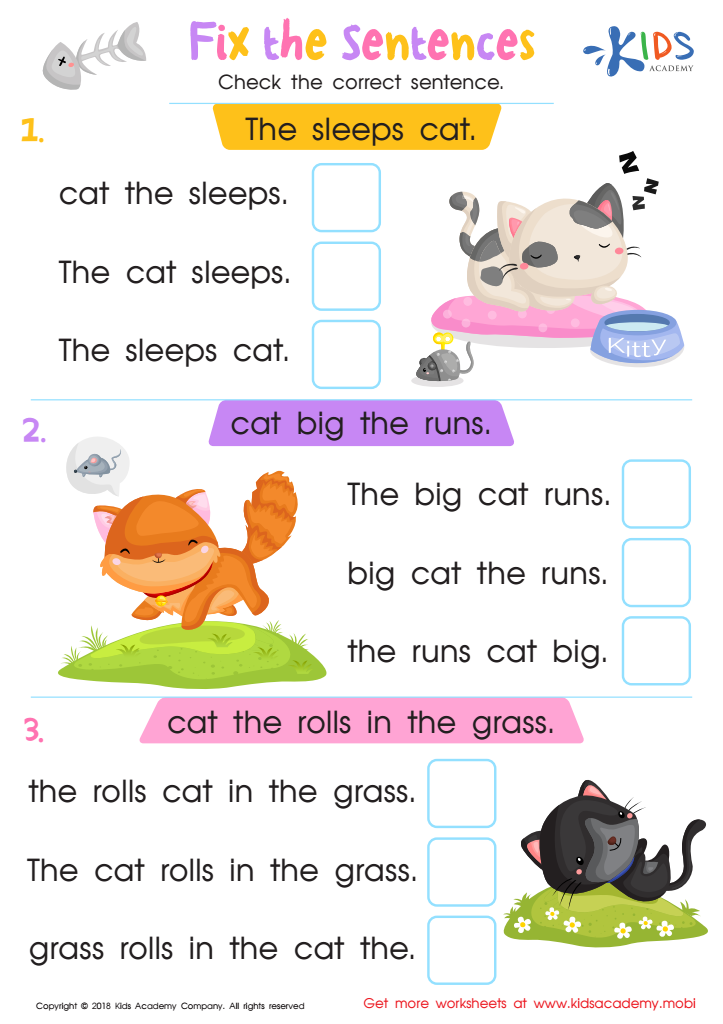
Fix the Sentences Worksheet
 Assign to My Students
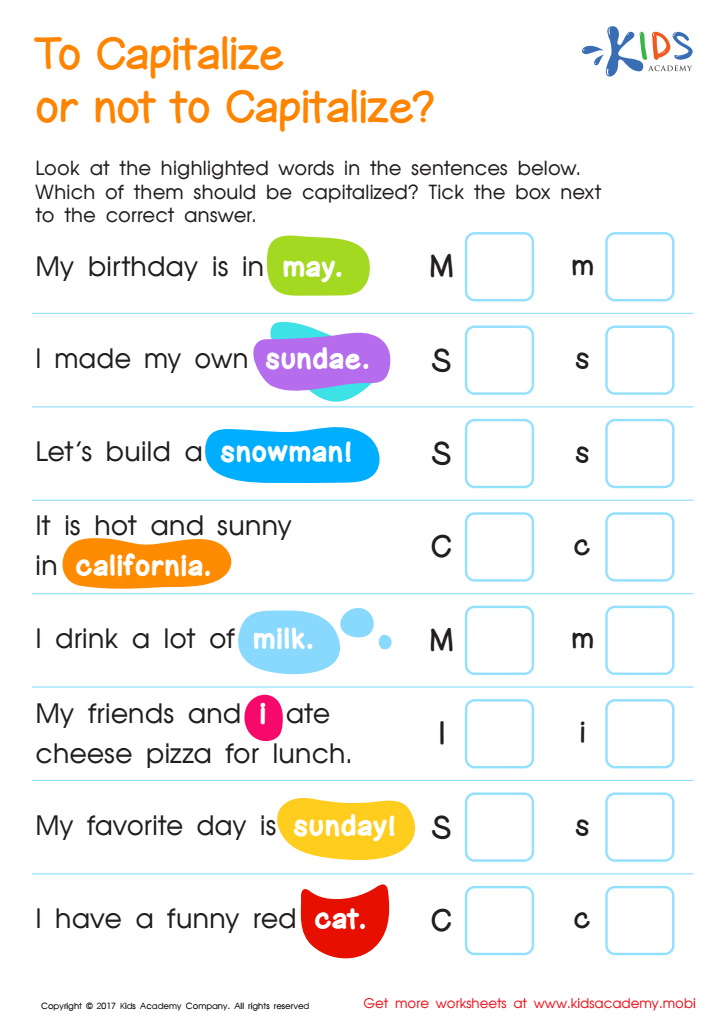
Capitalization: To Capitalize or Not? Printable
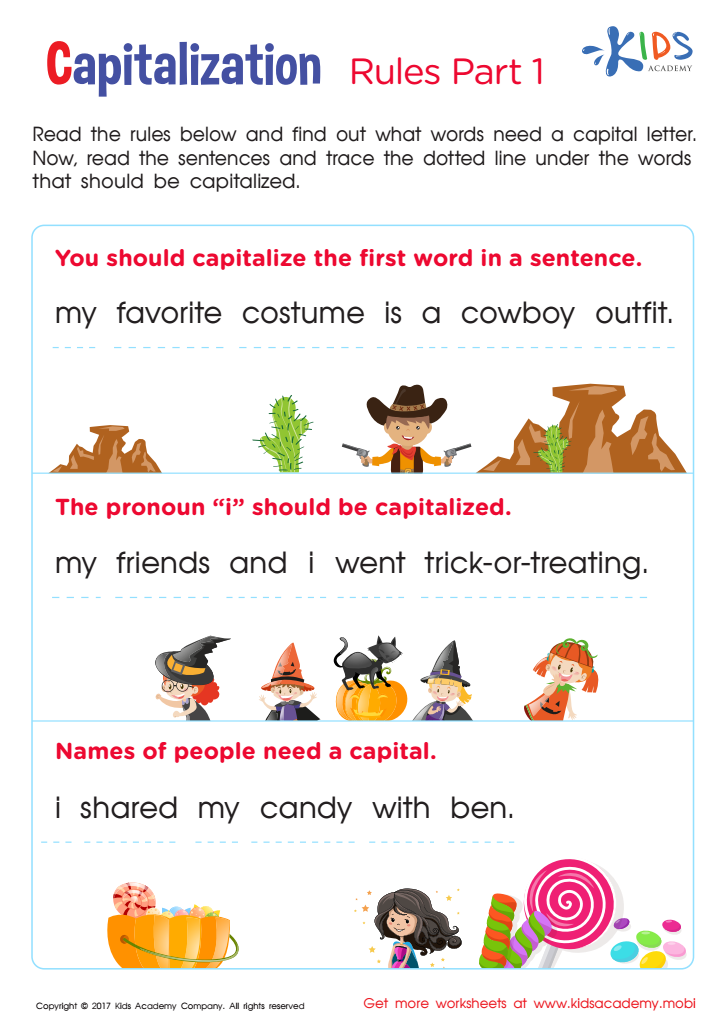
Capitalization Rules: Part 1 Worksheet








Parents and teachers should care about capitalization rules for 7-year-olds because these rules are foundational to effective communication. Proper capitalization helps children understand the structure and meaning of sentences, making their writing clear and understandable. When kids learn to capitalize correctly, they convey respect for themselves and their readers, showing that they take care in their work.
Understanding capitalization also helps children follow conventional rules that are essential for academic success. Many educational systems assess writing skills, and improper capitalization can lead to lower scores. Additionally, early mastery of these basics makes advanced writing skills easier to learn in the future.
Good handwriting habits, which include proper capitalization, build a child’s confidence. When their writing looks professional and polished, kids feel pride in their work and are more motivated to write and express their ideas. Moreover, learning these rules enhances reading comprehension. Recognizing capital letters helps young readers distinguish between proper nouns and common nouns, and identify the beginnings of new sentences, making reading smoother and more comprehensible.
Finally, teaching capitalization at a young age sets a good discipline for attention to detail and encourages responsibility. It’s essential for kids to understand that small things, like capital letters, can make a big difference in how they communicate and are perceived by others.