Fine Motor Skills Normal Letter E Worksheets for Ages 8-9
3 filtered results
-
From - To
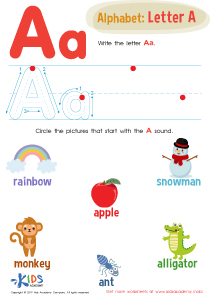
Enhance your child's fine motor skills with our engaging Normal Letter E worksheets, specially designed for ages 8-9! These worksheets provide a fun and interactive way to practice writing the letter "E" while also improving hand-eye coordination and dexterity. Each activity promotes skill development through tracing, coloring, and forming the letter "E" in various creative ways. Our resources cater to different learning styles, ensuring every child can excel at their own pace. Whether used at home or in the classroom, these worksheets are perfect for reinforcing alphabet knowledge and building essential motor skills. Discover the joy of learning today!
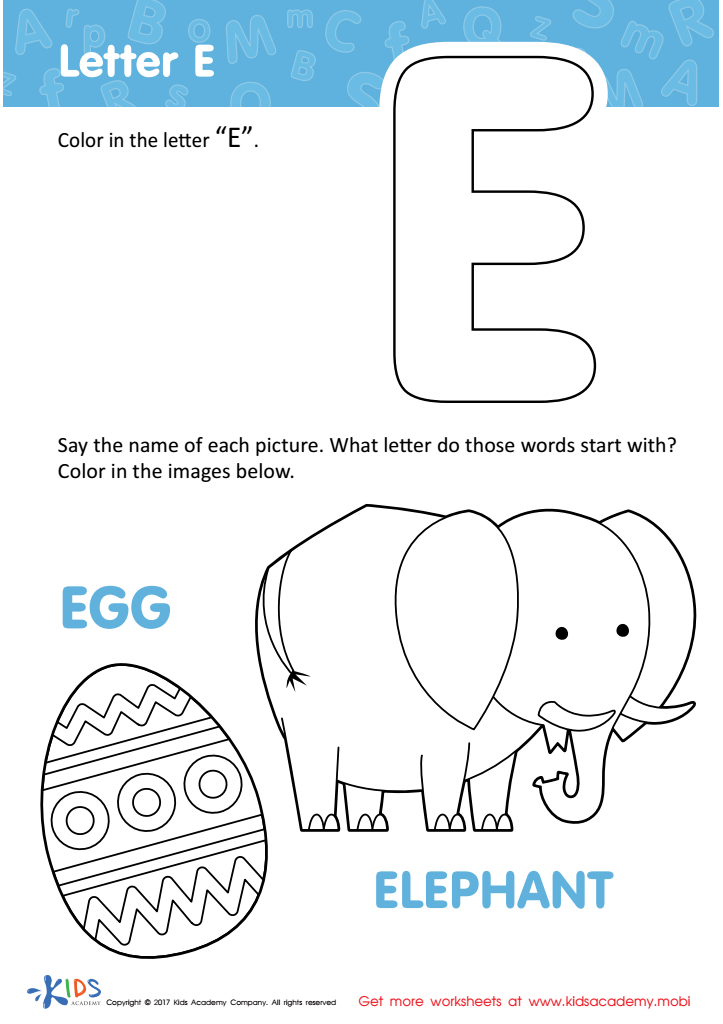
Letter E Coloring Sheet
 Assign to My Students
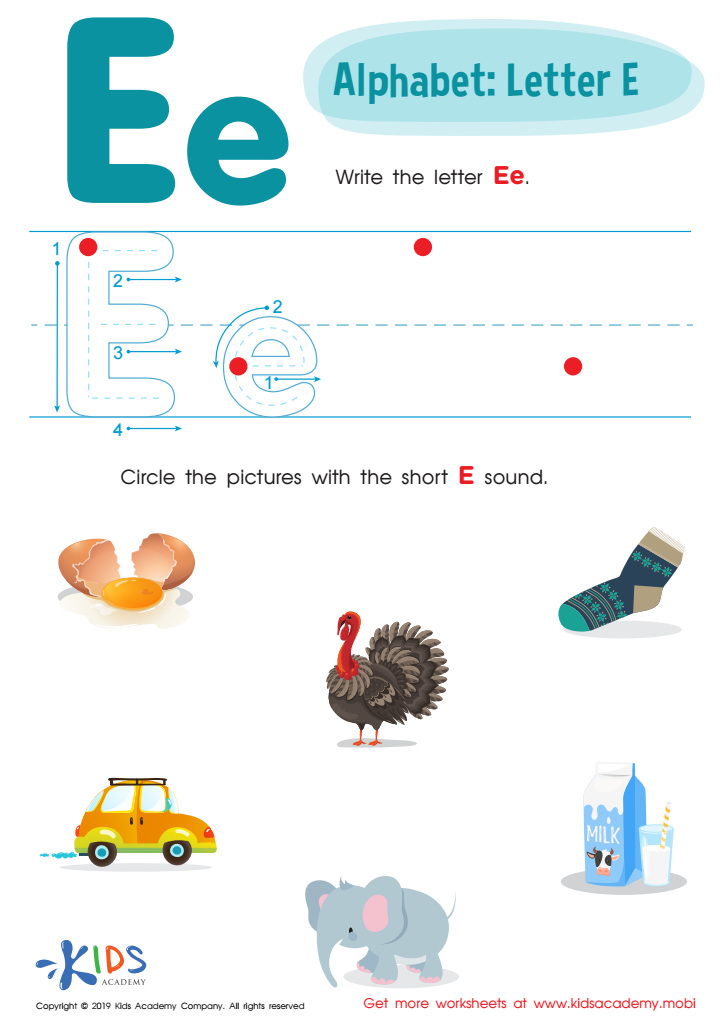
Letter E Tracing Worksheet
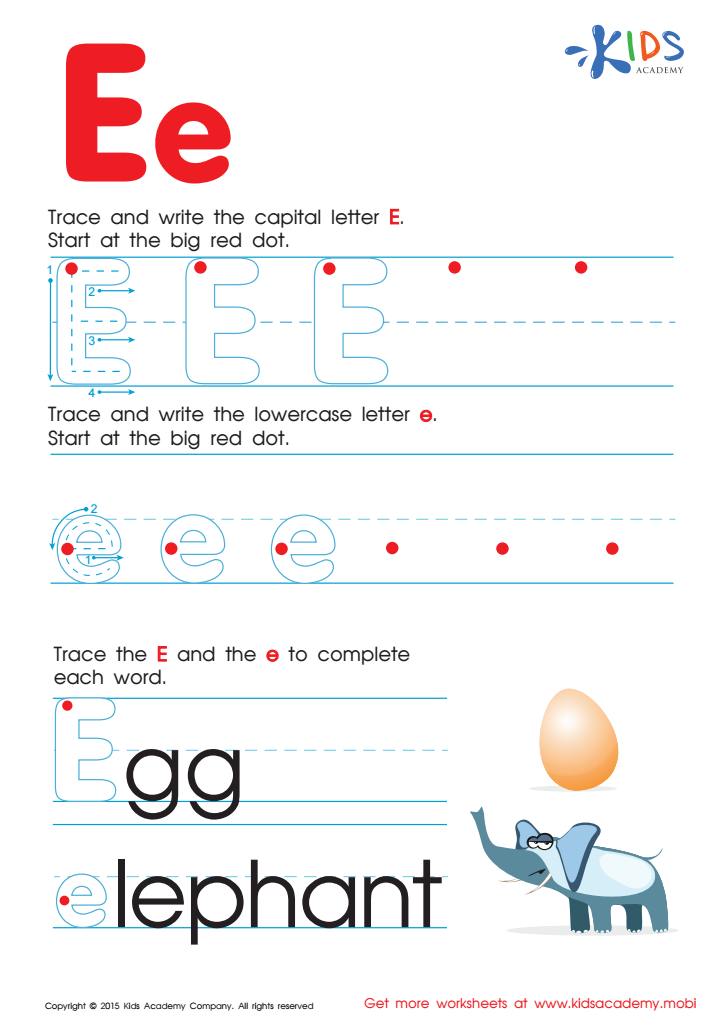
Letter E Tracing Page






Fine motor skills are crucial for children's overall development, particularly as they transition into more complex tasks in ages 8-9. At this stage, children are expected to refine their ability to control small muscle movements, particularly in their hands and fingers. Mastery of these skills significantly impacts their academic performance— especially in writing. For instance, drawing the normal letter "E" requires precise movements; children need to understand spatial relationships and practice coordination as they create straight lines and a horizontal line.
Parents and teachers should recognize that fine motor skills go beyond writing. They play a critical role in tasks such as buttoning clothes, using utensils, and engaging in sports or arts and crafts. Inadequate development of these skills may lead to frustration and a lack of confidence in children, which can hinder their motivation to participate in classroom activities.
Support from parents and teachers can foster an encouraging environment for skill development. Simple and fun activities like threading beads, crafting, or printable handwriting exercises can make a significant difference. Ultimately, investing time in nurturing fine motor skills contributes to children's independence, self-esteem, and success in school and everyday life.