Phonics practice Normal Long Vowels Worksheets for Ages 8-9
3 filtered results
-
From - To
Welcome to our Phonics Practice Worksheets for Normal Long Vowels, tailored for ages 8-9! These engaging and colorful worksheets are designed to enhance your child’s phonemic awareness and reading skills through effective long vowel sound practice. Including a variety of activities such as matching, identification, and sentence formation, children will learn to recognize long vowel sounds in different contexts. This interactive resource supports foundational literacy development while keeping learning fun and exciting. Perfect for both classroom use and at-home practice, our worksheets will empower young learners to gain confidence in their reading abilities. Explore today and watch your child flourish!
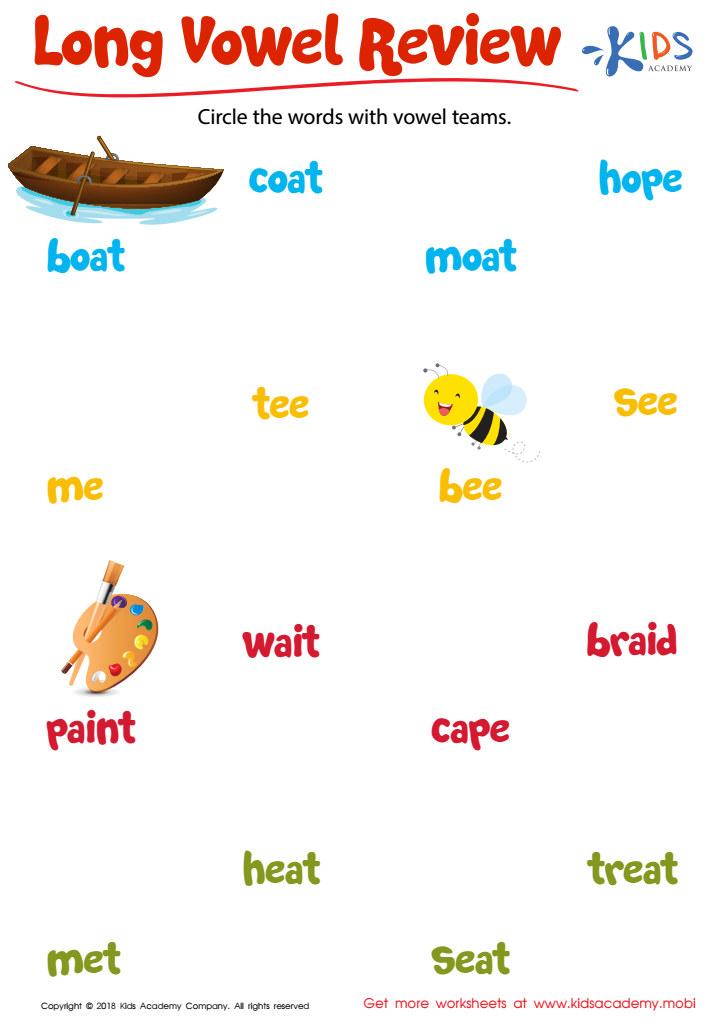
Long Vowel Review Worksheet
 Assign to My Students
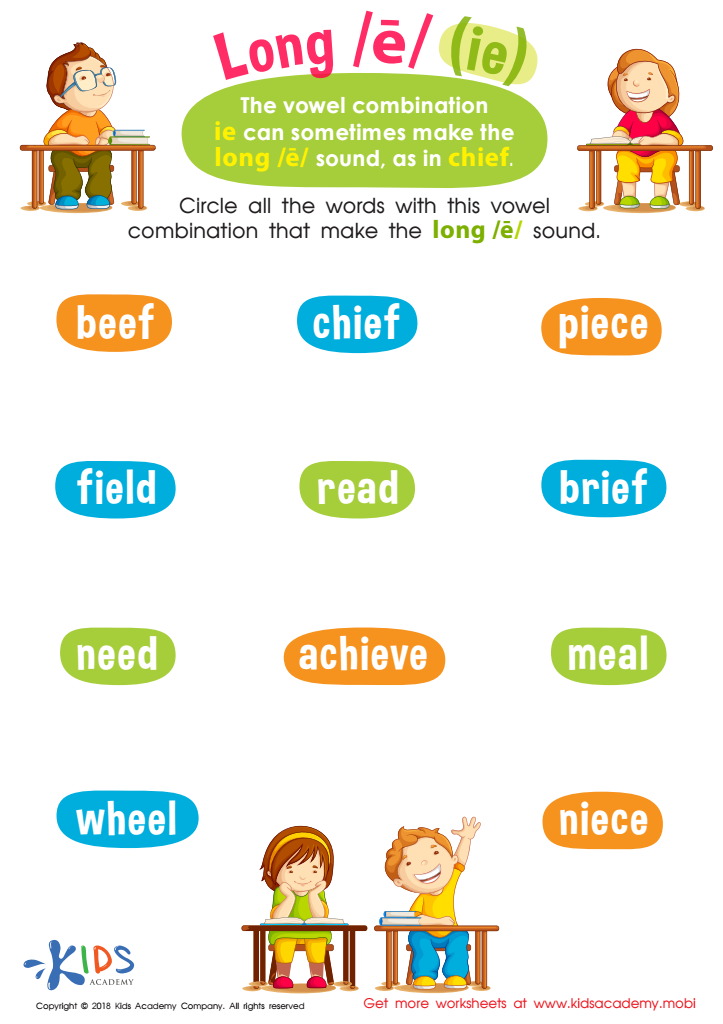
Reading: Long E and IE Worksheet
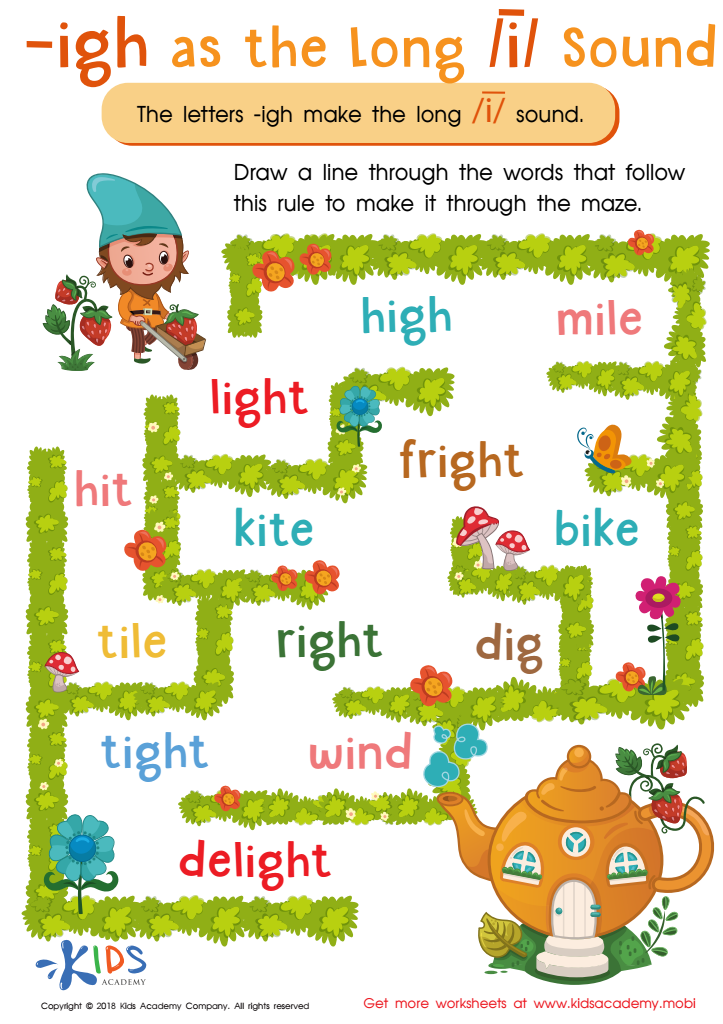
Reading: IGH as Long I Worksheet



Phonics practice, particularly focusing on normal long vowels for children aged 8-9, is crucial for several reasons. Firstly, this age group is at a pivotal point in their reading development. Mastering long vowel sounds enhances their ability to decode unfamiliar words, fostering confidence and fluency in reading. As students encounter more complex texts, a strong foundation in phonics allows them to tackle challenging vocabulary and comprehend reading materials effectively.
Moreover, understanding long vowel patterns assists children in becoming better spellers. Recognizing consonant-vowel combinations and patterns helps them apply spelling rules, competitive in standardized tests, and crucial for academic success across subjects.
Additionally, a solid grasp of phonics fuels a love for reading. Children who are confident readers are more likely to engage with literature, fueling their imagination and broadening their knowledge base. This enjoyment of reading can translate to more positive academic experiences overall.
In summary, parents and teachers should prioritize phonics practice for long vowels to ensure children develop strong reading, spelling, and comprehension skills. These foundational abilities are essential not just for academic success, but for fostering a lifelong love of literacy that opens doors to countless opportunities.