Vocabulary development Normal Phonics Worksheets for Ages 8-9
3 filtered results
-
From - To
Our Vocabulary Development Normal Phonics Worksheets for Ages 8-9 are meticulously designed to enhance your child’s reading and language skills. Each worksheet combines engaging activities that focus on building a robust vocabulary through phonics-based approaches. With a variety of exercises that teach new words and reinforce their usage, these worksheets ensure comprehensive learning in a fun, interactive manner. Perfect for third graders, our materials help children achieve reading fluency while developing critical thinking skills. Give your kid the best linguistic foundation with our expertly crafted phonics worksheets and watch their confidence soar!
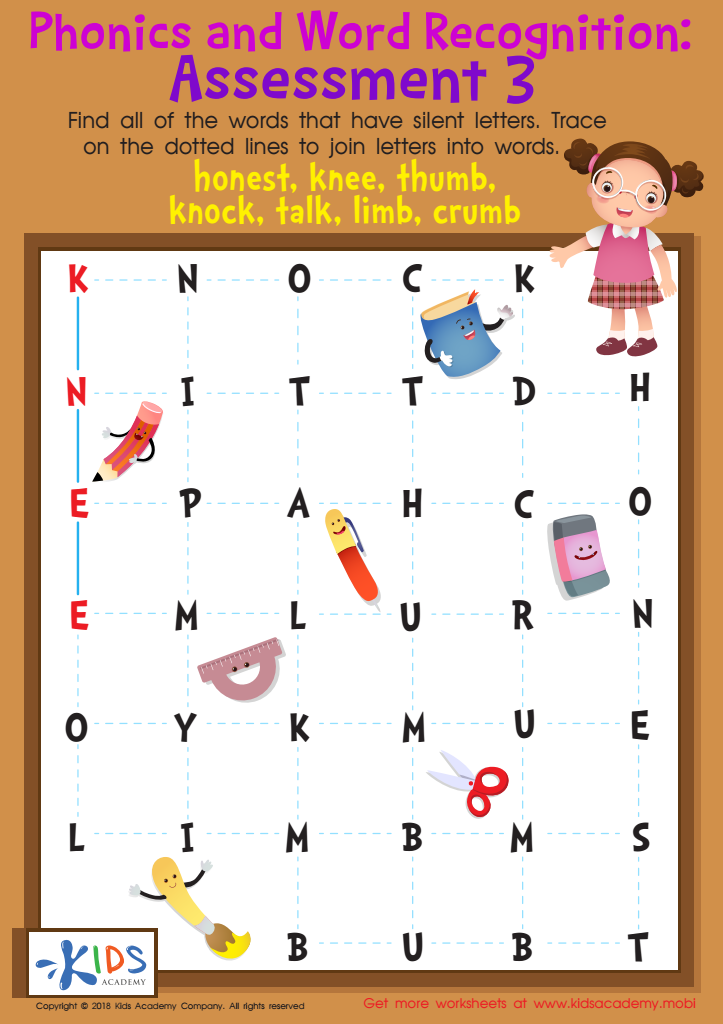
Phonics and Word Recognition: Assessment 3 Worksheet
 Assign to My Students
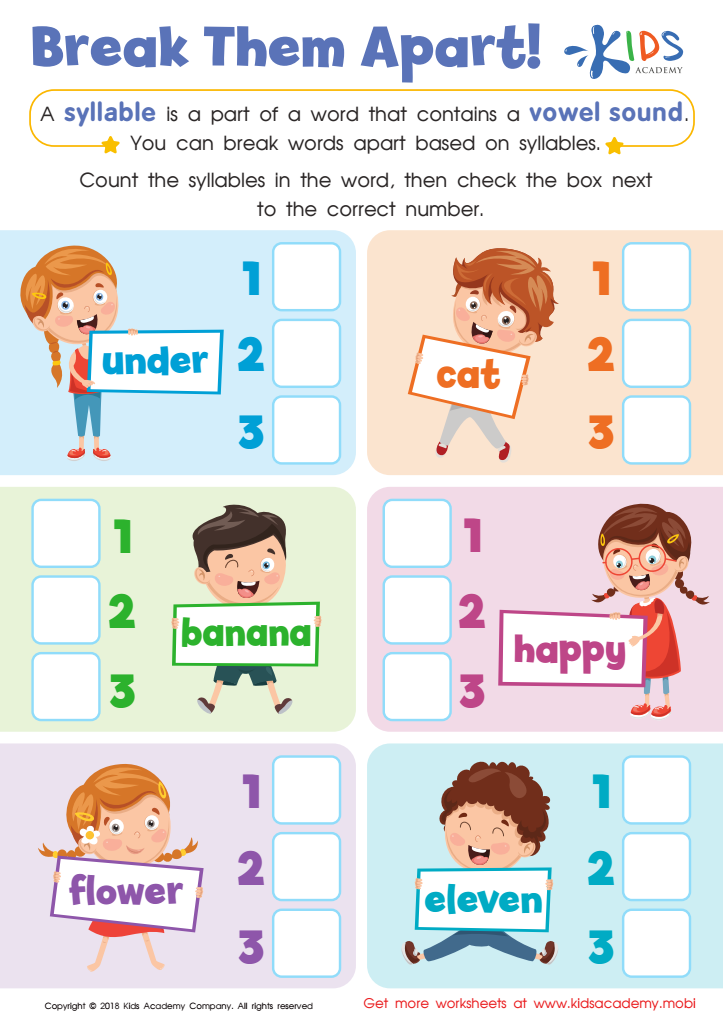
Reading: Break Them Apart Worksheet
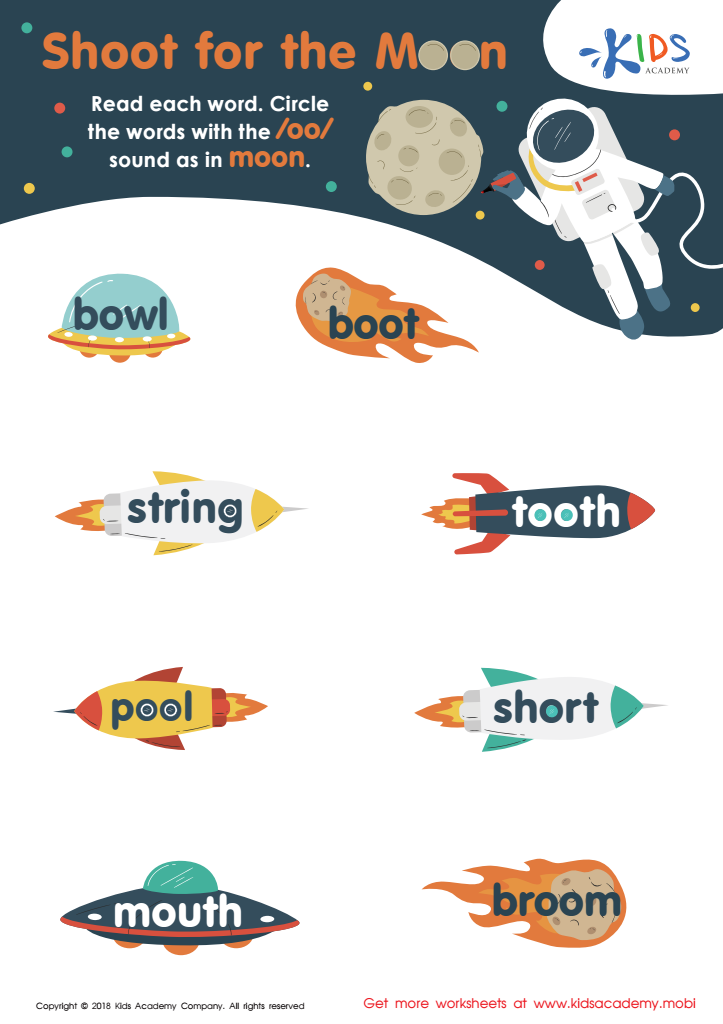
Reading: Shoot for the Moon Worksheet








Vocabulary development and phonics play crucial roles in a child's overall academic growth, particularly for children aged 8-9. At this age, children transition from learning to read to reading to learn. Skilled reading is foundational for future learning because almost every subject relies on reading proficiency.
Vocabulary development is essential because it enhances comprehension. When children encounter new words in a variety of contexts, they expand their vocabulary, thereby improving their ability to understand and respond to more complex texts across all subjects like science, history, and even math word problems. A rich vocabulary supports expressive language as well, allowing children to effectively communicate their thoughts and ideas.
Phonics, the method for teaching reading based on sound-symbol relationships, is equally important. Mastery of phonics allows children to decode new words, fostering independent reading skills. When children understand the phonetic structure of words, they can approach unfamiliar words with confidence, enhancing both reading fluency and comprehension.
Together, a strong focus on vocabulary and phonics at this age ensures that children develop into proficient, confident readers. This foundation not only influences immediate academic performance but also sets the stage for lifelong learning and opportunities. Early investment in these areas yields significant long-term benefits, supporting children as they build the necessary skills for academic success and critical thinking.







