Phonics Skills Normal Vowel Digraphs Worksheets for Ages 8-9
3 filtered results
Difficulty Level
Grade
Age
-
From - To
Subject
Activity
Standards
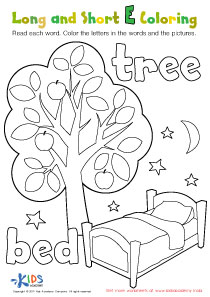
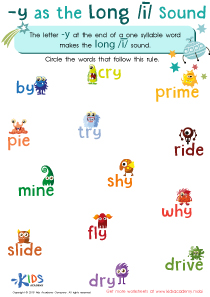
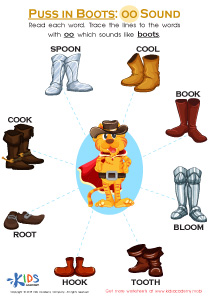
Enhance your child's phonics skills with our engaging Normal Vowel Digraphs Worksheets designed specifically for ages 8-9. These interactive worksheets offer a fun way for young learners to master vowel combinations such as "ea," "ai," and "oo." With a variety of exercises that encourage phonemic awareness, reading fluency, and spelling accuracy, children will gain confidence in using digraphs in context. Our resources cater to diverse learning styles, ensuring every child can thrive. Perfect for home or classroom use, these worksheets will support your child’s literacy development while keeping them excited about learning! Boost their reading journey today!
Favorites
With answer key
Interactive
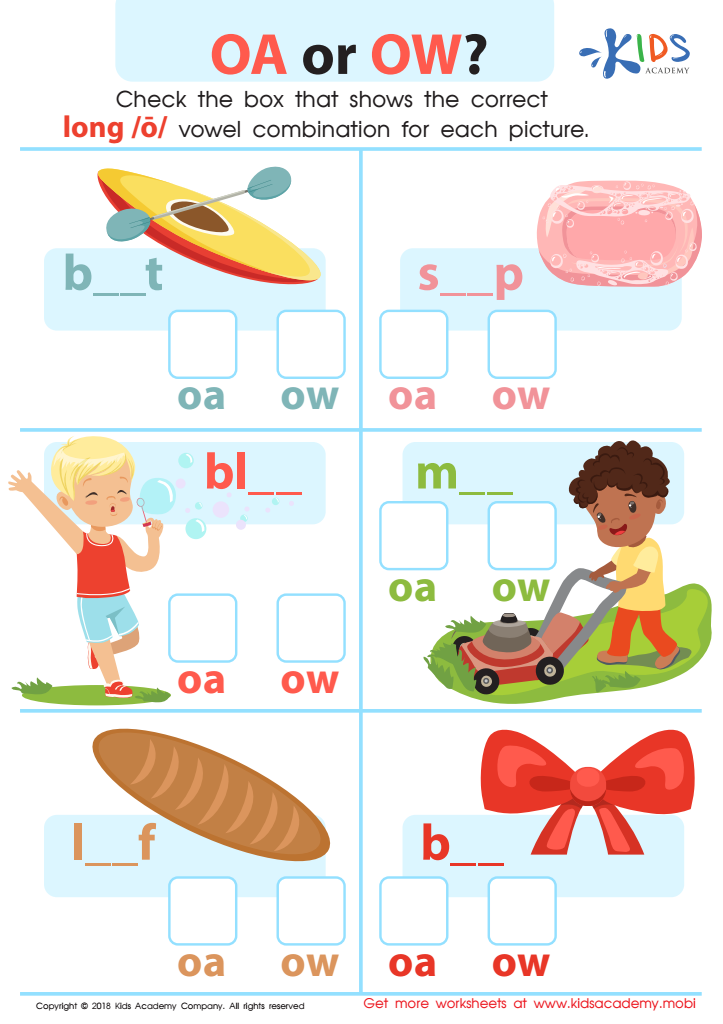
Reading: OA or OW Worksheet
This printable worksheet helps young and emergent readers with decoding words and understanding digraphs (two letters with one sound). It requires students to complete the spelling for each word based on the picture, focusing on /oa/ and /ow/ spellings. It's ideal for a reading classroom and for spelling practice.
 Assign to My Students
Reading: OA or OW Worksheet
Worksheet
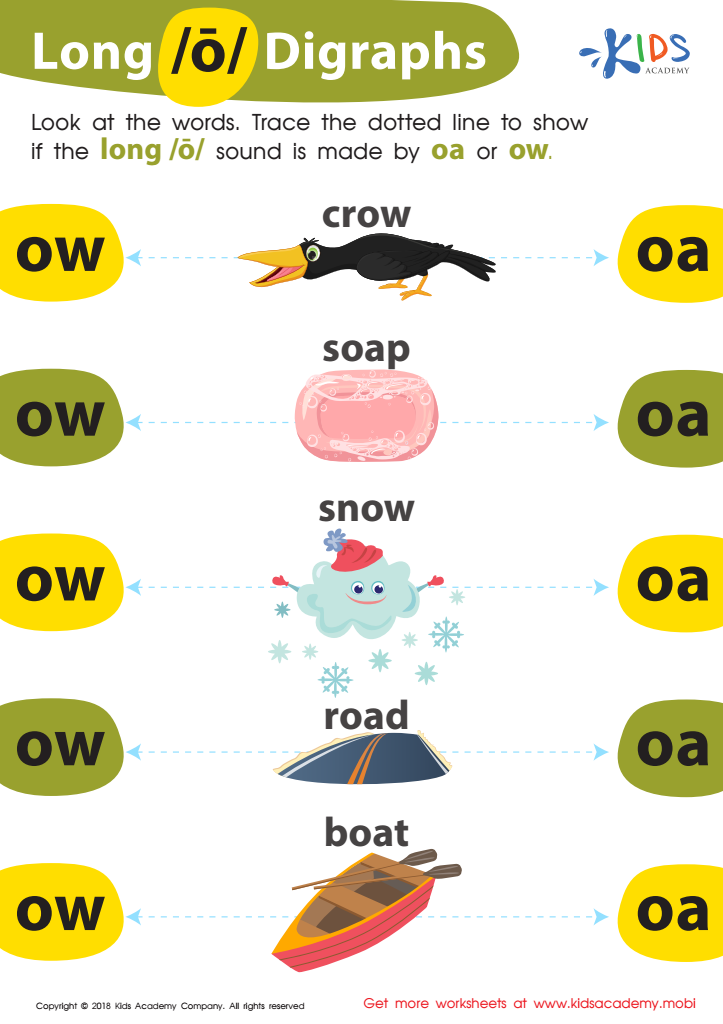
Reading: Long O Digraphs Worksheet
Reading and decoding words can be complex for learners when they start studying digraphs, two letters that make one sound. This worksheet focuses on the long O sound, /oa/ and /ow/. With the understanding of digraphs, students can decode more words and build their reading confidence.
Reading: Long O Digraphs Worksheet
Worksheet
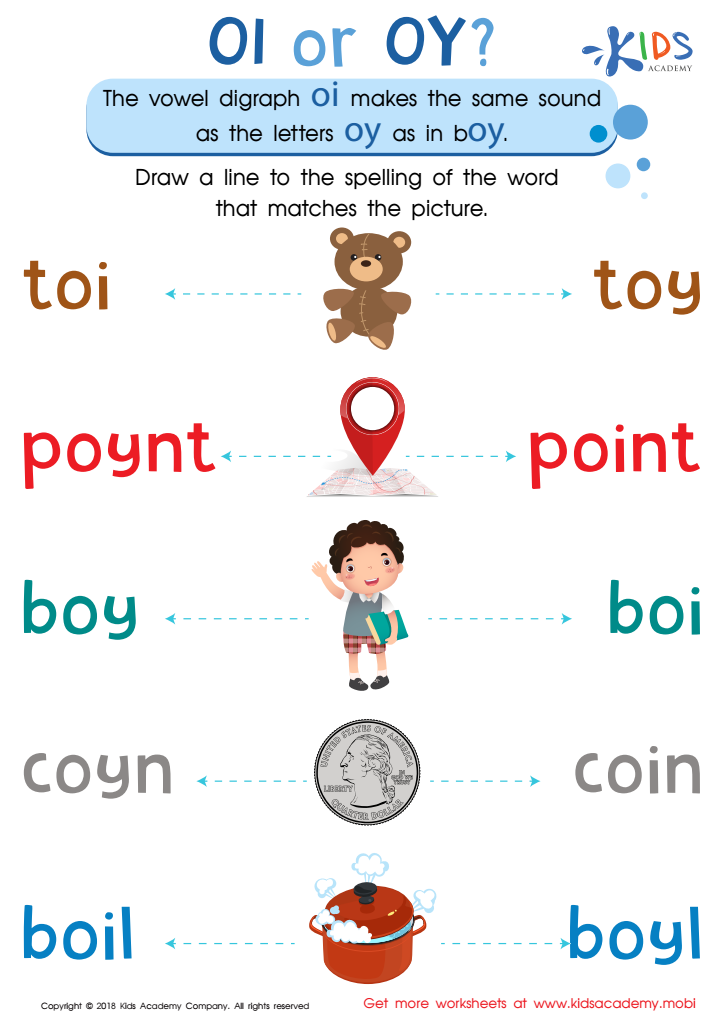
Reading: OI and OY Worksheet
Ask your students if they know the rule for words with /oi/ or /oy/ sound. If not, it's easy to learn! Rule: If /oy/ at end of word, spell with 'oy'; if /oi/ in middle of word, spell with 'oi'. Use this worksheet to help them master these digraphs and improve their ability to decode.
Reading: OI and OY Worksheet
Worksheet
Join Kids Academy for Free
Who is primarily going to use this learning content?


Parents and teachers should prioritize phonics skills, particularly normal vowel digraphs, for children ages 8-9 because these foundational skills are crucial for reading fluency and comprehension. Vowel digraphs, such as "ai," "ee," and "oa," represent pairs of vowels that create unique sounds, helping children decode more complex words. At this age, children are transitioning from learning to read to reading to learn. Mastery of digraphs allows them to tackle increasingly challenging texts, enhancing their overall literacy skills.
Moreover, a strong understanding of phonics fosters confidence in young readers. Without solid phonetic skills, children may struggle with pronunciation and meaning, leading to frustration and a disengagement from reading. Teachers can incorporate engaging activities and games that focus on vowel digraphs, making learning interactive and fun. Parents can support this learning at home by reading aloud together, pointing out digraphs in everyday reading materials, and encouraging practice through storytelling.
Incorporating normal vowel digraphs into the curriculum helps children not only succeed academically but also promotes a lifelong love of reading. Understanding these phonics skills equips them with the tools needed to decipher words independently, laying a robust groundwork for their future literacy development.