Spelling practice Normal Vowel Diphthongs Worksheets for Ages 8-9
10 filtered results
Difficulty Level
Grade
Age
-
From - To
Subject
Activity
Standards
Boost your 8-9-year-olds' spelling skills with our engaging Normal Vowel Diphthongs Worksheets! Perfectly designed for young learners, these worksheets offer plenty of practice with vowel combinations such as 'oi' in 'boil' and 'ou' in 'house'. Our fun and educational activities help solidify knowledge of challenging diphthongs, enhancing both reading and writing abilities. Each worksheet is crafted to reinforce understanding through varied exercises and eye-catching layouts. Ideal for classroom use or at-home practice, they provide a comprehensive learning experience to make spelling fun and effective. Empower your kids with the tools they need to master diphthongs today!
Favorites
With answer key
Interactive
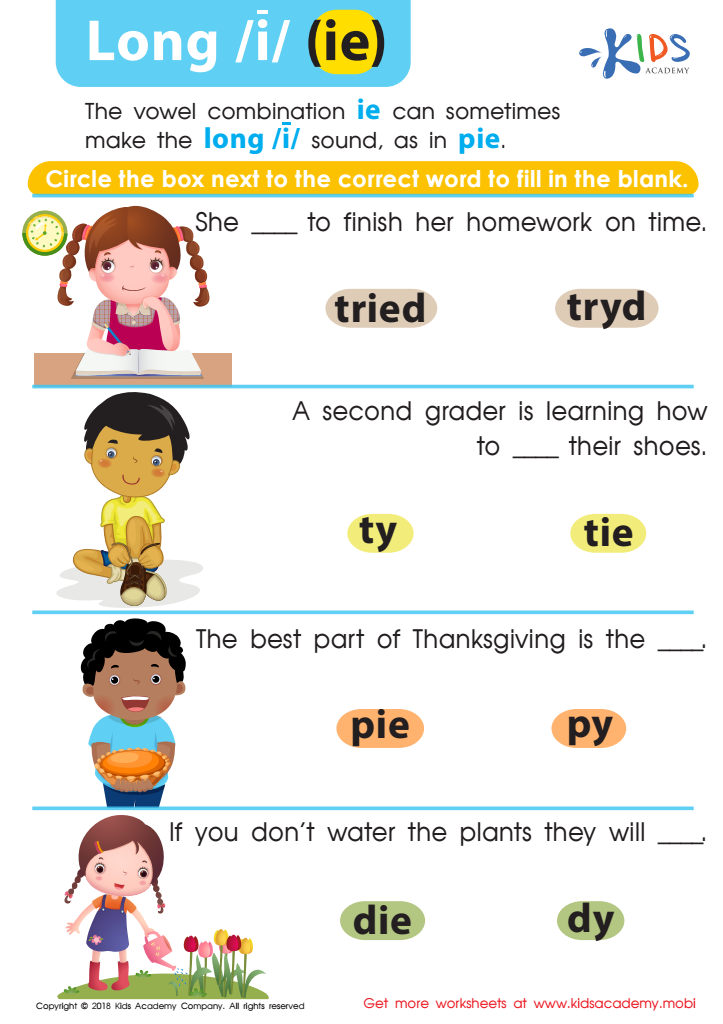
Reading: Long I and IE Worksheet
Have your child list words with the long /i/ sound (eg. 'pie'), and if needed, help them out with some examples. Read each word in the worksheet together and check their answer by having them circle the correct word.
 Assign to My Students
Reading: Long I and IE Worksheet
Worksheet
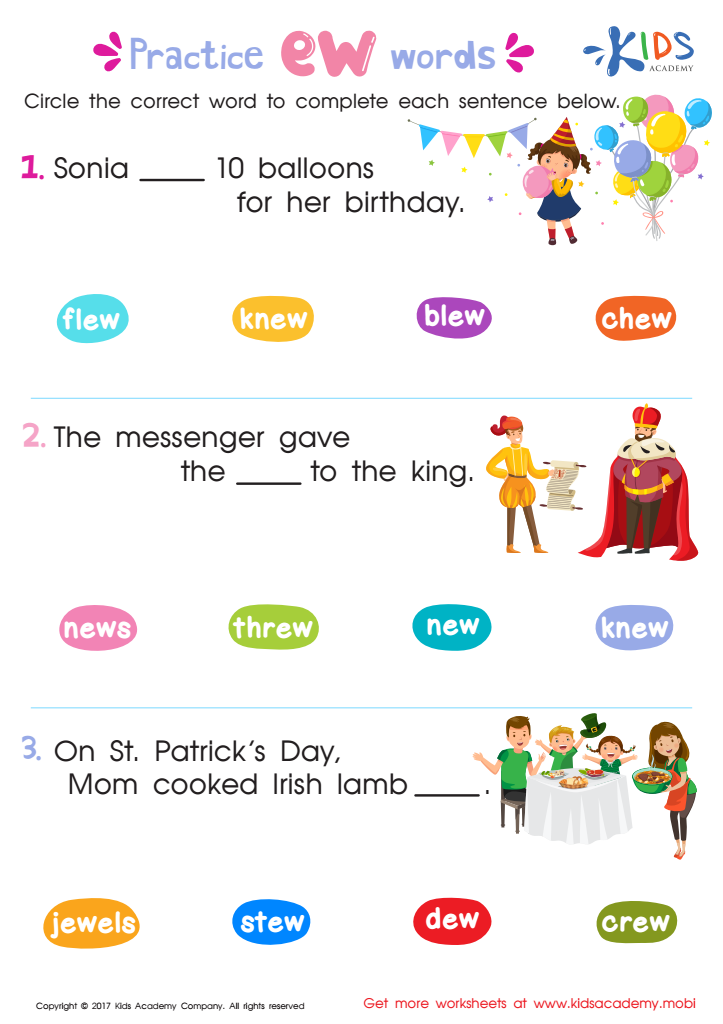
EW Words Worksheet
Practice the diphthong ew and boost your child's vocabulary with this fun ew words worksheet! Filled with illustrations, it will help your child hone their reading and spelling skills. Plus, the tricky words will make it both enjoyable and rewarding!
EW Words Worksheet
Worksheet
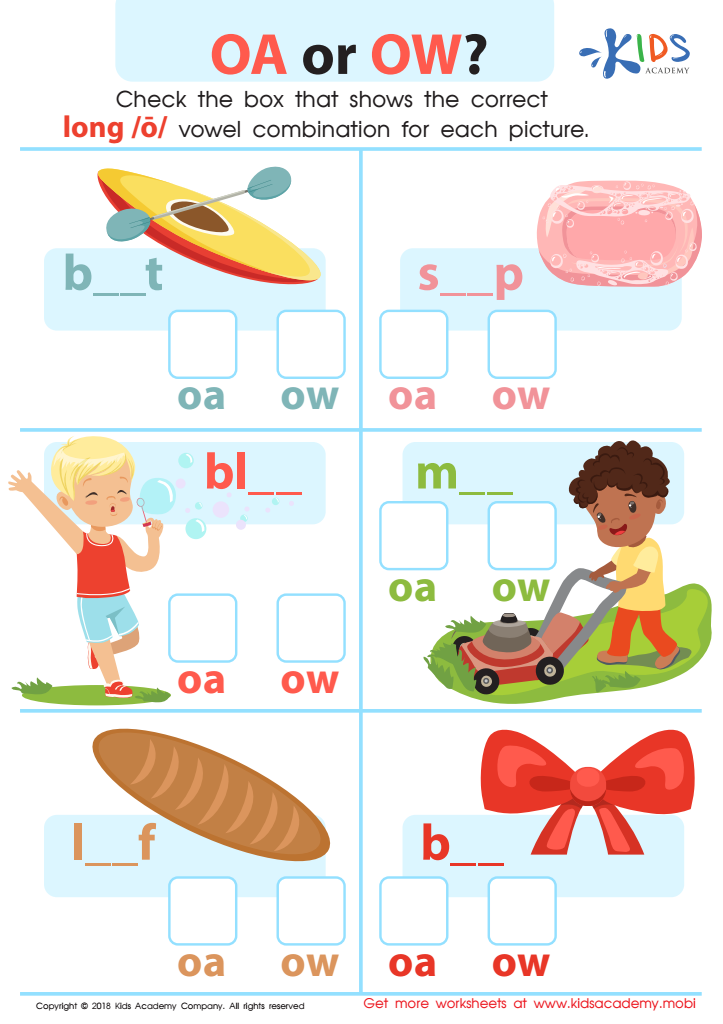
Reading: OA or OW Worksheet
This printable worksheet helps young and emergent readers with decoding words and understanding digraphs (two letters with one sound). It requires students to complete the spelling for each word based on the picture, focusing on /oa/ and /ow/ spellings. It's ideal for a reading classroom and for spelling practice.
Reading: OA or OW Worksheet
Worksheet
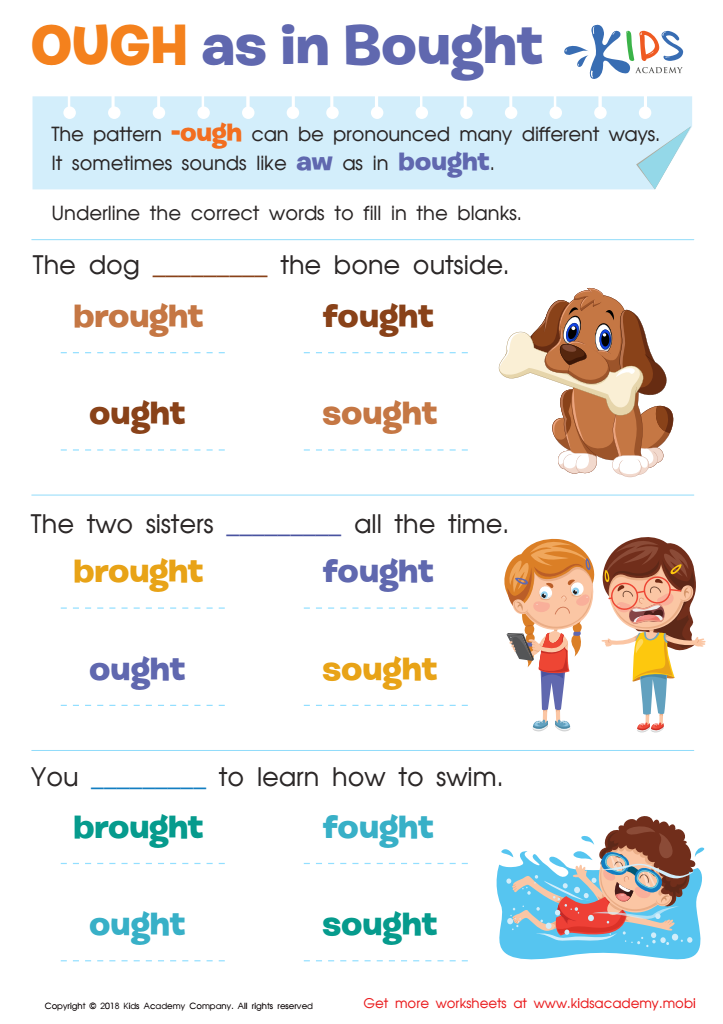
OUGH as in Bought Worksheet
Use this worksheet to teach your child the different pronunciations of -ough. For example, -ough can sound like ‘aw’ in ‘bought’. Ask your child to give more examples and help them underline the correct answers to fill in the blanks.
OUGH as in Bought Worksheet
Worksheet
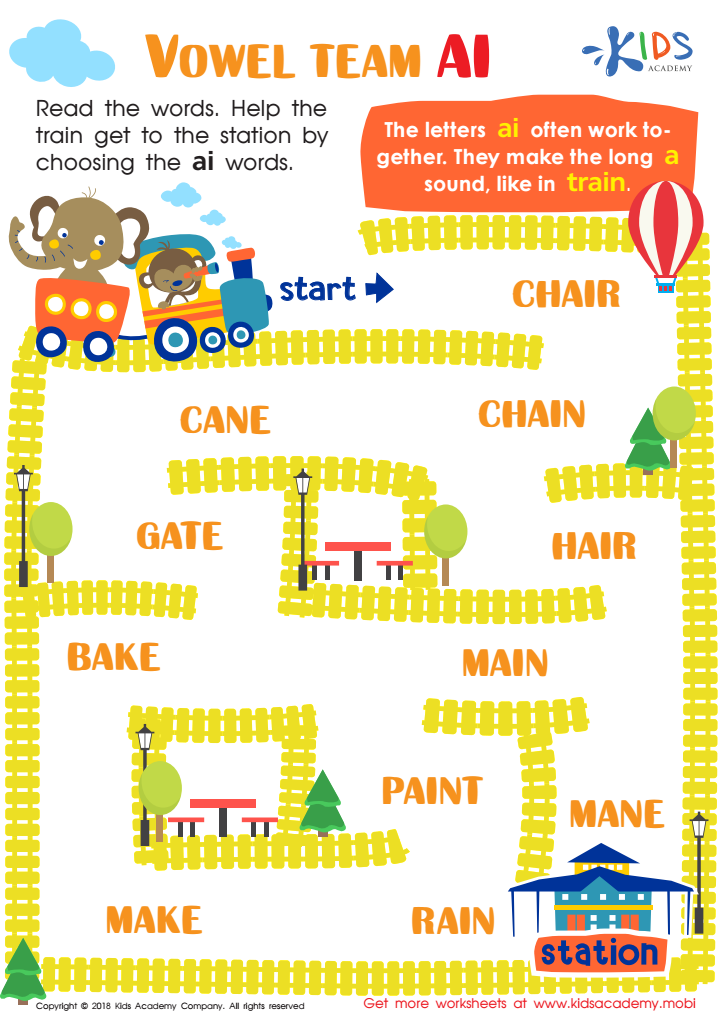
Vowel team ai Worksheet
Kids will have a blast learning about the -ai digraph with this fun worksheet. They'll read words with it and practice their motor skills as they help the animal duo get back to the train station. With success, they'll smile and enjoy the activity!
Vowel team ai Worksheet
Worksheet
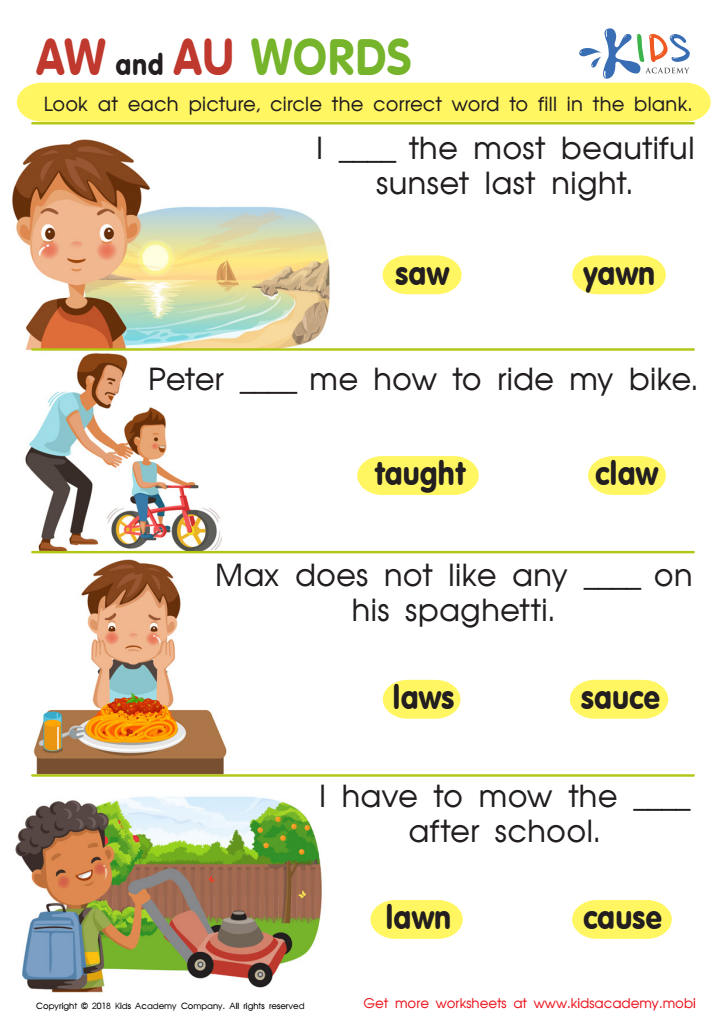
Reading: AW and AU Words Worksheet
This worksheet helps kids recognize that /au/ and /aw/ can make the same sound. Students read sentences and pick the correct word with one of the digraphs. Understanding digraphs improves decoding and reading fluency. Perfect for reading and phonics classes.
Reading: AW and AU Words Worksheet
Worksheet
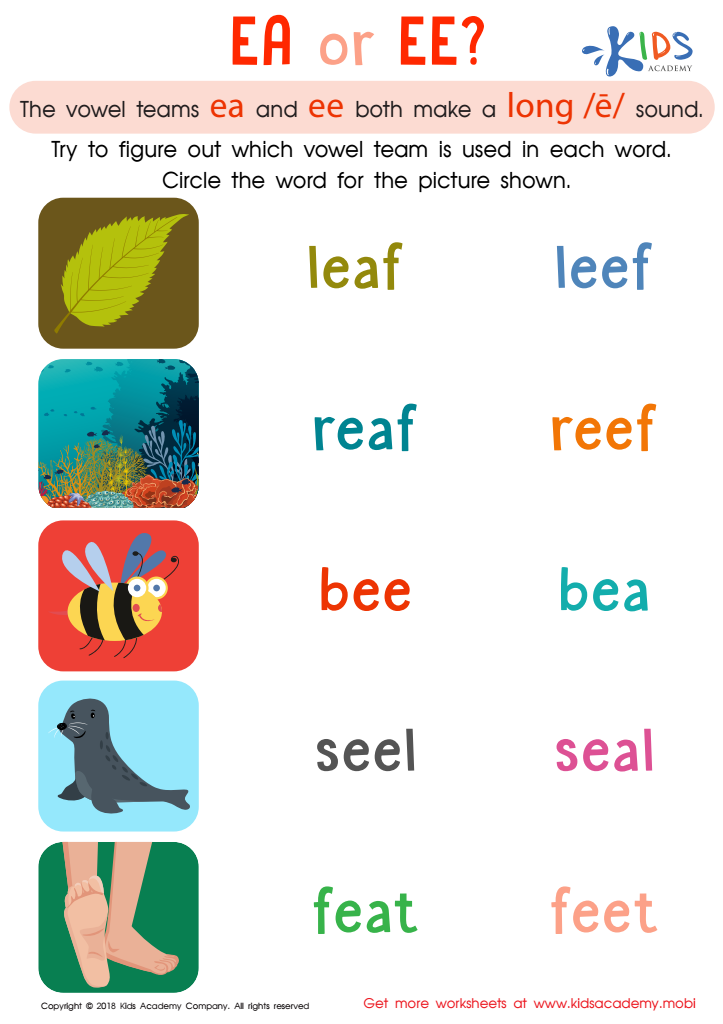
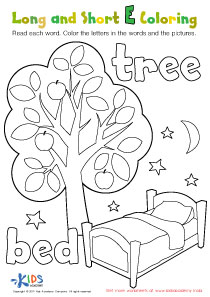
Reading: EA and EE Worksheet
Confused by the long E sound's varying spellings? Give students practice with this printable. It will improve their reading and spelling skills by helping them identify the correct spellings for words with the /ee/ and /ea/ vowel teams. Clear up the confusion and sharpen their skills.
Reading: EA and EE Worksheet
Worksheet
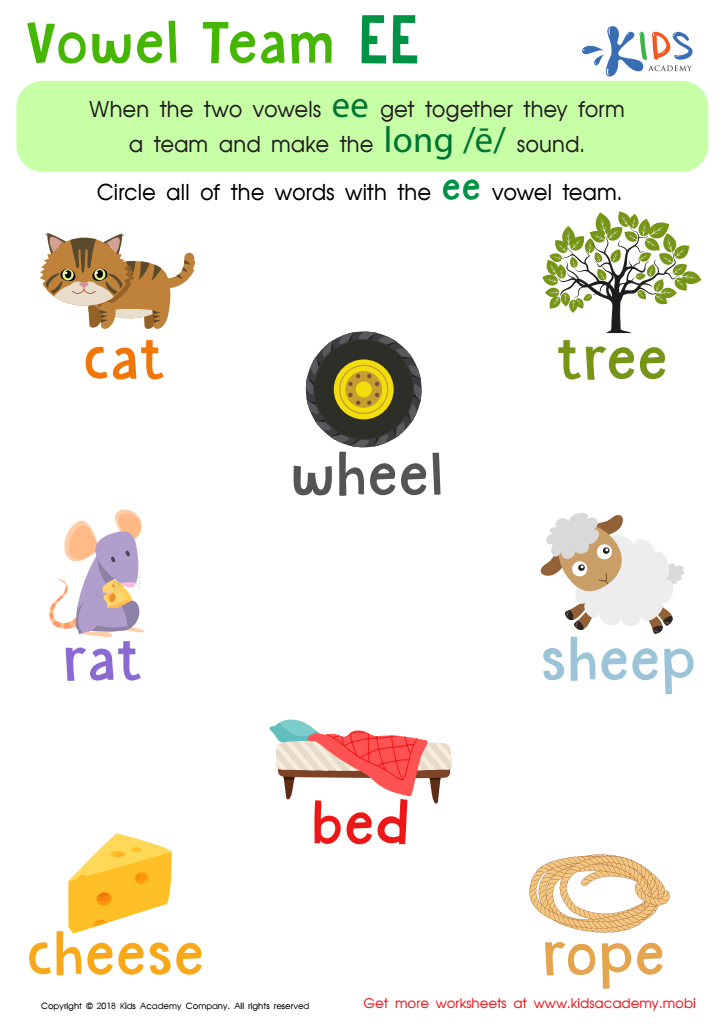
Reading: Vowel Team EE Worksheet
This worksheet is perfect for helping young learners master the /ee/ vowel team. It shows the first vowel with a long sound and the second vowel silent. It also provides pictures for unfamiliar words for readers of all levels. It's an ideal resource for teaching phonics skills.
Reading: Vowel Team EE Worksheet
Worksheet
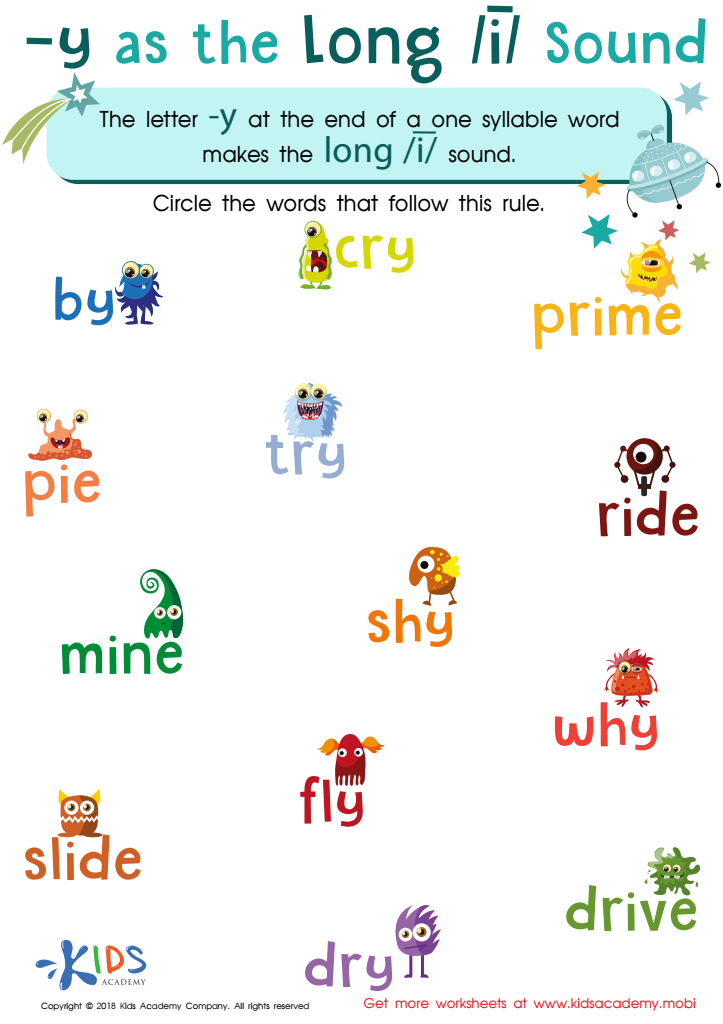
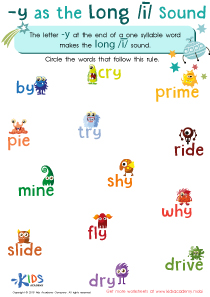
Reading: Y as Long I Worksheet
Students need practice and exposure to letters that make different sounds for decoding and reading success. This printable is a great resource for language arts classes: it explains that words ending with Y and having only one syllable make the long I sound. Students will circle all words with Y that have this sound.
Reading: Y as Long I Worksheet
Worksheet
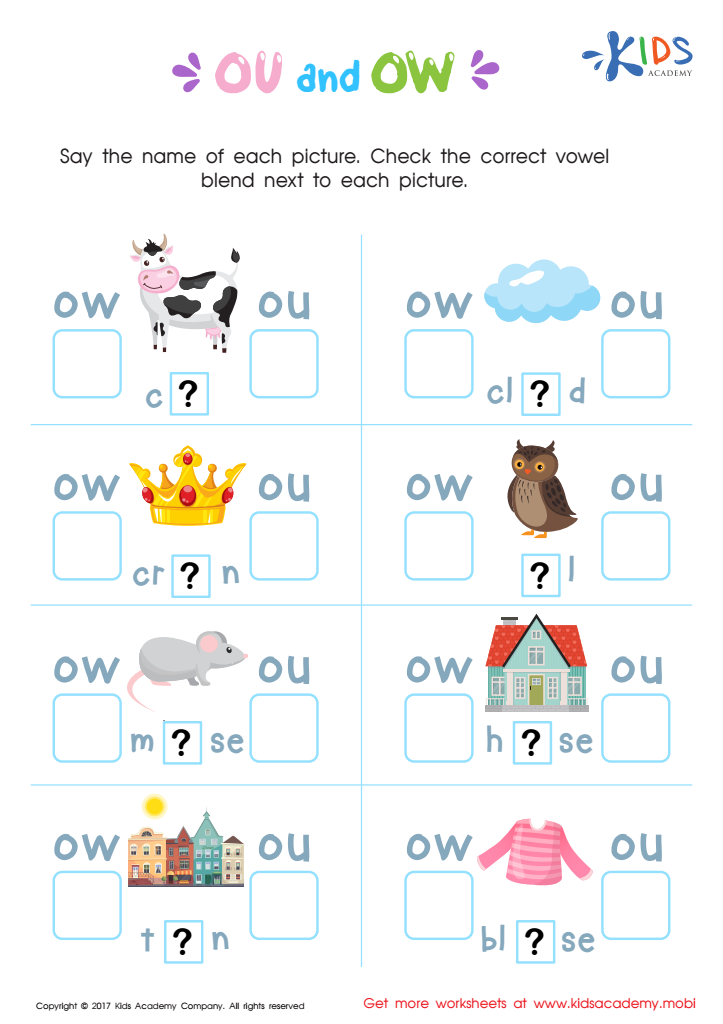
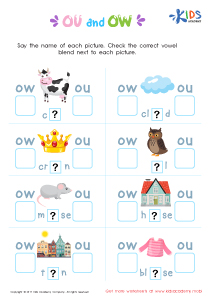
OU and OW Words Worksheet
Enhance your child's reading and spelling with this ou and ow words worksheet! Fun pictures and common words make mastering the diphthongs ou and ow easy and enjoyable.
OU and OW Words Worksheet
Worksheet
Join Kids Academy for Free
Who is primarily going to use this learning content?


Spelling practice involving normal vowel diphthongs is vital for children aged 8-9 as it bridges the gap between basic phonics and more complex word recognition. Vowel diphthongs, where two vowel sounds slide together within a single syllable (like “oi” in "coin" or “ou” in "sound"), enrich a child's phonetic foundation.
For both parents and teachers, focusing on these phonetic structures is crucial because mastering them boosts children's reading fluency and comprehension. When kids can smoothly navigate through the complexities of vowel sounds, their ability to decode new words increases significantly, thereby making reading a less intimidating and more enjoyable experience. Enhanced reading fluency positively correlates with better academic performance across various subjects.
Moreover, this practice sharpens spelling skills, crucial for clear communication in both writing and speaking. Understanding diphthongs equips children with the tools to spell and pronounce a variety of words correctly.
Finally, diphthong practice fosters phonemic awareness—a child's recognition and manipulation of individual sounds. This awareness is an early indicator of later reading success, providing a solid base for advancing to more intricate literacy tasks. Supporting them in mastering these early linguistic milestones sets the foundation for lifelong literacy skills, consequently preparing them for complex language tasks in the future.