Basic Arithmetic Normal Addition and Subtraction Word Problems Worksheets for Ages 8-9
4 filtered results
-
From - To
Discover engaging Basic Arithmetic Normal Addition and Subtraction Word Problems Worksheets designed for children aged 8-9. These worksheets help reinforce essential math skills through relatable real-world scenarios, making learning fun and interactive. Each problem promotes critical thinking and problem-solving abilities, allowing students to practice addition and subtraction in context. With a variety of questions ranging from simple to more complex, these resources cater to diverse learning needs, ensuring every child can build confidence in their math skills. Perfect for both classroom use and at-home practice, these worksheets aim to enhance comprehension while providing a solid foundation in basic arithmetic. Start your journey to math mastery today!
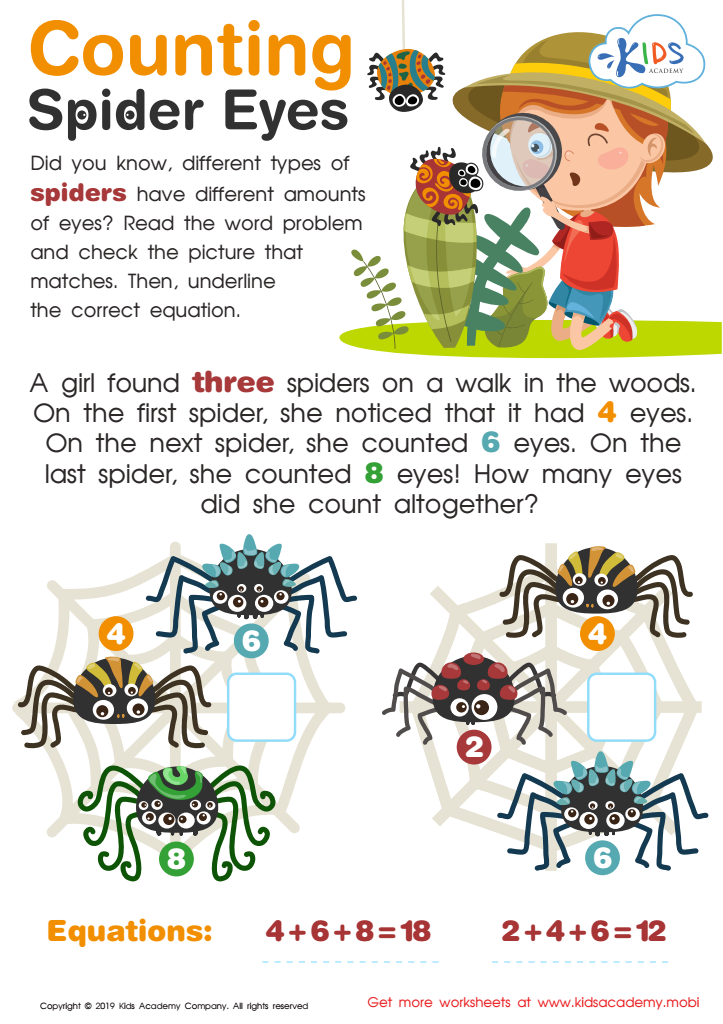
Counting Spider Eyes Worksheet
 Assign to My Students
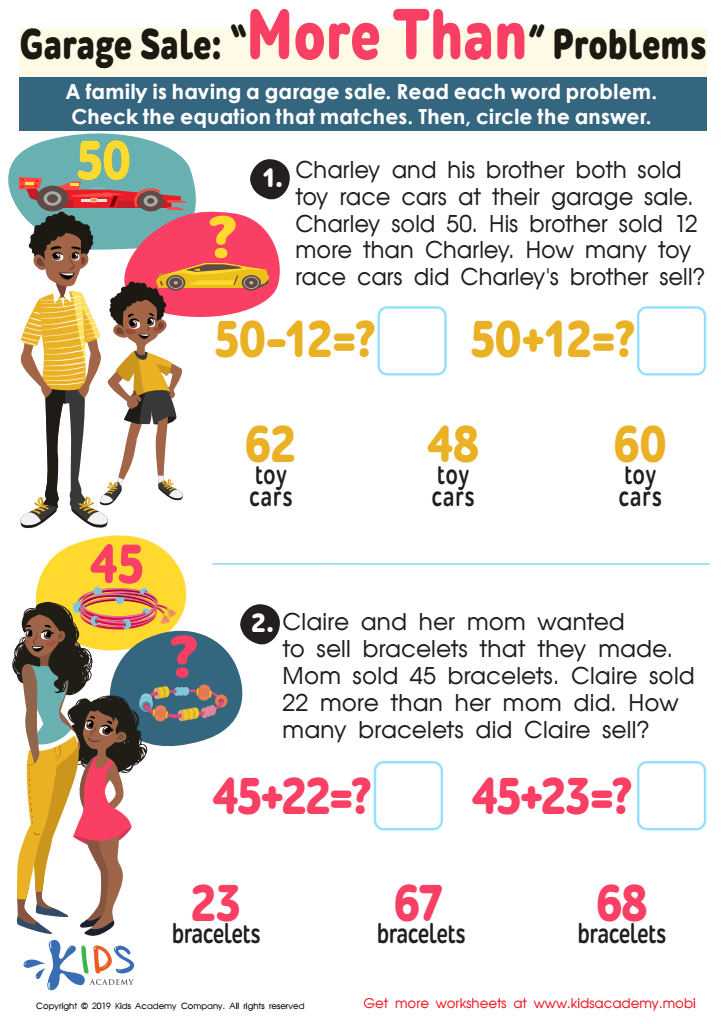
Garage Sale - More yhan Worksheet
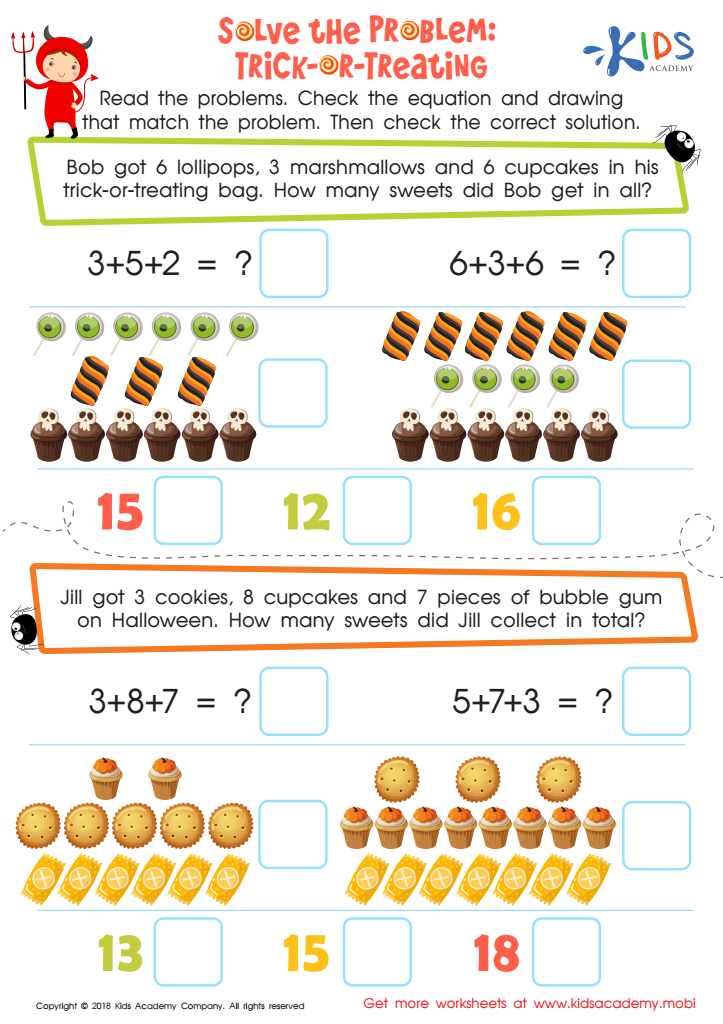
Solve the Problem: Trick–or–treating Worksheet
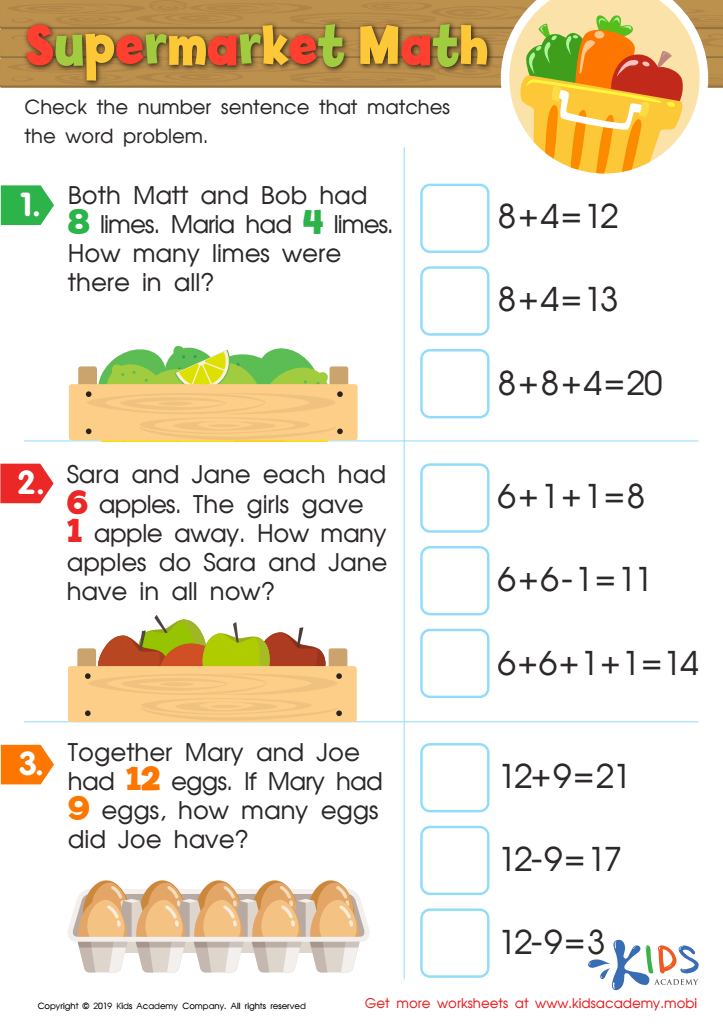
Supermarket Math Worksheet








Parents and teachers should prioritize Basic Arithmetic Normal Addition and Subtraction Word Problems for children aged 8-9 for several compelling reasons. At this critical developmental stage, students deepen their understanding of mathematical concepts beyond simple computation. Engaging with word problems helps students develop essential problem-solving skills, critical thinking, and the ability to interpret real-life situations mathematically.
Additionally, mastering addition and subtraction word problems enhances reading comprehension. Children must analyze a scenario, identify relevant information, and devise strategies to solve it. This multi-step approach fosters reasoning and logical thinking, skills vital for academic success across subjects.
Moreover, proficiency in these skills builds confidence in mathematics, reducing anxiety around the subject as they tackle more complex arithmetic operations in the future. It lays a solid foundation for future learning and encourages a positive attitude towards math, making them more likely to persevere through challenges later in their education.
Finally, word problems reflect everyday experiences, helping students connect math to the real world. This relevance can ignite interest and motivation in learning. In turn, caretaking these skills promotes a well-rounded education, empowering young learners to thrive academically and in everyday situations.