Mathematical reasoning Normal Division Worksheets for Ages 8-9
3 filtered results
-
From - To
Enhance your child’s mathematical reasoning with our engaging Normal Division Worksheets for Ages 8-9. Designed to challenge and stimulate young minds, these printable worksheets help students master basic division skills while fostering critical thinking. Each worksheet provides a variety of division problems that encourage logical analysis and problem-solving, guiding students step-by-step toward divisional proficiency. Perfect for both classroom and home use, these worksheets align with educational standards and make learning division fun and effective. Equip your 8-9-year-old with the tools they need for mathematical success with our expertly crafted division exercises.
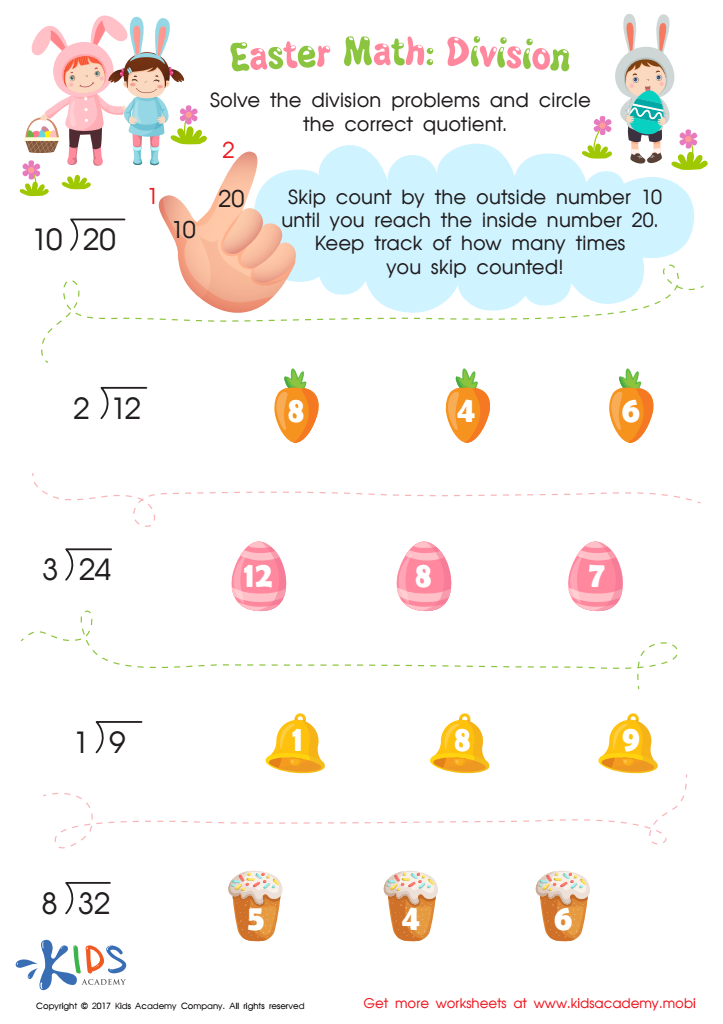
Division Worksheet
 Assign to My Students
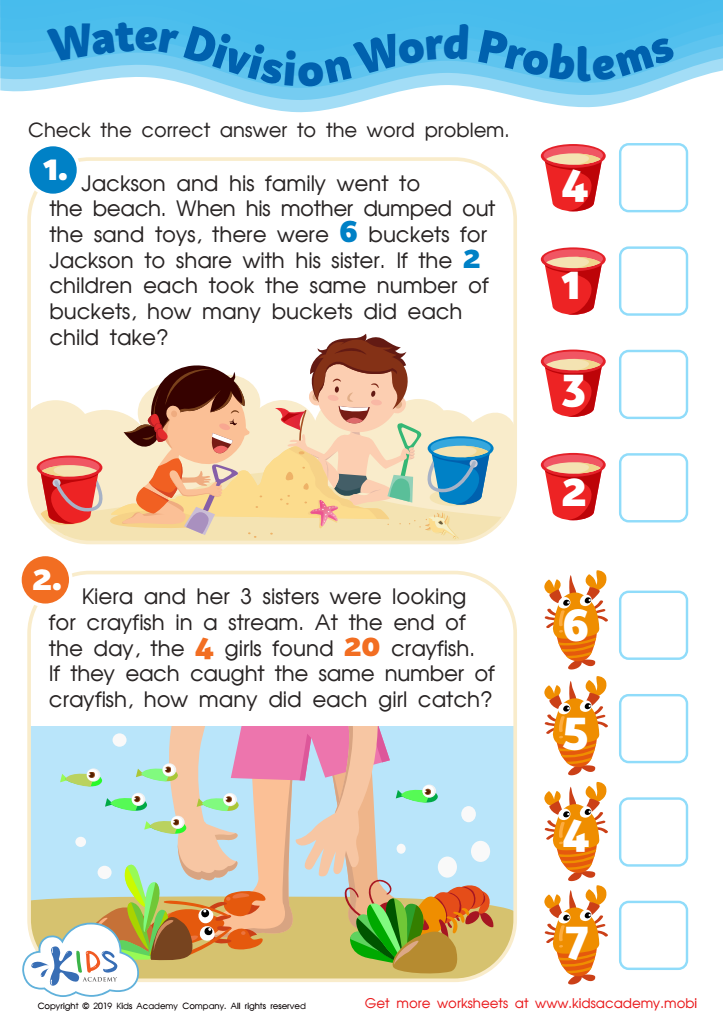
Water Division Word Problems Worksheet
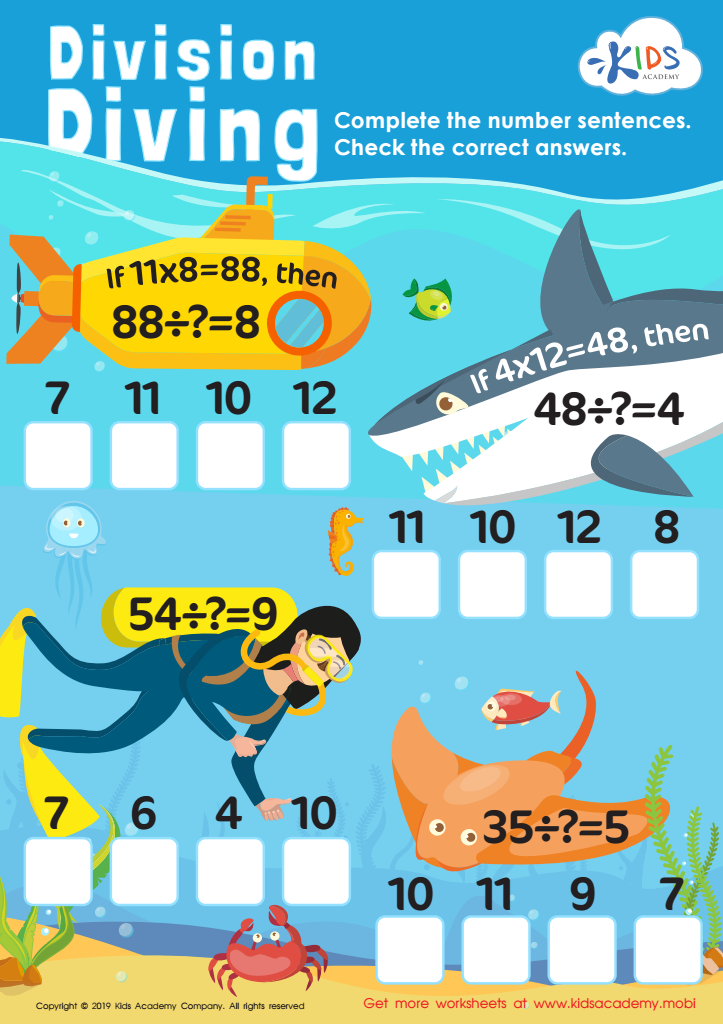
Division Diving Worksheet







Mathematical reasoning and normal division for children aged 8-9 are foundational to their overall cognitive development and academic success. At this critical stage, students transition from basic arithmetic to more complex mathematical concepts. Understanding division, a key arithmetic operation, helps solidify their comprehension of how numbers interact with each other. This understanding is not only crucial for future math courses but also for everyday problem-solving situations.
Mathematical reasoning involves the ability to think logically and make connections between ideas, which is fundamental in many life skills beyond math. When children learn division, they practice these reasoning skills by determining how many times a number fits into another, which encourages them to think critically and analytically.
Moreover, division serves as a building block for more advanced mathematical topics, such as fractions, ratios, and decimals. Mastery of these subjects boosts confidence and encourages a positive attitude towards mathematics, preventing math anxiety and fostering a growth mindset.
Parents and teachers who invest in nurturing mathematical reasoning and introducing normal division to 8-9-year-olds provide them with essential tools for academic achievement. These skills not only enhance their performance in math but also support overall intellectual growth, benefiting them across various disciplines and real-life activities.








