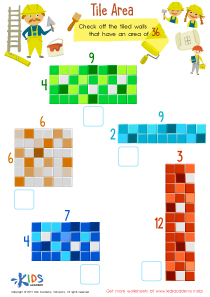
Recognizing number patterns Normal Numbers Worksheets for Ages 8-9
3 filtered results
-
From - To
Enhance your child's math skills with our "Recognizing Number Patterns" worksheets designed for ages 8-9. These engaging activities will help students identify and understand various number patterns, developing critical thinking and problem-solving skills. Through interactive exercises, kids will learn to recognize sequences in numbers, fostering a strong foundation for more advanced mathematics. Our printable worksheets are perfect for home or classroom use and cater to different learning styles. Instill confidence and competence in your young learners as they explore the fascinating world of numbers! Download our worksheets today and watch your child's math skills soar!
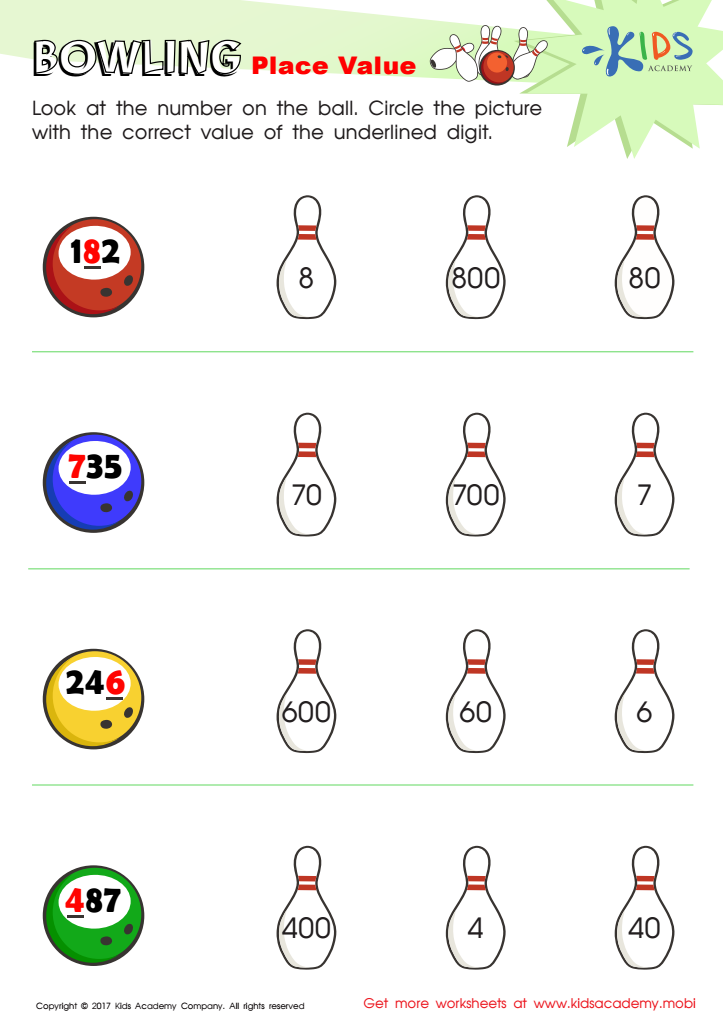
Place Value Worksheet
 Assign to My Students
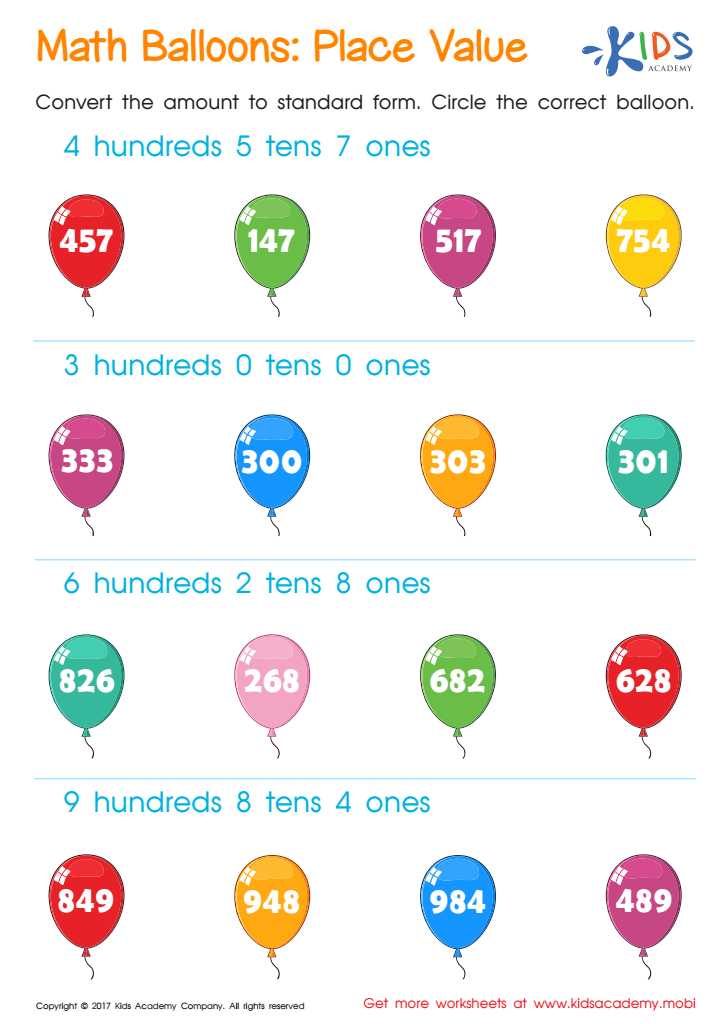
Place Value Printable Worksheet
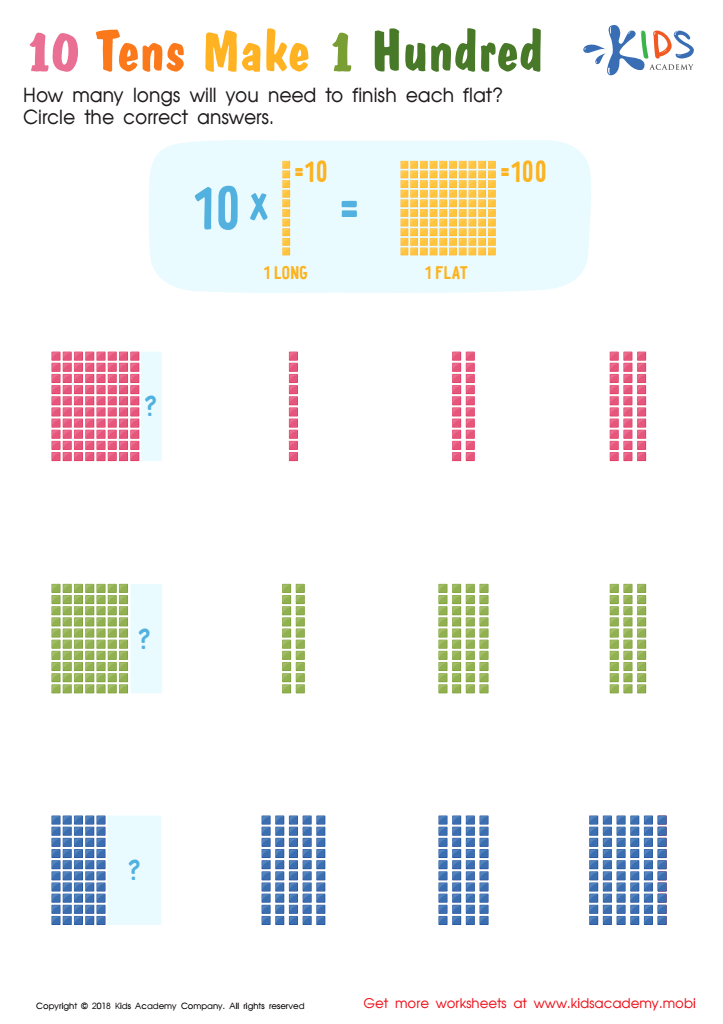
10 Tens Make 1 Hundred Worksheet








Recognizing number patterns, particularly Normal Numbers, is crucial for children aged 8-9 as it lays a foundational understanding of mathematics and cognitive skills essential for their development. At this age, students transition from basic arithmetic to more complex concepts, and identifying patterns fosters critical thinking and problem-solving abilities.
Normal Numbers are intriguing as they contain an infinite, evenly distributed sequence of digits, which can captivate young minds and prompt curiosity about numbers and their relationships. By engaging with these patterns, children not only enhance their mathematical skills but also develop logical reasoning and analytical thinking.
Moreover, recognizing number patterns helps students become more proficient in various mathematical operations, such as addition, subtraction, multiplication, and division, ultimately boosting their overall confidence in math and their performance in academics.
Parents and teachers should also appreciate that understanding these concepts can have long-term benefits, as pattern recognition is critical in beyond mathematics, including science, computer programming, and everyday decision-making. Encouraging such engagement in young learners helps foster a love for math, equipping them with the cognitive tools they need to succeed both in school and in life.