Multiplication practice Normal Multiplication Worksheets for Ages 8-9 - Page 2
26 filtered results
-
From - To
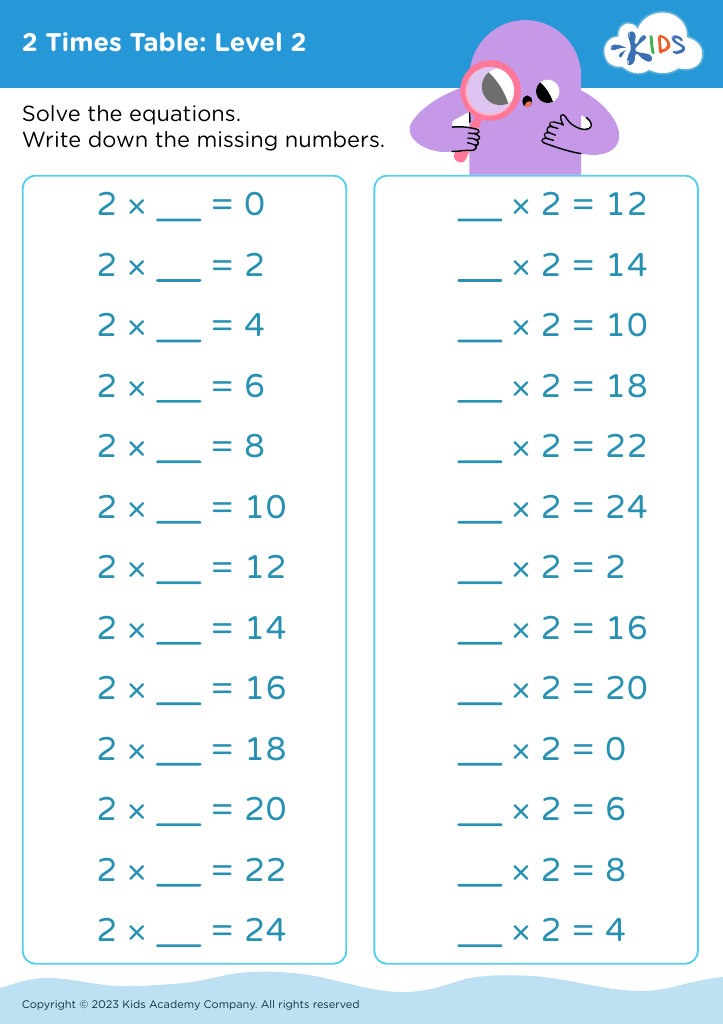
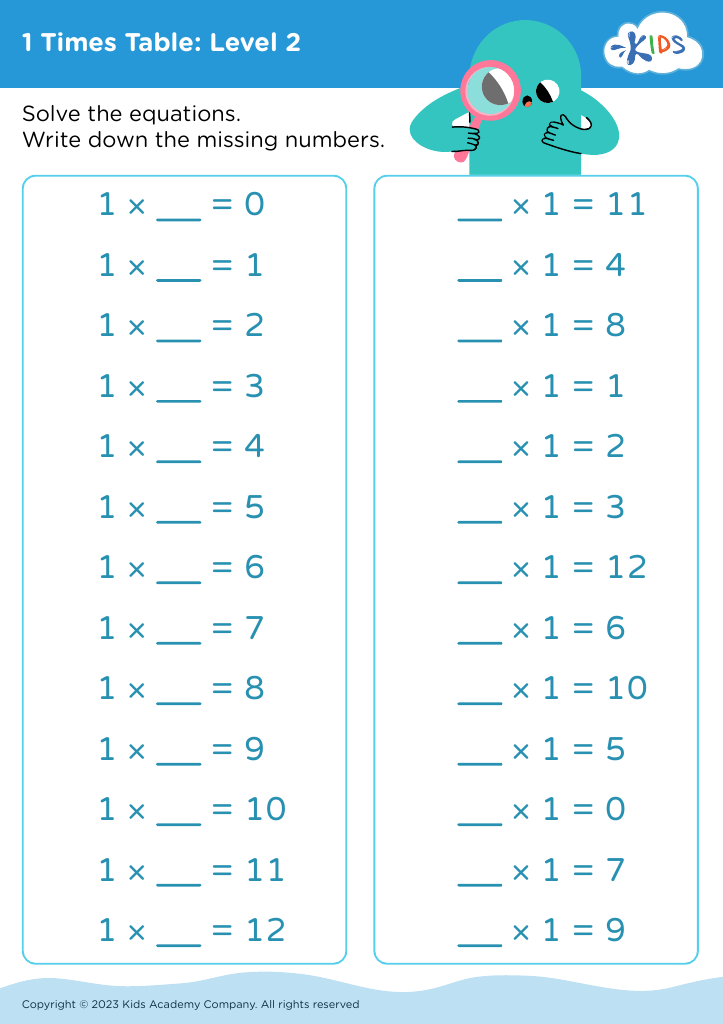








Multiplication practice for children aged 8-9 is fundamental for several key reasons. By this age, students are typically in third grade and are transitioning from basic arithmetic to more complex math concepts.
First, mastering multiplication fosters a strong numerical foundation essential for understanding advanced math topics such as division, fractions, and algebra. These foundational skills are essential as math becomes more abstract in higher grades. Consistent practice allows children to develop fluency and recall, making it easier for them to solve math problems efficiently and confidently.
Second, early success in math builds self-esteem and promotes a positive attitude toward the subject, which is crucial during these formative years. Students who feel confident with math are more likely to participate actively, tackle challenging problems, and maintain an interest in STEM fields later in life.
Moreover, multiplication is a practical skill used in daily life, such as in making purchases, understanding time, and measuring ingredients while cooking. Proficiency in multiplication empowers children to navigate these everyday tasks with ease and independence.
Teachers and parents can use engaging techniques, such as games, repetition, and real-life applications, to make multiplication practice enjoyable and effective. Investing time and effort in this practice ensures that children develop the critical thinking and problem-solving skills necessary for academic success and beyond.








