Understanding suffixes Normal Building Vocabulary Worksheets for Ages 8-9
3 filtered results
-
From - To
Enhance your child's vocabulary through our "Understanding Suffixes" worksheets designed specifically for ages 8-9! This engaging resource helps young learners grasp the concept of suffixes, enabling them to explore how adding different endings to words can change meanings and create new words. The worksheets provide fun activities and exercises that encourage independent thinking and creativity, making learning both effective and enjoyable. Perfect for use at home or in the classroom, our worksheets promote essential reading and writing skills while building a strong foundation in language arts. Start your child's vocabulary journey today and watch their confidence soar!
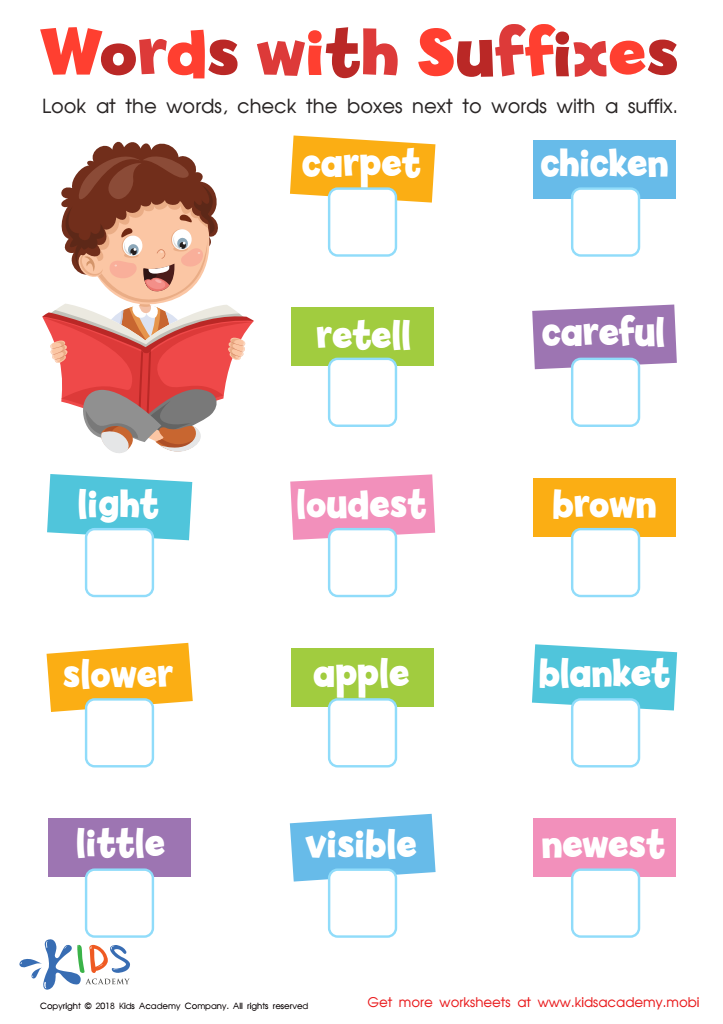
Reading: Words With Suffixes Worksheet
 Assign to My Students











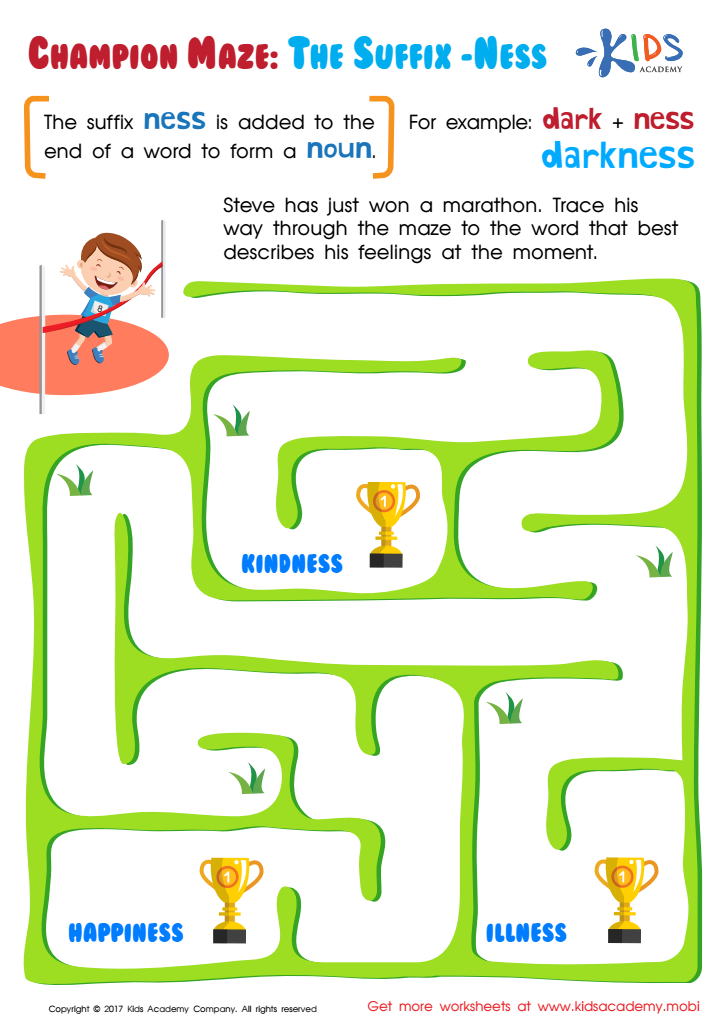
Suffix Ness Worksheet
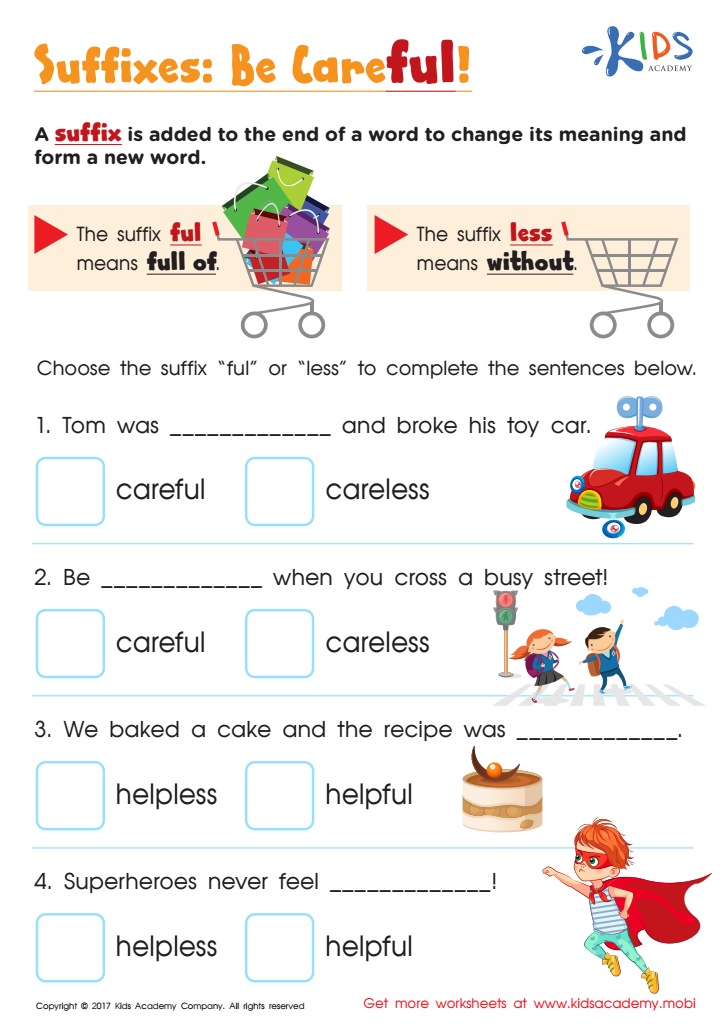
Suffixes Ful and Less Worksheet





.jpg)


Understanding suffixes is crucial for building vocabulary, particularly for children aged 8-9. Suffixes are word endings that change a word's meaning or grammatical function, such as "-ing," "-ed," or "-ful." By learning about suffixes, children not only expand their vocabulary but also enhance their reading and writing skills. When kids recognize suffixes, they can decode unfamiliar words, making them more confident and effective readers.
For parents and teachers, promoting awareness of suffixes helps children develop critical thinking skills. Understanding how suffixes influence meaning encourages students to analyze language more deeply, leading to improved comprehension. This knowledge also fosters creativity; children can build new words and experiment with language, enhancing their communication abilities.
Moreover, as children transition to more complex texts, strong vocabulary ties closely with academic success. Many subjects rely on specific terminology, and a solid grasp of suffixes allows for better understanding and engagement. Encouraging the exploration of suffixes can make learning fun and meaningful, ultimately supporting lifelong learning skills. By prioritizing this aspect of vocabulary development, parents and teachers lay the foundation for effective communication and academic achievement in their students.








