Logical Reasoning Normal Reading Worksheets for Ages 8-9
3 filtered results
-
From - To
Unlock your child's potential with our Logical Reasoning Normal Reading Worksheets for Ages 8-9. Designed to elevate critical thinking and problem-solving skills, these engaging worksheets combine reading proficiency with logical reasoning tasks, promoting comprehensive cognitive development. Each carefully crafted activity challenges young minds with puzzles, word problems, and sequencing exercises that stimulate intellectual growth. Perfect for reinforcing school learning or enhancing at-home education, our worksheets captivate and motivate students, making learning both effective and fun. Empower your child with tools to succeed academically and beyond, as they develop essential reasoning skills with our expertly designed worksheets.
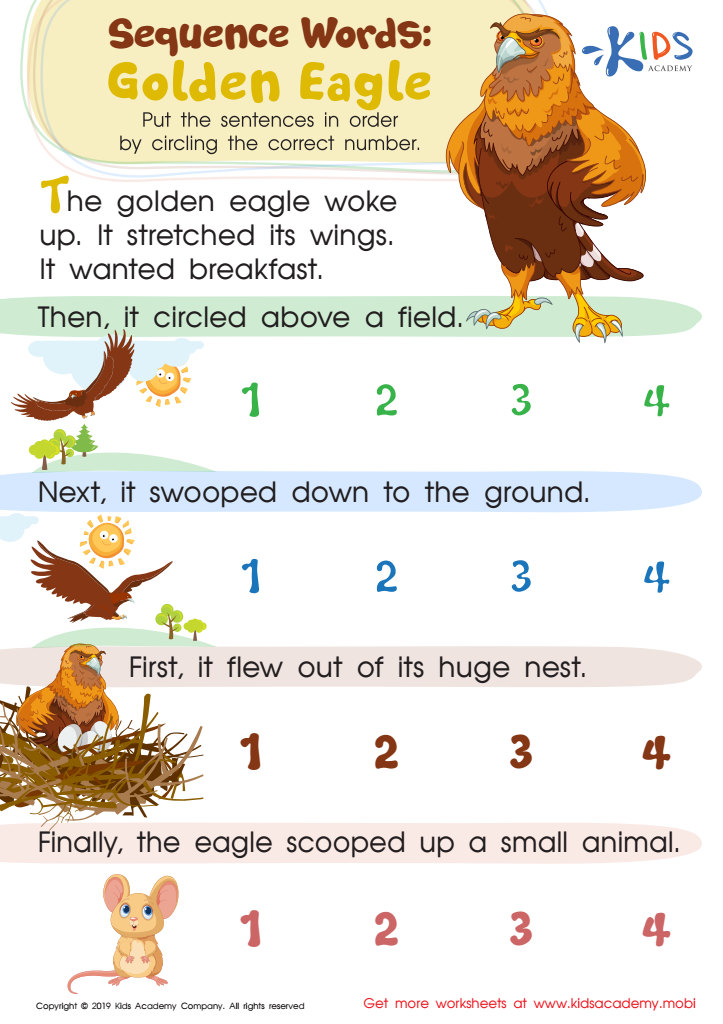
Sequence Word Eagle Worksheet
 Assign to My Students
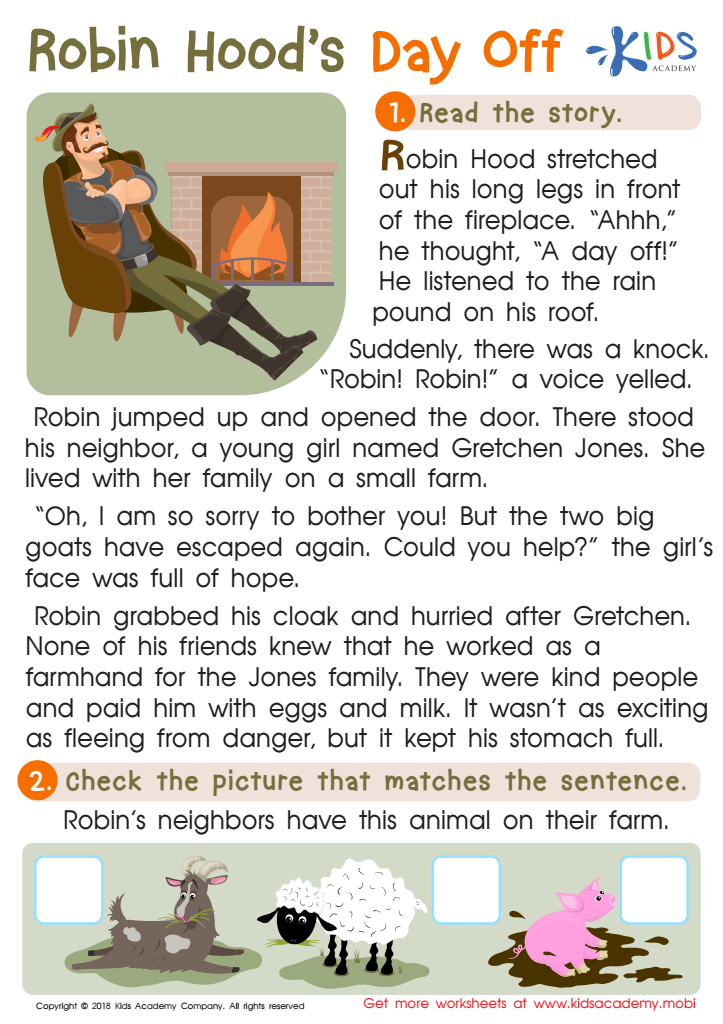
Robin Hood's Day Off Worksheet
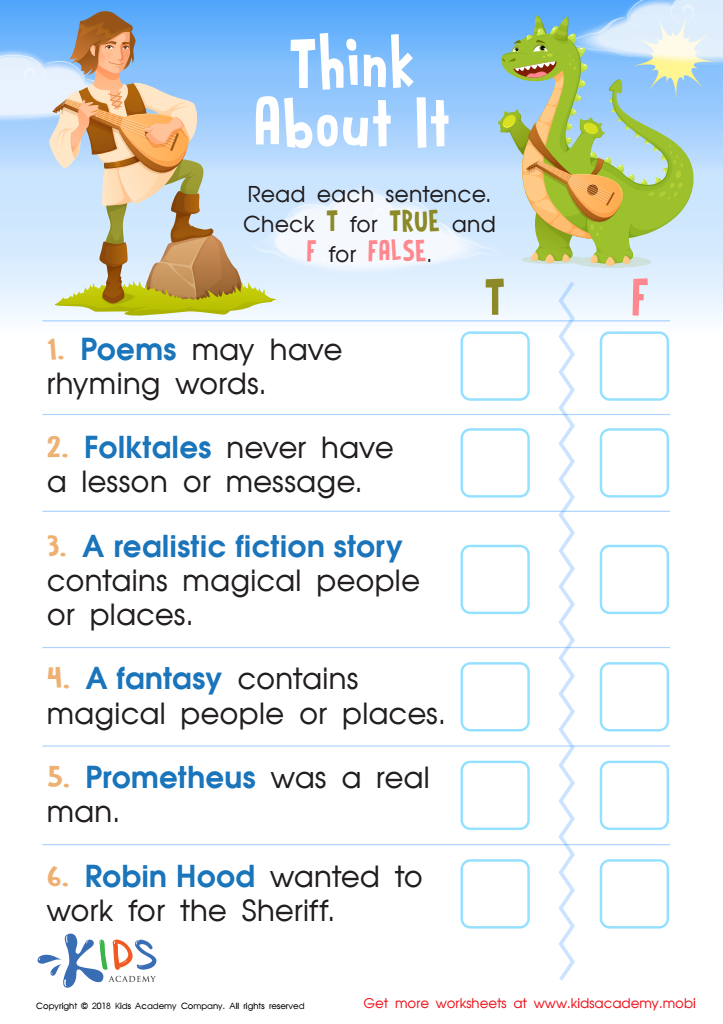
Think About It: Assessment Worksheet








Parents and teachers should care about the development of logical reasoning and normal reading skills in children ages 8-9 because these are foundational skills that shape future academic success and cognitive development. At this age, children transition from learning to read to reading to learn. Strong reading skills enable them to comprehend textbooks, follow instructions, and gain new information independently. Logical reasoning, meanwhile, enhances problem-solving abilities, critical thinking, and decision-making.
Developing logical reasoning helps children understand the 'why' and 'how' behind concepts, making learning more meaningful and less about rote memorization. It also boosts their ability to grasp essential math and science concepts and improve analytic skills in subjects like history and language arts. Efficient reading skills open doors to a wealth of knowledge, increasing their curiosity and enabling lifelong learning.
Moreover, these skills foster independence and confidence in young learners, equipping them with the tools to tackle increasingly complex tasks and holistically enhancing their educational experience. Solid reading and reasoning foundation advocate rising academic expectations, instills intrinsic motivation to learn and lays the groundwork for well-rounded development as they advance in their educational journey and beyond.








