Understanding suffixes Normal Reading Worksheets for Ages 8-9
3 filtered results
-
From - To
Enhance your child's reading skills with our "Understanding Suffixes" worksheets designed for ages 8-9. These engaging printable resources help students explore suffixes, which are vital for word formation and comprehension. Each worksheet provides fun exercises that encourage kids to recognize, define, and apply various suffixes in context. As they practice, they'll improve their vocabulary, decoding skills, and overall reading fluency. Our visually appealing and easy-to-follow worksheets are perfect for classroom use or at-home learning, making literacy enjoyable and effective. Help your child boost their reading confidence and mastery of suffixes with our comprehensive and user-friendly resources today!
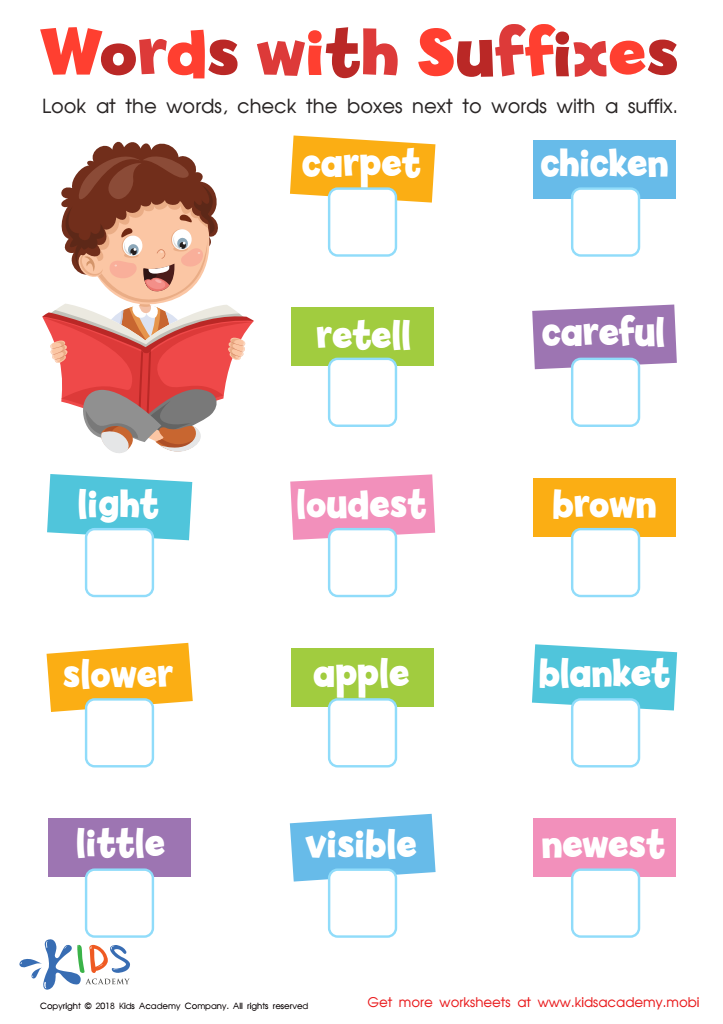
Reading: Words With Suffixes Worksheet
 Assign to My Students
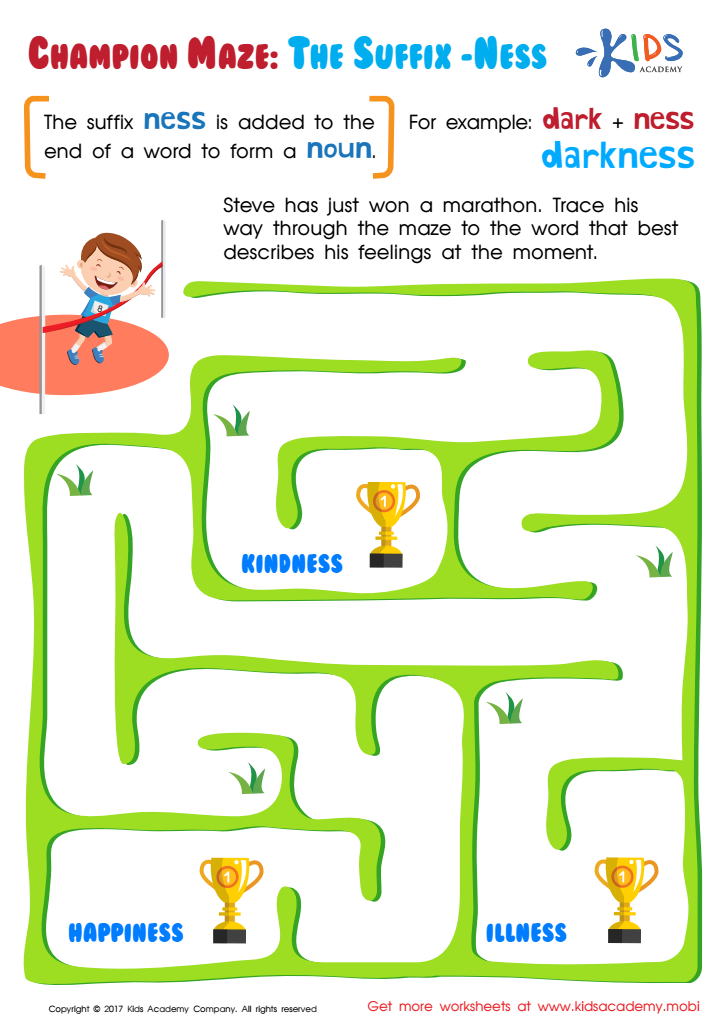
Suffix Ness Worksheet
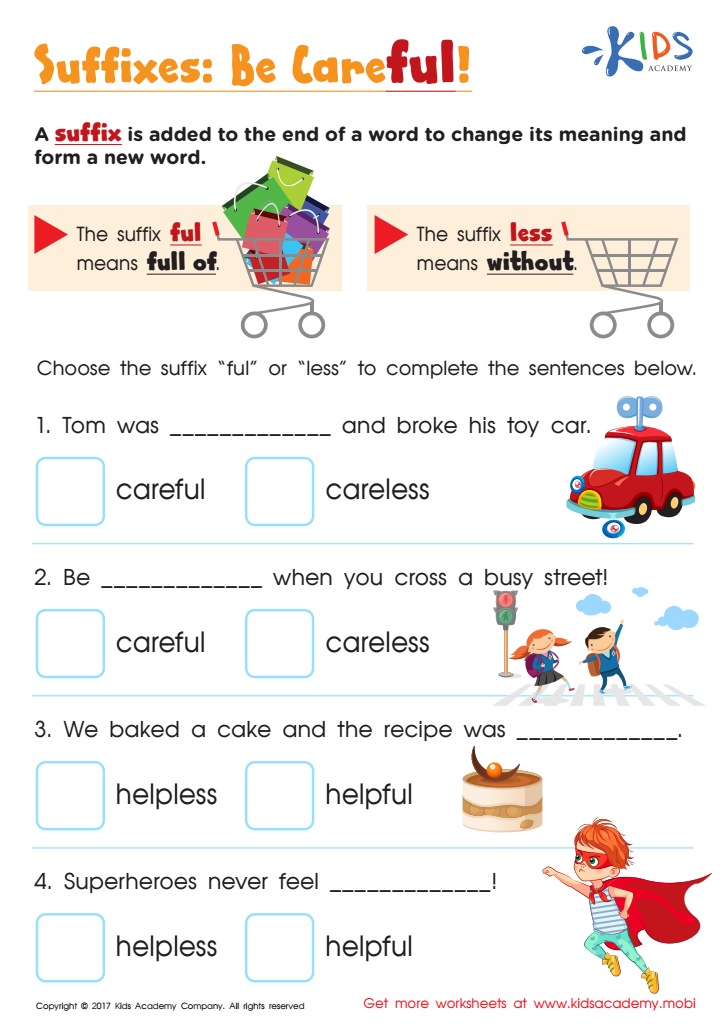
Suffixes Ful and Less Worksheet







Understanding suffixes is crucial for children aged 8-9 as they develop their reading and language skills. Suffixes are letters or groups of letters added to the end of a word that modify its meaning or change its part of speech. By learning suffixes, children enhance their vocabulary, improve their reading comprehension, and expand their ability to express themselves effectively.
Parents and teachers should care because a solid grasp of suffixes contributes to a child's ability to decode unfamiliar words. For instance, knowing that adding "-able" to a word indicates a capacity (like "read" becoming "readable") helps children infer meanings without needing to look a word up. This skill fosters independence in reading and bolsters a child's confidence.
Additionally, understanding suffixes can significantly support literacy development. As children practice using and recognizing suffixes, they become better writers and communicators. It creates a foundation for more complex grammatical concepts encountered in later grades. Encouraging exploration of suffixes not only makes reading and writing fun but also nurtures a love for language that lasts a lifetime. Parents and teachers play a vital role in guiding children through this essential aspect of language, shaping their future academic success.








