Understanding Sequences Normal Reading Comprehension Worksheets for Ages 8-9
3 filtered results
-
From - To
Enhance your child's reading skills with our "Understanding Sequences Normal Reading Comprehension Worksheets for Ages 8-9." Specifically designed for young learners, these worksheets help improve comprehension by focusing on the ability to identify and understand sequences within texts. Through engaging passages and targeted questions, children practice placing events, instructions, and ideas in logical order, boosting their critical thinking and reading fluency. Perfect for both classroom and home use, our worksheets provide diverse topics to keep kids interested and motivated to learn. Start building a strong reading foundation with Kids Academy's expertly crafted materials today!
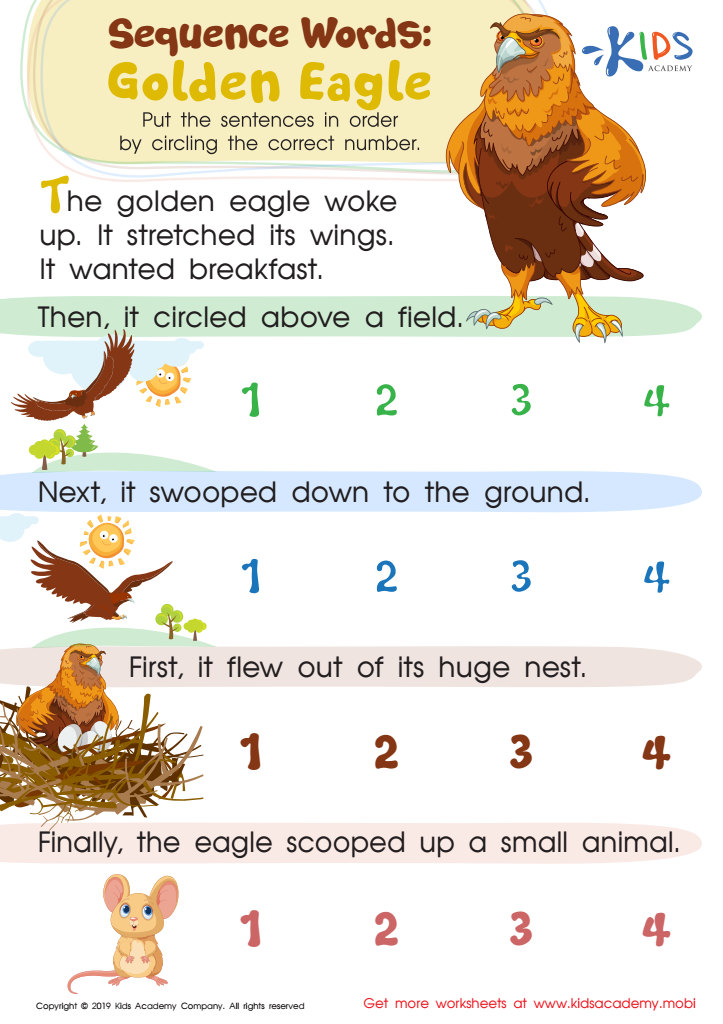
Sequence Word Eagle Worksheet
 Assign to My Students
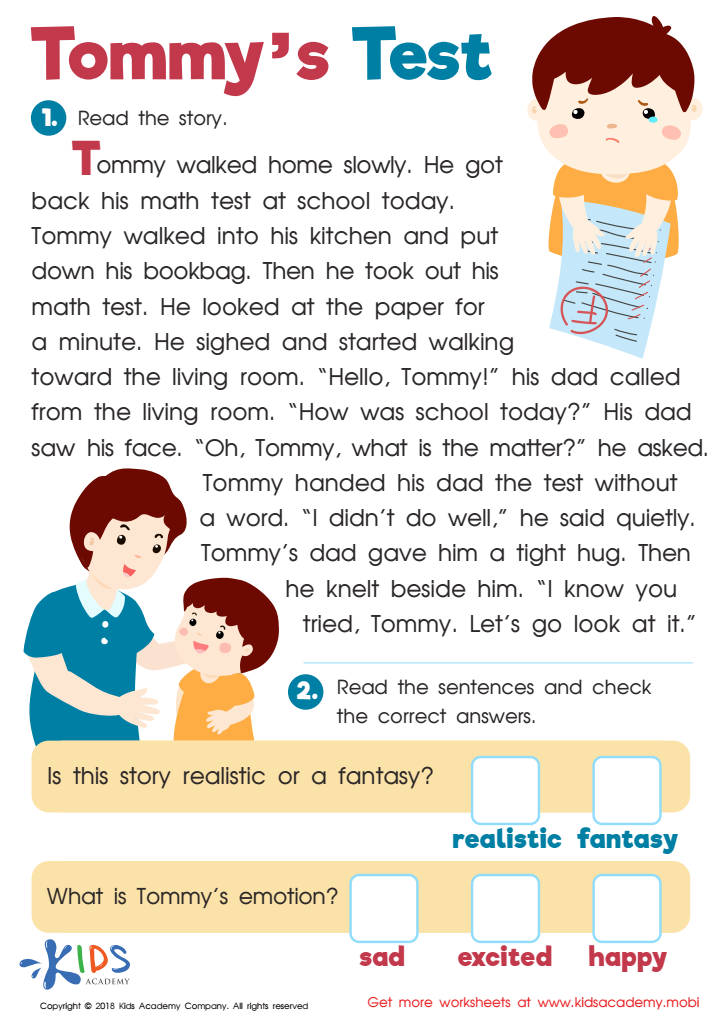
Tommys Test Worksheet
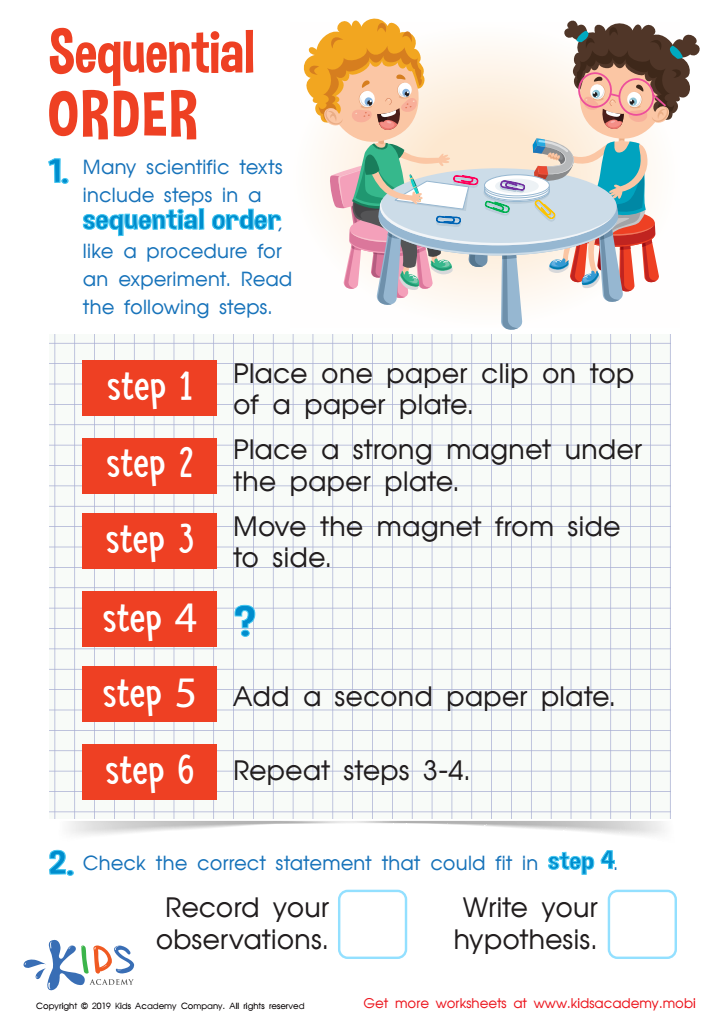
Sequencential Order Worksheet



.jpg)



Understanding sequences is essential for reading comprehension in children aged 8-9, as it forms a foundation for deeper literacy skills. At this age, children transition from learning to read to reading to learn, and grasping the sequential order of events in a text helps them make sense of stories, information, and instructions.
Parents and teachers should care about this skill because it directly influences a child's ability to understand cause and effect, predict outcomes, and follow instructional steps—crucial abilities in both academic and real-world settings. For example, in a narrative, recognizing the sequence helps children identify the plot structure, including the beginning, middle, and end, which enhances their overall understanding and retention of the story. In informational texts, understanding sequences is vital for following processes or chronological events, such as historical timelines or scientific experiments.
Additionally, when children grasp sequences, they develop better organizational skills and logical thinking. This logical progression aids in their ability to communicate more effectively, both in written assignments and verbal explanations. Supporting children in mastering sequence comprehension can lead to more confident, independent, and successful readers, setting a strong foundation for future academic achievements. Hence, integrating activities that promote sequencing skills in educational practices and daily routines is crucial for parents and teachers.








