Story sequencing Normal Reading Fiction Worksheets for Ages 8-9
4 filtered results
-
From - To
Explore our engaging "Story Sequencing Normal Reading Fiction Worksheets" designed for children ages 8-9! These thoughtfully crafted worksheets enhance reading comprehension skills by helping students identify the correct order of events in captivating fiction stories. Through our interactive activities, young learners will build essential skills in storytelling, improve their ability to summarize narratives, and develop critical thinking. Each worksheet is aligned with educational standards and encourages creativity and imagination while strengthening literacy skills. Perfect for classroom use or home study, these resources will inspire a love for reading and improve your child’s overall comprehension. Dive into the adventure today!
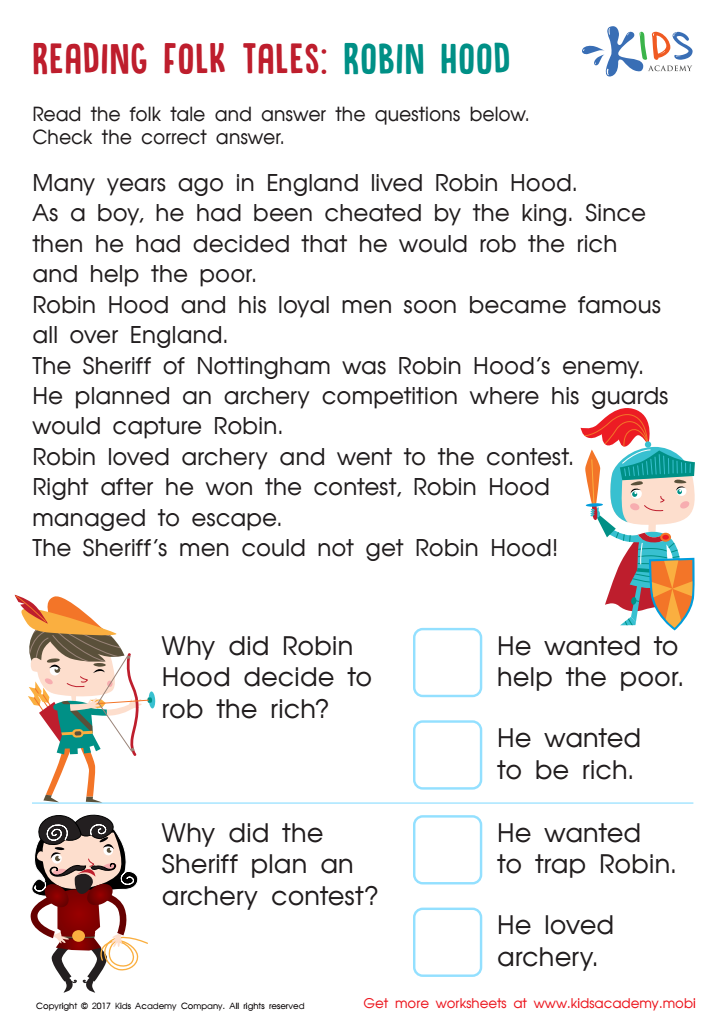
Robin Hood Folktale Worksheet
 Assign to My Students
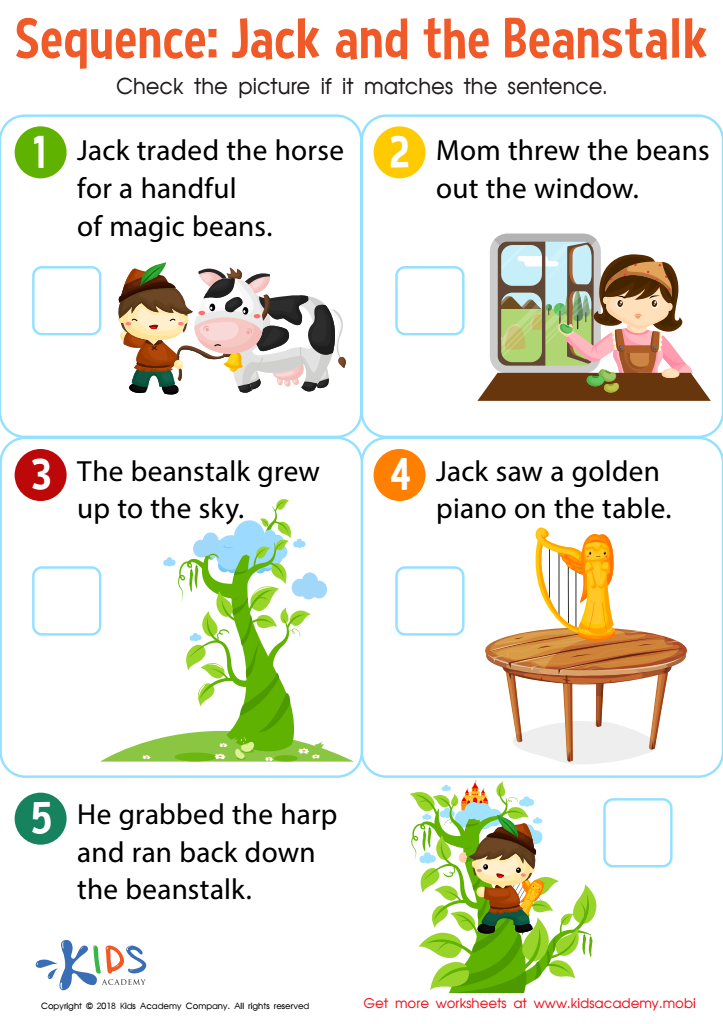
Sequence: Jack and The Beanstalk Worksheet
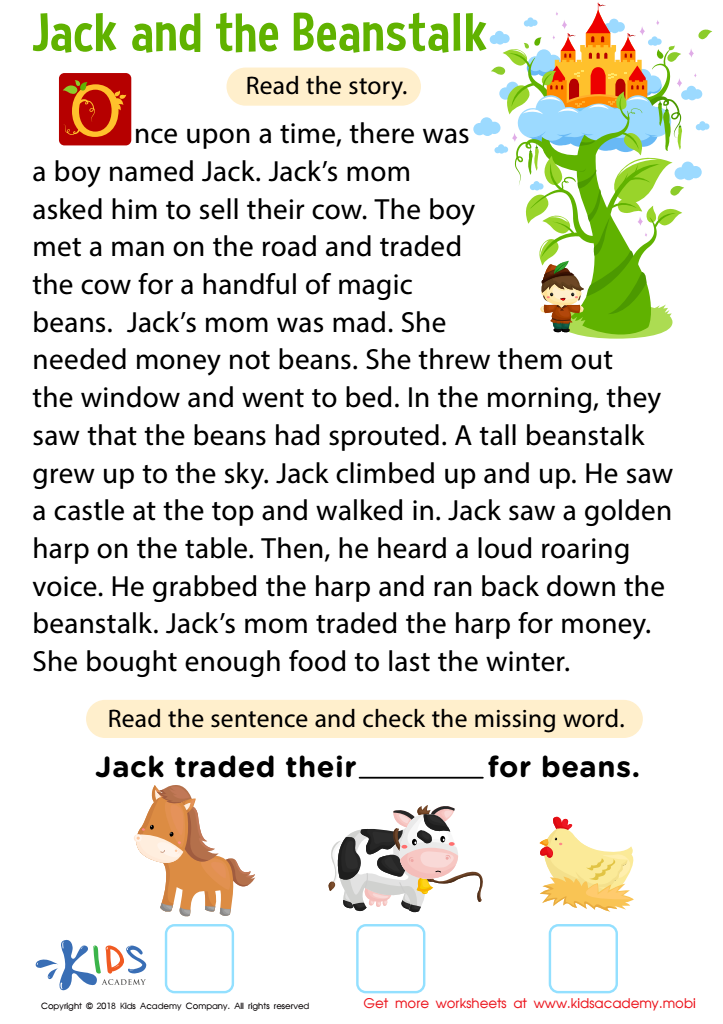
Jack and Beanstalk Worksheet
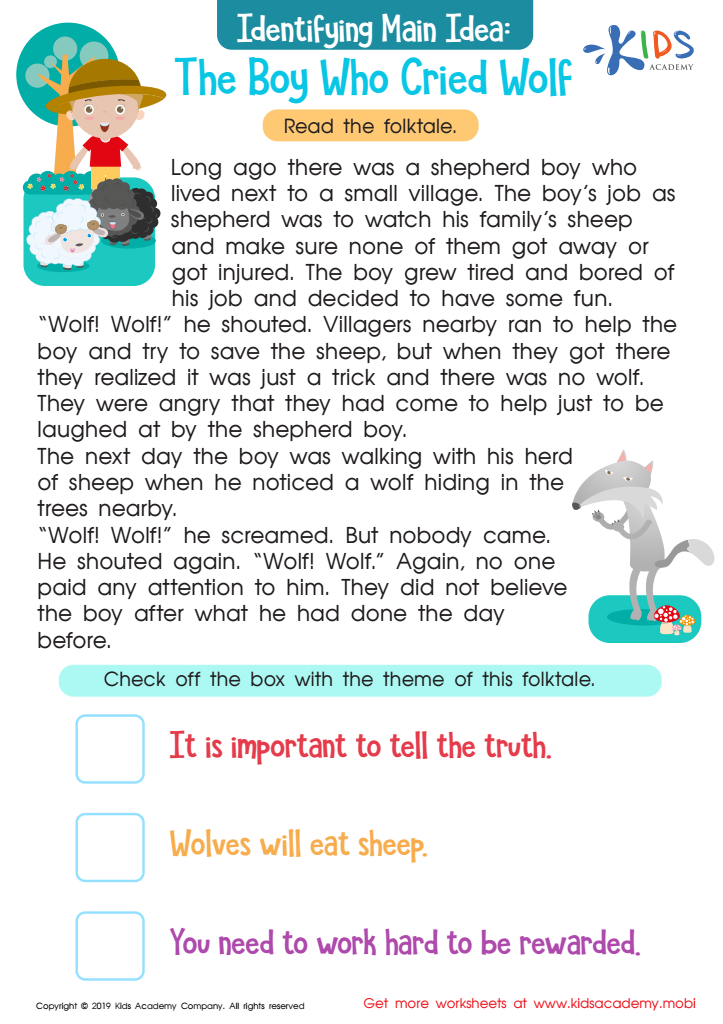
The Boy Who Cried Wolf Part 2 Worksheet








Story sequencing is a fundamental literacy skill that plays a crucial role in reading comprehension for children aged 8-9. Parents and teachers should prioritize this skill because it helps young learners understand the structure of narratives, promoting better retention and recall of the story they read. When children can identify the beginning, middle, and end of a story, they learn to analyze and interpret plot developments, character motivations, and thematic elements.
Furthermore, mastering story sequencing enhances critical thinking and cognitive development. Children learn to predict outcomes based on events, fostering an understanding of cause and effect. This skill goes beyond just reading; it lays the groundwork for effective writing and communication. When students can organize their thoughts and narratives logically, they become more proficient in storytelling, whether orally or in written form.
Additionally, cultivating a love for fiction through story sequencing can motivate children to engage more deeply with their reading material. They develop a stronger connection to the stories, enhancing their overall learning experience. Ultimately, by emphasizing story sequencing, parents and teachers equip children with essential tools for academic success and encourage a lifelong appreciation for literature.







