Historical Knowledge Normal Reading Non-Fiction Worksheets for Ages 8-9
3 filtered results
-
From - To
Discover our engaging Historical Knowledge Non-Fiction Worksheets designed specifically for children ages 8-9! These printable resources will enhance your students’ understanding of history while developing critical reading skills. Featuring captivating topics, including notable figures, ancient civilizations, and pivotal events, these worksheets encourage analytical thinking and foster a love for learning. Each activity is crafted to be both educational and fun, allowing young learners to connect with history in meaningful ways. Perfect for classroom use or at-home learning, our non-fiction worksheets support diverse learning styles and help children build a strong foundation in historical knowledge. Stimulate curiosity and ignite learning today!
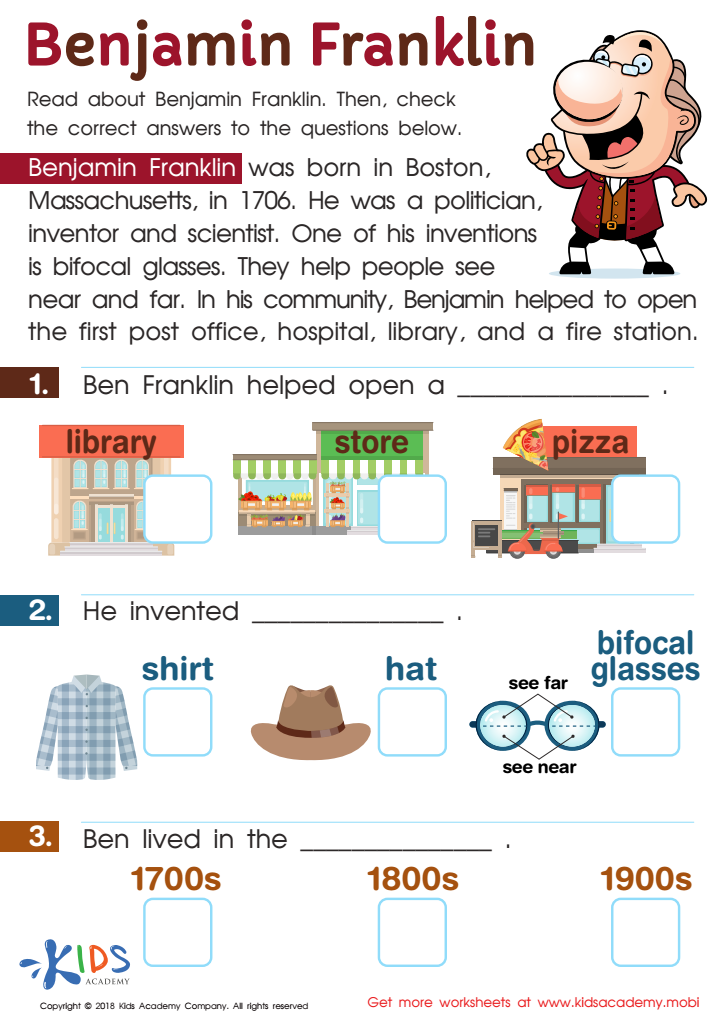
Benjamin Franklin Worksheet
 Assign to My Students
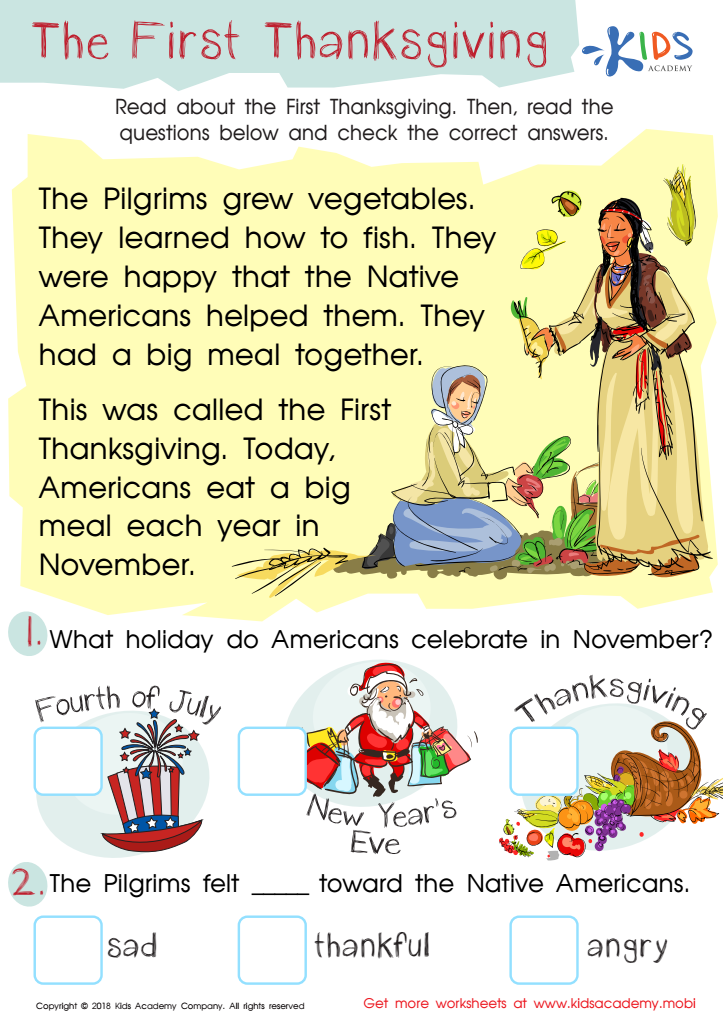
Assessment: First Thanksgiving Worksheet
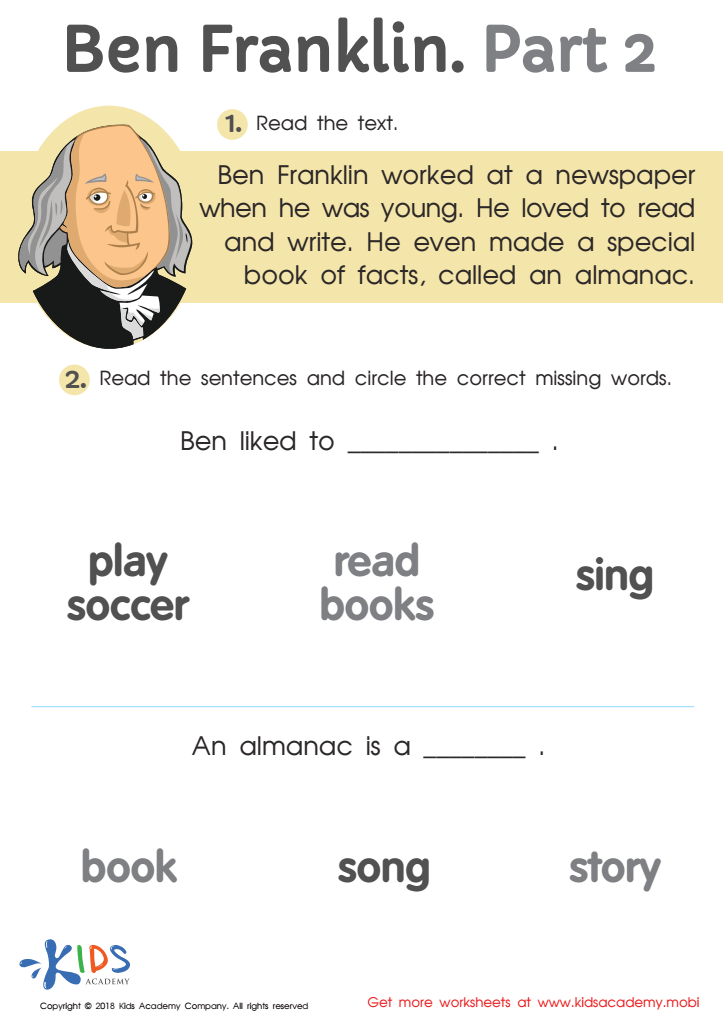
Ben Franklin Part 2 Worksheet








Parents and teachers should prioritize historical knowledge through non-fiction reading for children ages 8-9 for several compelling reasons. First, this age group is crucial for cognitive development, as children are increasingly able to engage with complex ideas and think critically about the world around them. Non-fiction historical texts provide accurate information about the past, cultivating curiosity and encouraging children to explore diverse cultures, events, and notable figures. This branch of knowledge enriches their understanding of how society has evolved and fosters empathy towards different perspectives.
Furthermore, exposure to historical non-fiction aids in the development of various skills, including reading comprehension, vocabulary expansion, and critical thinking. As children engage with factual texts, they learn to interpret information, analyze sources, and understand cause-and-effect relationships.
Additionally, instilling a sense of history can inspire children, giving them role models from the past while teaching them the importance of civic engagement and informed citizenship. By focusing on historical knowledge, parents and teachers help young learners build a well-rounded worldview, encouraging them to be informed and involved in their communities. In essence, prioritizing historical non-fiction ensures that children not only become better readers but also more educated and empathetic individuals.