Cultural awareness Normal History Worksheets for Ages 8-9
4 filtered results
Difficulty Level
Grade
Age
-
From - To
Subject
Activity
Standards
Enhance your child's understanding of the world's diverse cultures with our Cultural Awareness Normal History Worksheets for Ages 8-9! Designed to broaden young minds, each worksheet explores various cultural traditions, significant figures, and pivotal historical events from around the globe. Engaging activities and age-appropriate content help students develop respect and appreciation for different lifestyles and perspectives. Perfect for classroom or at-home learning, our worksheets foster curiosity and foster empathy, ensuring children grasp the importance of cultural diversity. Transform history lessons into a vibrant exploration of the world's rich tapestry through these innovative and educational materials.
Favorites
With answer key
Interactive
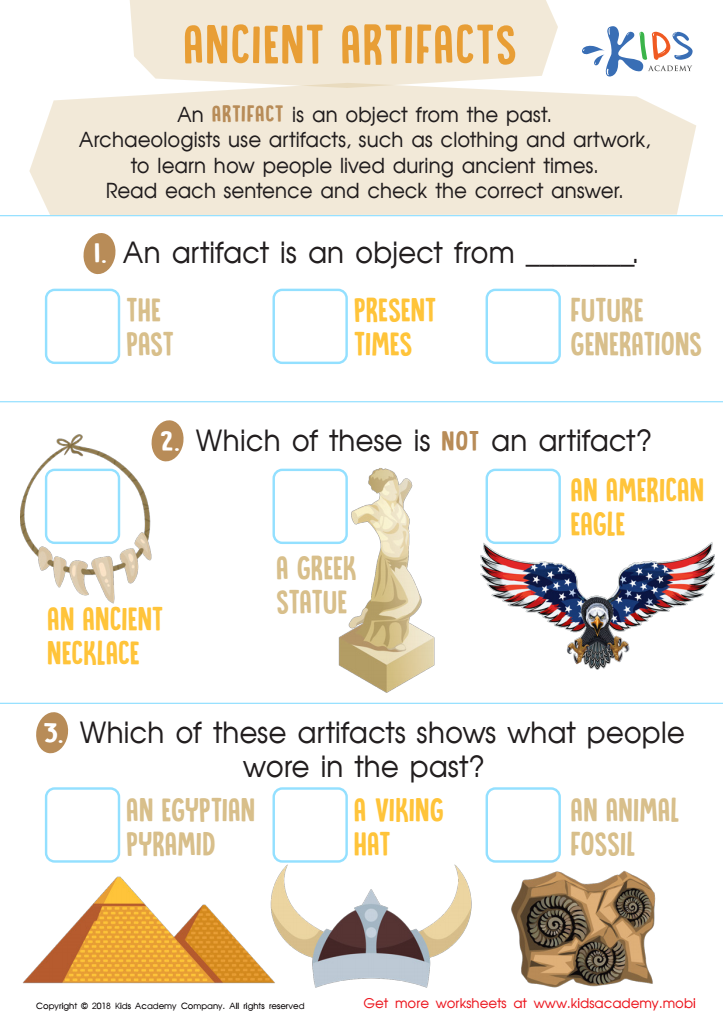
Ancient Artifacts Worksheet
This free worksheet helps kids understand ancient artifacts, from statues to necklaces to fossils. They'll read comprehension questions and select answers from multiple choice options, with pictures to help them grasp the concept. It's a great way for children to learn about artifacts and what they may look like.
 Assign to My Students
Ancient Artifacts Worksheet
Worksheet
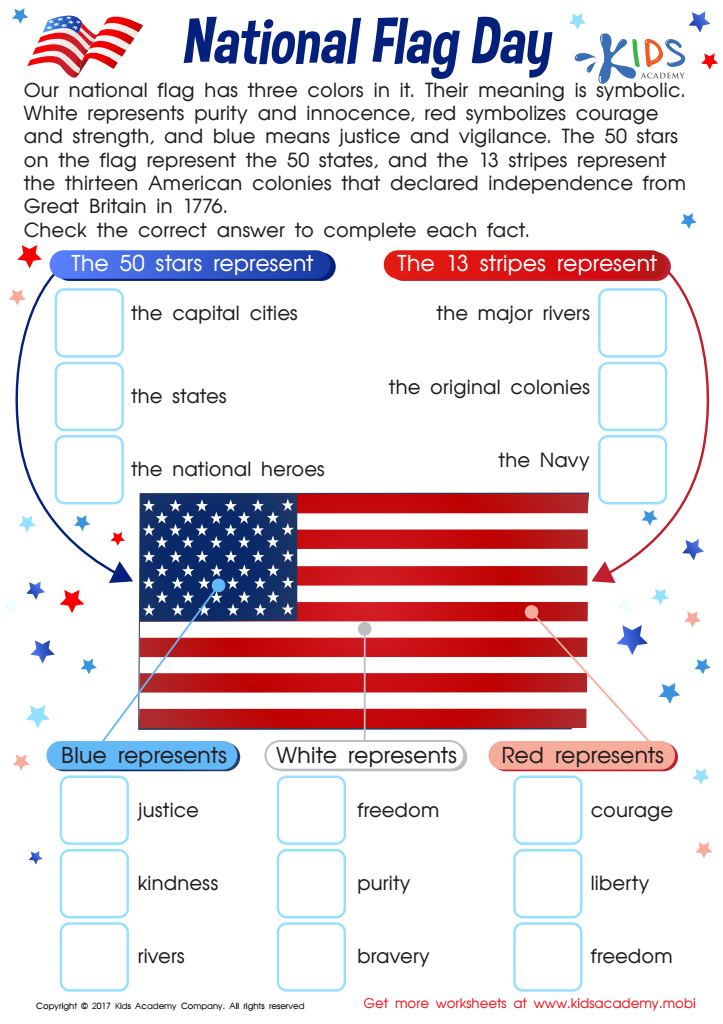
US National Flag Day Worksheet
Flag Day commemorates our nation's most iconic symbol: the American flag! This worksheet explains all the details, from the stars to the stripes, and helps kids understand the symbolism and importance of the flag. Even though it's not a federal holiday, it's still worth celebrating!
US National Flag Day Worksheet
Worksheet
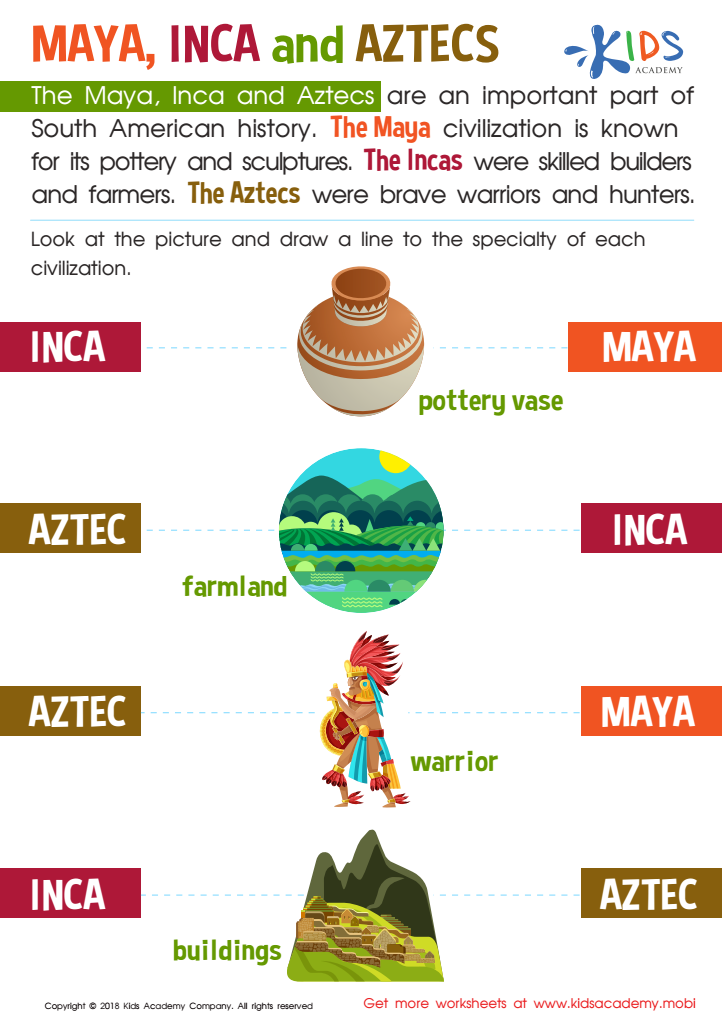
Maya, Inca and Aztecs Worksheet
This worksheet introduces your child to the thrilling histories of the Mayan, Incan and Aztec cultures, teaching them about their warriors, sculptors and farmers. With traceable lines and colorful imagery, they'll connect each culture with its correct associated picture - great for cementing concepts!
Maya, Inca and Aztecs Worksheet
Worksheet
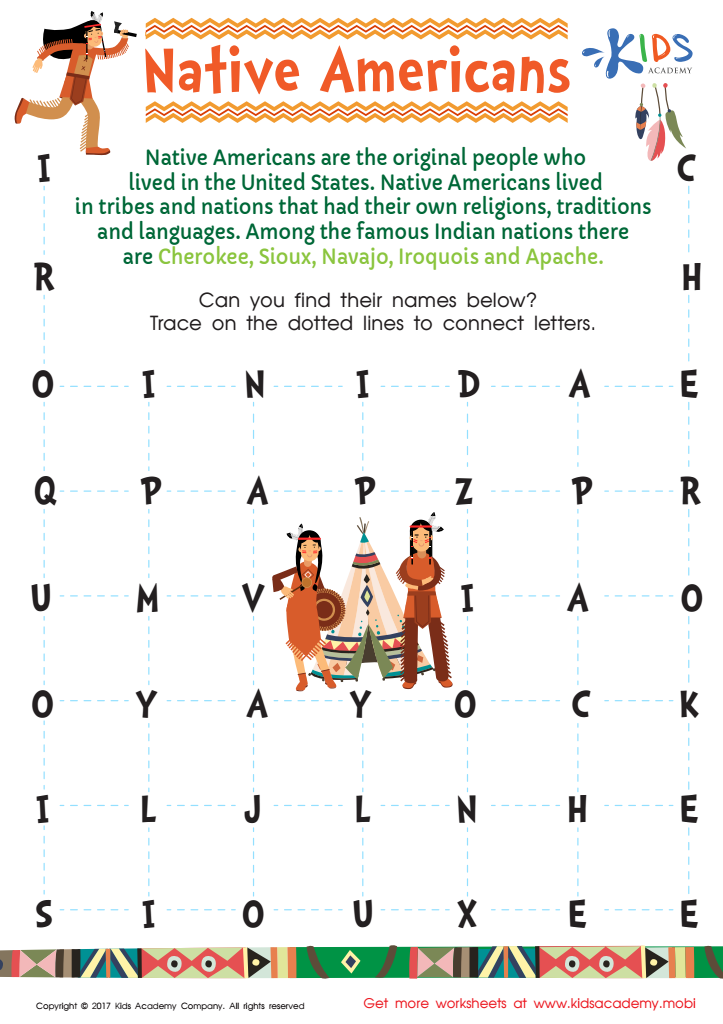
Native American Word Search Printable
This Native American word search PDF helps kids review important vocabulary and concepts about this important part of our county's history. It includes the names of famous and prominent Native American tribes. Solving the puzzle is fun and educative!
Native American Word Search Printable
Worksheet
Join Kids Academy for Free
Who is primarily going to use this learning content?








Cultural awareness and normal history are crucial concepts for children aged 8-9, both for parents and teachers to endorse. First and foremost, cultural awareness helps children appreciate and respect the diversity around them. By understanding different traditions, languages, and customs, youngsters can expand their horizons beyond their immediate social environment. This encourages empathy, reduces prejudice, and fosters an inclusive mindset, traits essential for thriving in a multicultural society.
Normal history, which includes learning about everyday life in different times and cultures, makes historical concepts relatable and engaging. Developing this understanding at an early age helps children grasp that figures in history books were real people whose lives were both different from and similar to their own. This brings history to life and cultivates an interest in the subject.
Moreover, cultural awareness and a robust understanding of history will bolster children's cognitive and emotional development. Exploring varied cultural practices and histories improves critical thinking and analytical skills as kids compare and contrast different ways of life. Parents and teachers play a pivotal role in this educational journey by championing inclusive curricula and fostering an environment where cultural diversity is celebrated.
In summary, cultural awareness and historical understanding equip kids to become open-minded, empathetic, and genuinely interested in the world around them—traits that are invaluable in an interconnected global community.