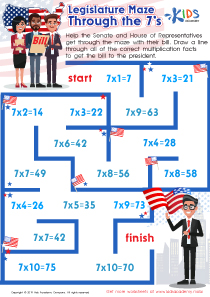
Multiplication practice Normal Social Studies Worksheets for Ages 8-9
3 filtered results
Difficulty Level
Grade
Age
-
From - To
Subject
Activity
Standards
Discover engaging multiplication practice worksheets designed specifically for children ages 8-9, perfect for reinforcing math skills within a social studies context. Our thoughtfully crafted materials help students enhance their multiplication abilities while connecting mathematical concepts to real-world scenarios. Each worksheet encourages critical thinking and integrates relevant social studies themes, providing a well-rounded learning experience. Whether used in the classroom or at home, these printable resources ensure learners remain immersed in both mathematics and social studies. Foster a love for learning and equip your child with the necessary skills to succeed in school. Explore our collection today for fun and educational multiplication practice!
Favorites
With answer key
Interactive
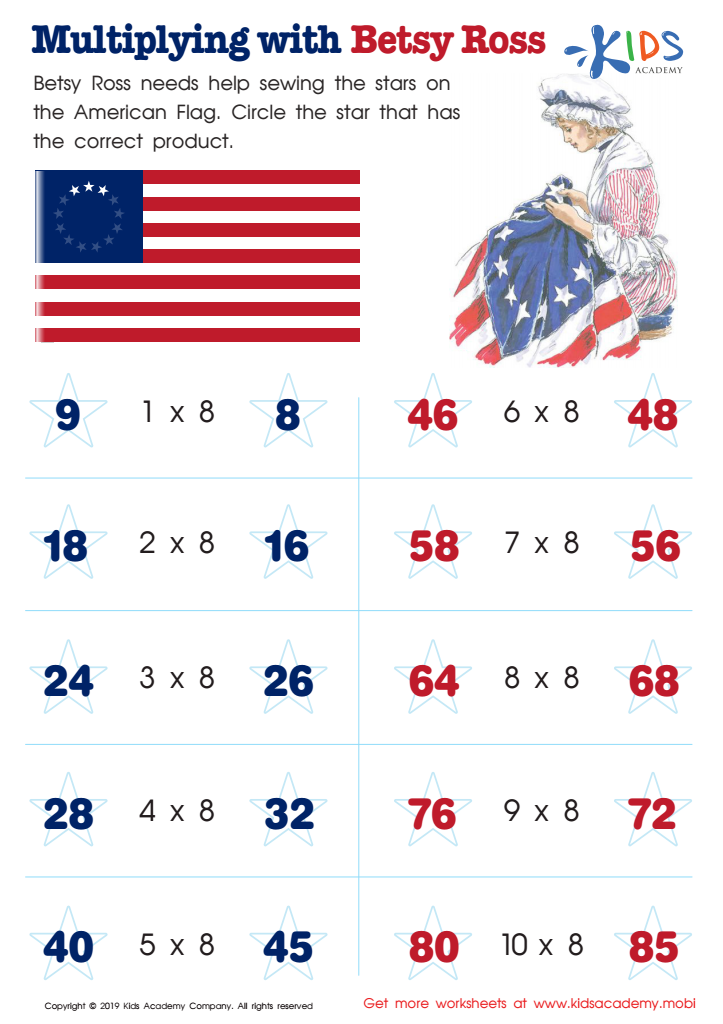
Multiplying with Betsy Ross Worksheet
Before getting into the worksheet, have your students take a quick history lesson on Betsy Ross. Ask them if they know her role in American history. On the printout, ask your kids to identify what Betsy Ross is doing - sewing the stars on the American Flag. Have them circle the star that has the correct pattern.
 Assign to My Students
Multiplying with Betsy Ross Worksheet
Worksheet
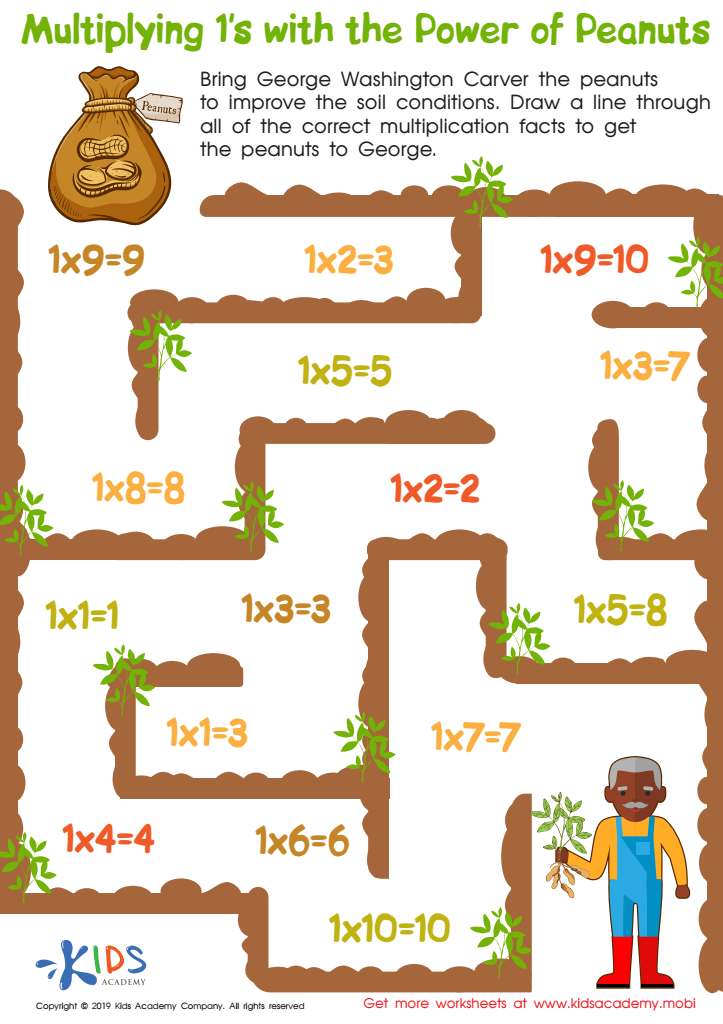
Multiplying 1’s With the Power of Peanuts Worksheet
Help your kids learn about George Washington Carver with this fun worksheet! Assist them in bringing peanuts to Carver by drawing a line through the correct multiplication facts. Introduce them to Carver's genius creations and show them how he used peanuts to improve the soil condition.
Multiplying 1’s With the Power of Peanuts Worksheet
Worksheet
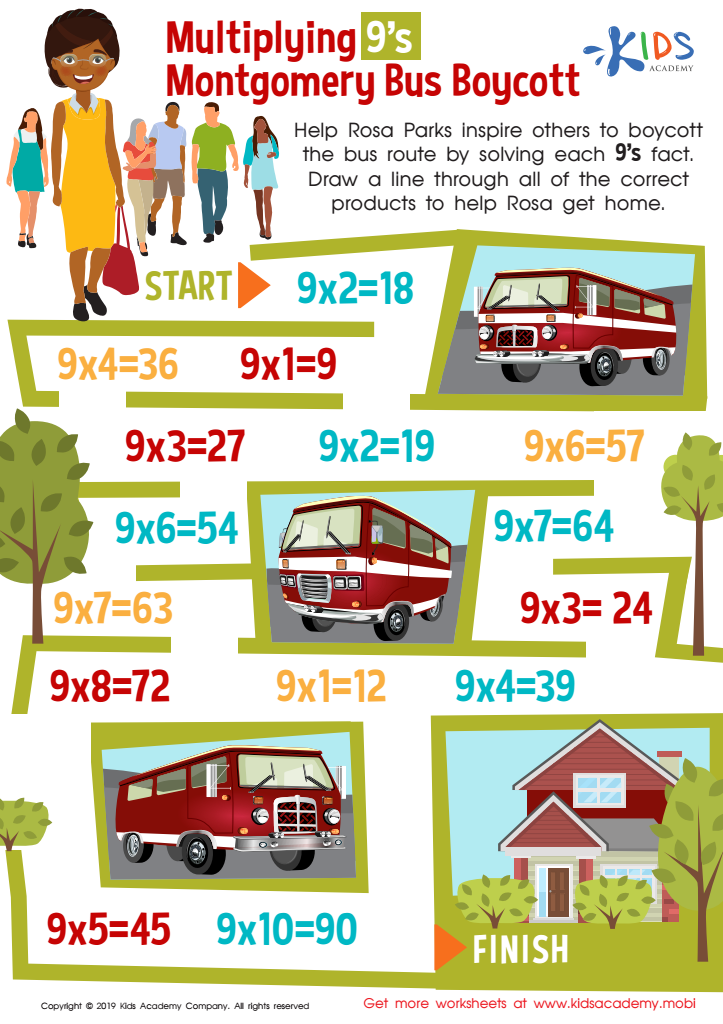
Multiplying 9’s Montgomery Bus Boycott Worksheet
As your students learn math, the numbers get bigger. This worksheet is great for learning the nine times table. Help Rosa Park get home - ask them to solve each multiplication fact, then draw a line through the correct products. Encourage your students to stand up for what's right!
Multiplying 9’s Montgomery Bus Boycott Worksheet
Worksheet
Join Kids Academy for Free
Who is primarily going to use this learning content?








Parents and teachers should care about multiplication practice in social studies for ages 8-9 because it fosters critical thinking, enhances problem-solving skills, and connects mathematical concepts to real-world applications. At this age, students are developing cognitive skills that enable them to understand more abstract ideas. Integrating multiplication practice with social studies topics allows children to explore demographics, economics, and resource distribution in compelling ways.
For instance, while learning about a country's population, students can calculate population density by using multiplication, turning abstract numbers into relatable concepts. This makes social studies more engaging and relevant, helping students to appreciate how the subjects intersect.
Moreover, consistent practice reinforces their multiplication skills, which are foundational for more complex mathematics encountered in later grades. By embedding multiplication practice within the context of social studies, educators can show students the importance of mathematics in understanding societal structures, historical events, and global trends. Ultimately, this interdisciplinary approach supports a well-rounded education, prepares students for future learning, and fosters curiosity about the world around them. Parents and teachers play a crucial role in nurturing this connection, emphasizing the importance of math literacy alongside social awareness.