Contextual understanding Normal Writing Worksheets for Ages 8-9
3 filtered results
Difficulty Level
Grade
Age
-
From - To
Subject
Activity
Standards
Our "Contextual Understanding Normal Writing Worksheets for Ages 8-9" are thoughtfully designed to enhance your child's reading comprehension and writing abilities. Through engaging exercises, kids learn to identify context clues, draw inferences, and understand narratives, all of which are essential for developing effective communication skills. These printable worksheets provide varied and age-appropriate activities, including short passages, creative writing prompts, and context analysis tasks. Perfect for both classroom and home use, our resources help foster critical thinking and build a solid foundation for future learning success. Ensure your child's academic growth with expertly crafted writing worksheets from Kids Academy.
Favorites
With answer key
Interactive
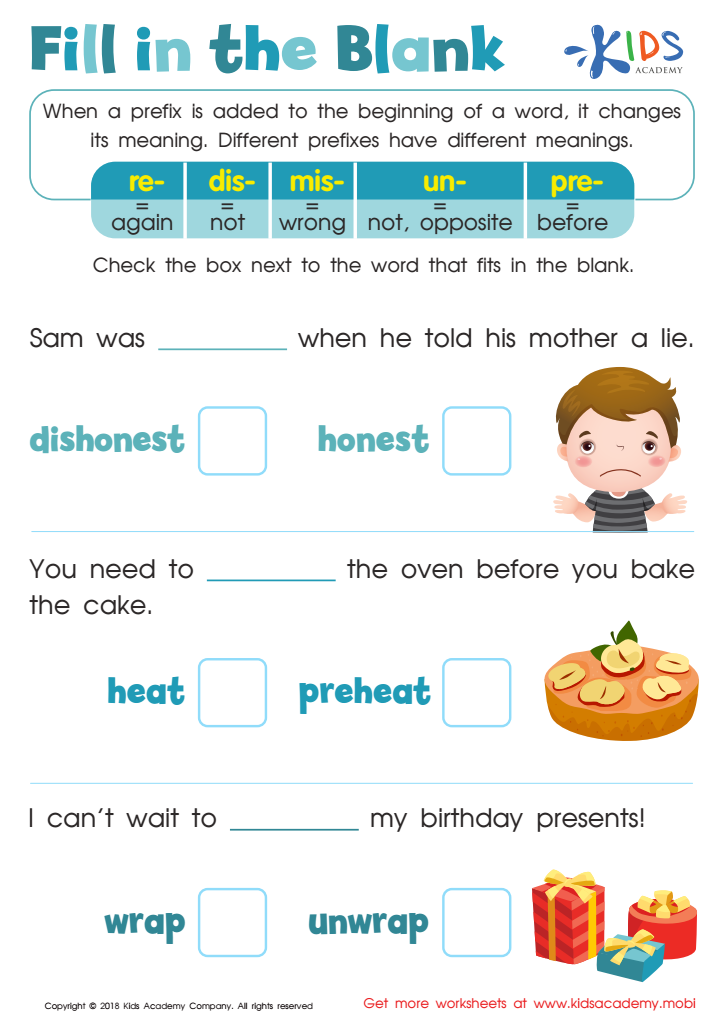
Reading: Fill in the Blank Worksheet
Students can practice understanding the meaning of common prefixes with this worksheet. They read sentences and pick the correct word with the appropriate prefix to complete it. Downloadable and a great addition to reading and vocabulary resources, this helps improve comprehension with mastery of the skill!
 Assign to My Students
Reading: Fill in the Blank Worksheet
Worksheet
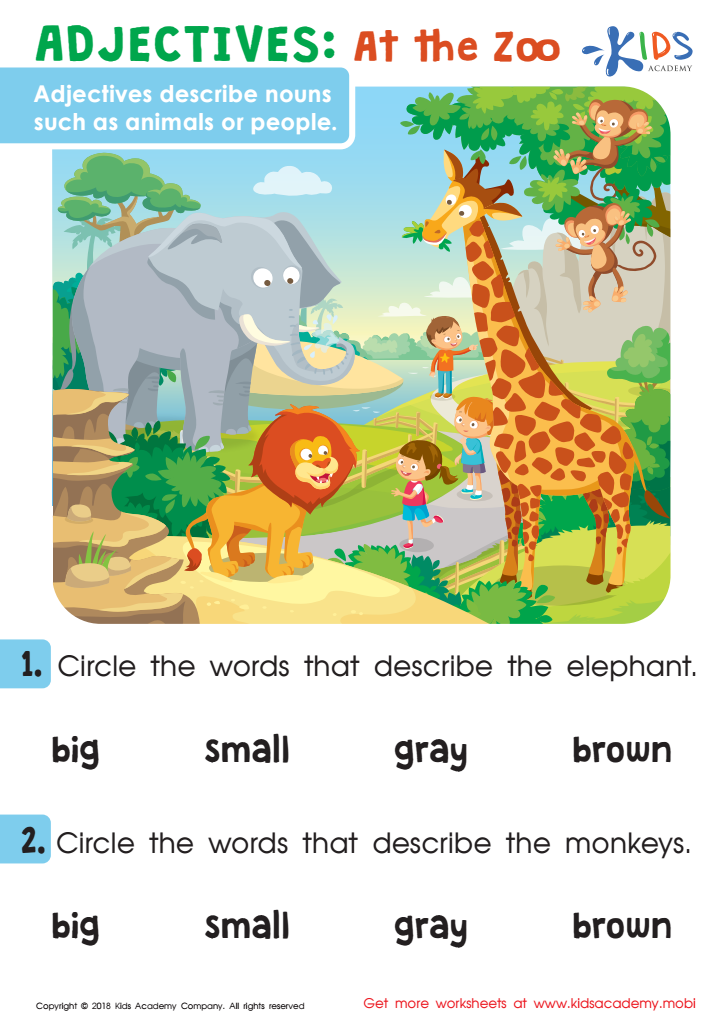
Adjectives: At The Zoo Worksheet
Take your kids to the zoo and ask them about their favorite activities and animals. This worksheet is a great way for kids to learn about adjectives. Explain that adjectives describe nouns like people or animals (e.g. big, tall, dark). Look at the printout with your kids and help them circle words that describe the animals in the picture.
Adjectives: At The Zoo Worksheet
Worksheet
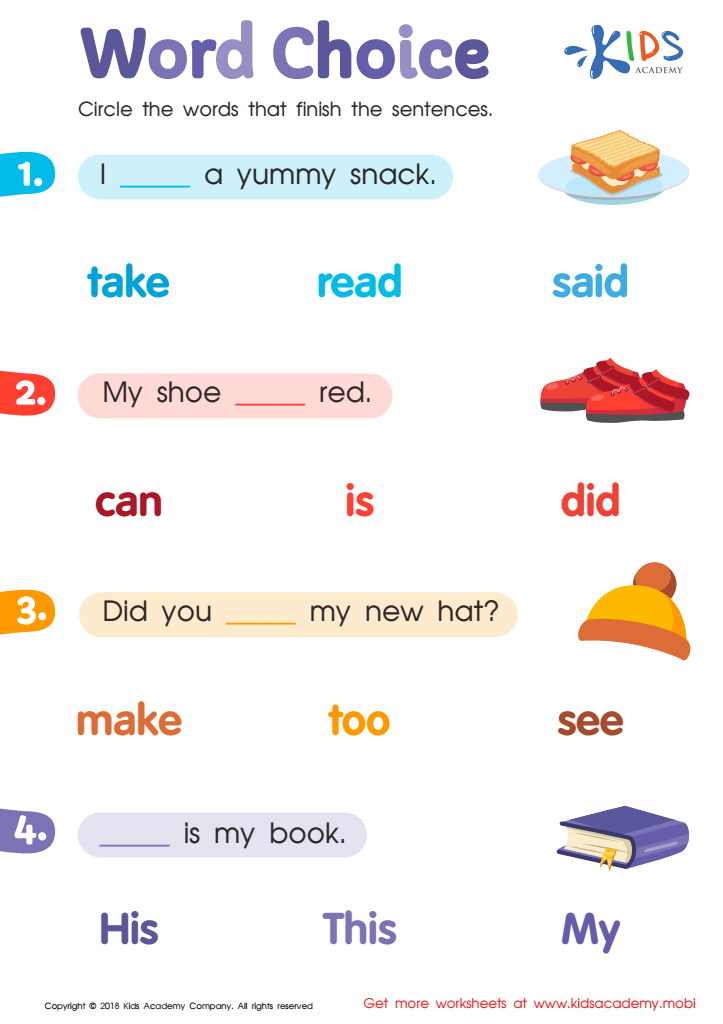
Word Choice Worksheet
This worksheet can help your children become better readers. By now, you should have an idea of their reading level. Read the incomplete sentences aloud and point to the missing piece. Have your students pick the correct word they think best fits the sentence out of the options given.
Word Choice Worksheet
Worksheet
Join Kids Academy for Free
Who is primarily going to use this learning content?








Contextual understanding is crucial for children ages 8-9 because it enhances their comprehension and communication skills in multiple ways. When children grasp the context of what they read or encounter, they can interpret the meaning behind words and phrases more accurately. This skill helps them understand not just individual words but the subject matter as a whole, aiding in better academic performance and nurturing a love for reading.
In addition to academic benefits, contextual understanding aids in social interactions. Children often use context to navigate conversations, understanding jokes, emotions, and social cues, which helps them build stronger relationships with their peers and adults. This capability is essential for effective communication, empathy, and emotional intelligence.
For teachers and parents, emphasizing contextual understanding means supporting a child’s well-rounded development. Using real-life examples, stories, and relatable scenarios in lessons, parents and teachers can make learning more meaningful. This holistic approach to comprehension helps kids apply what they learn to various situations, fostering critical thinking and problem-solving skills.
Engaging children in discussions about their reading materials, encouraging them to ask questions, and relating lessons to everyday experiences can enrich their contextual understanding, making learning both effective and enjoyable. Therefore, caring about contextual understanding is investing in a child's present learning and future success.