Letter recognition Normal Alphabet Coloring Pages Worksheets for 8-Year-Olds
6 filtered results
-
From - To
Discover our engaging "Letter Recognition Normal Alphabet Coloring Pages Worksheets" crafted specifically for 8-year-olds. These vibrant, educational worksheets are designed to make learning the alphabet both fun and effective. Each page features captivating illustrations, allowing children to color while reinforcing their letter recognition skills. These activities enhance fine motor skills, boost concentration, and solidify understanding of the alphabet. Perfect for home study or classroom use, our worksheets are an ideal tool to support your child’s literacy journey. Download now to provide a stimulating, enjoyable learning experience that fosters a strong foundation in reading and writing!
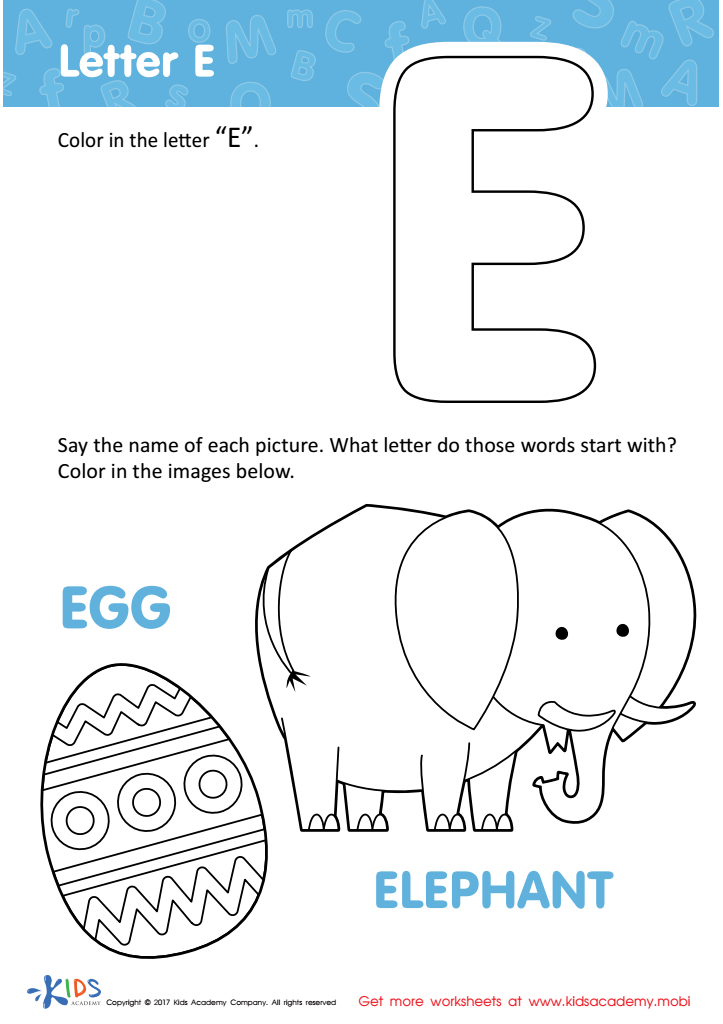
Letter E Coloring Sheet
 Assign to My Students
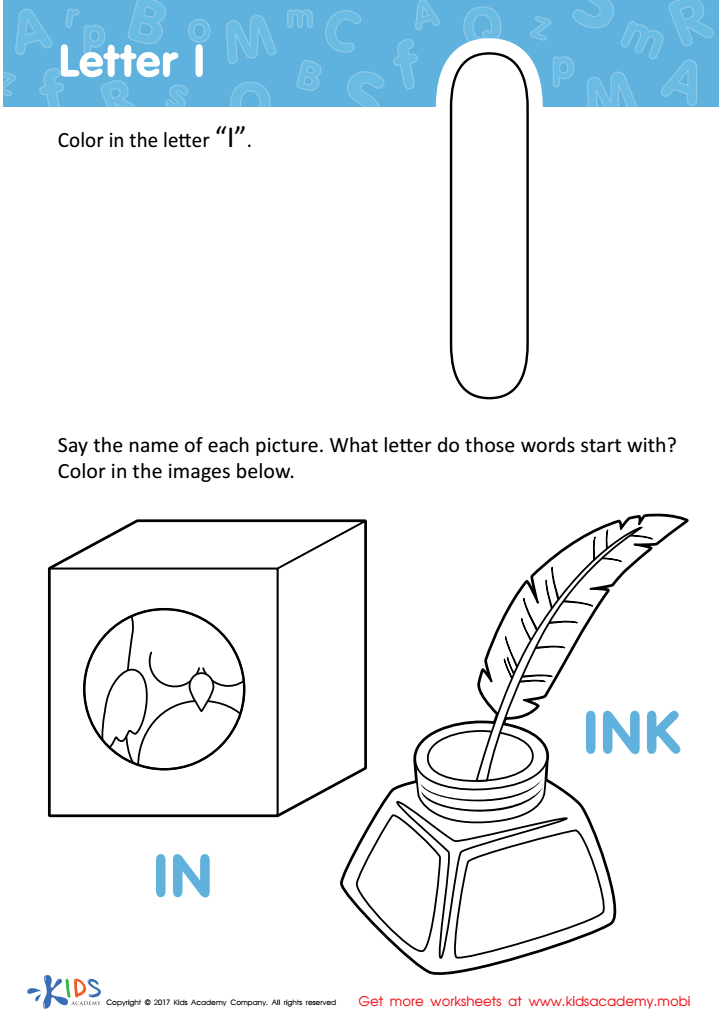
Letter I Coloring Sheet
Assign to My Students
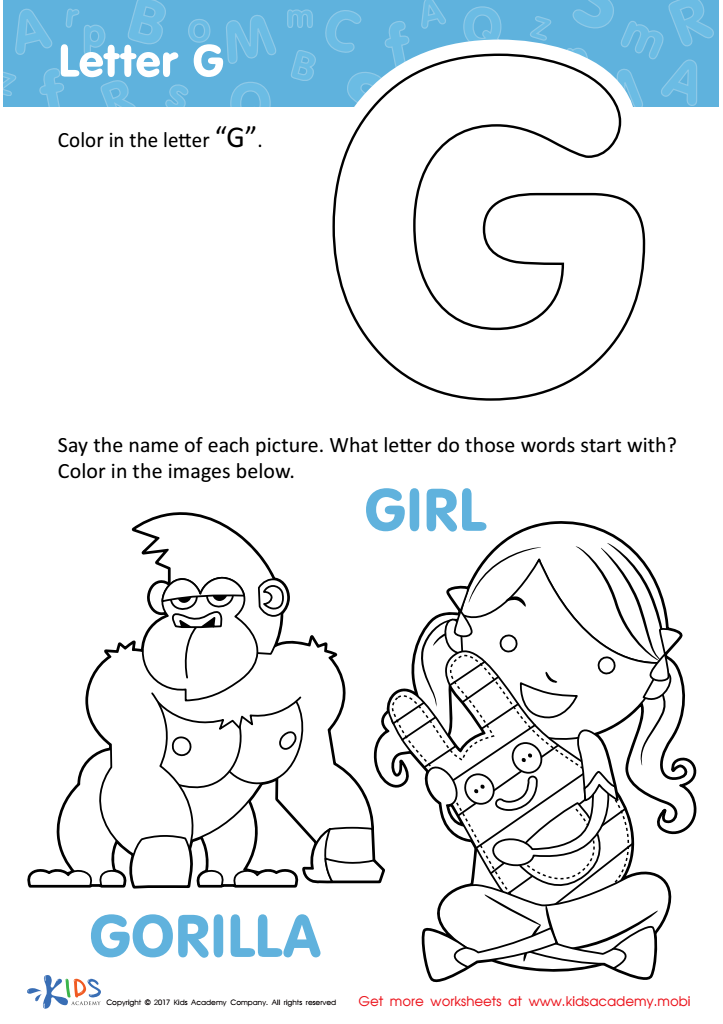
Letter G Coloring Sheet
Assign to My Students

Letter J Coloring Sheet
Assign to My Students
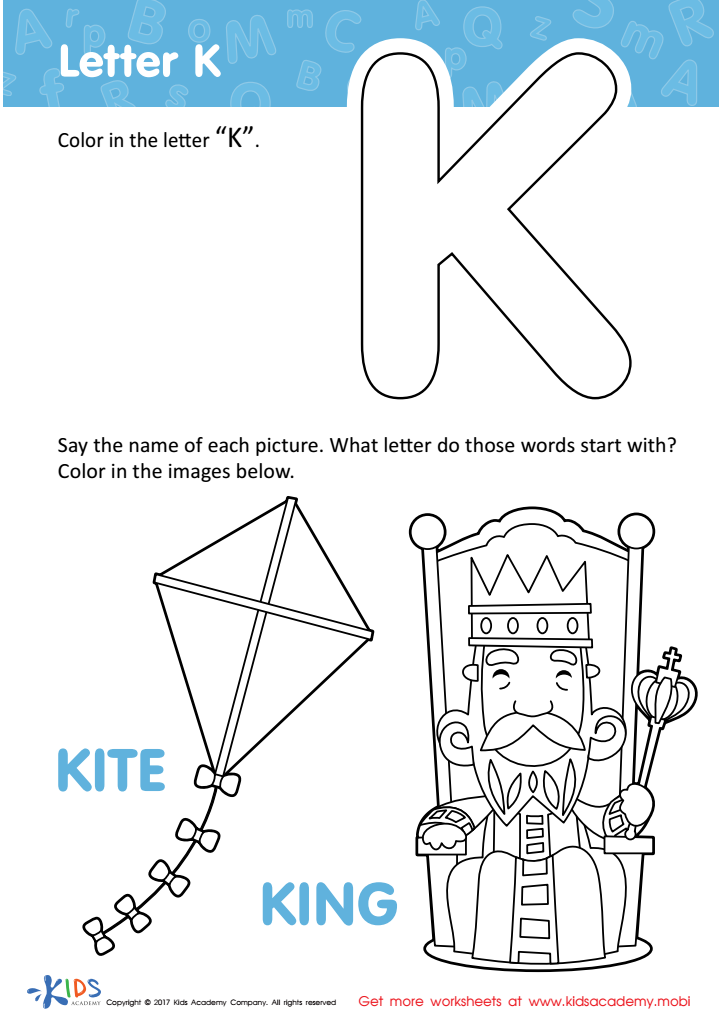
Letter K Coloring Sheet
Assign to My Students
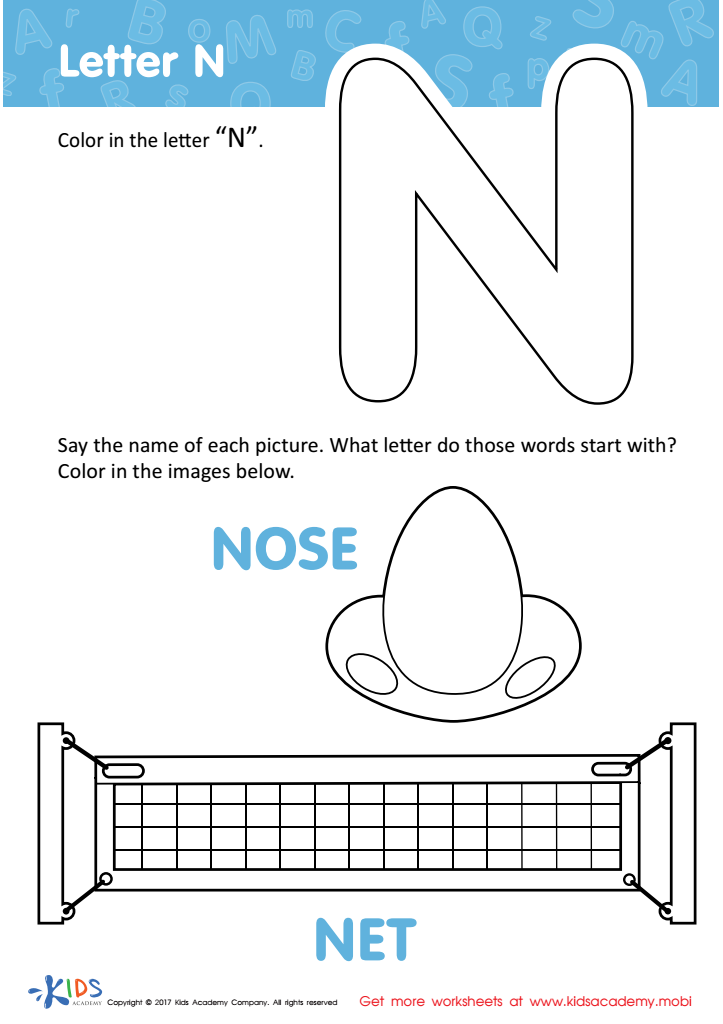
Letter N Coloring Sheet
Assign to My Students





Letter recognition is a fundamental skill critical for early literacy development. Normal alphabet coloring pages offer an engaging and effective method to enhance this ability, especially for 8-year-olds who are refining their reading skills. Parents and teachers should care about these resources for several key reasons.
Firstly, alphabet coloring pages provide a multisensory learning experience. As children color, they visually engage with letter shapes, reinforcing recognition through a tactile and creative process. This dual engagement promotes memory retention and makes learning enjoyable, which is crucial for sustaining a child's interest and motivation.
Secondly, coloring within the lines of letters hones fine motor skills. Steady hand movements required to color neatly prepare children's hands for writing, benefiting overall letter formation and handwriting.
Additionally, alphabet coloring pages can be easily integrated into a broader curriculum. Teachers can incorporate these pages in various themes—animals, foods, or holidays—making learning diverse and contextually rich. For parents, these pages provide a valuable at-home activity that doubles as educational and relaxing.
Ultimately, investing time in alphabet coloring pages fosters a strong foundation in literacy while promoting creativity and fine motor coordination, making it an essential tool for both parents and educators aiming for well-rounded educational development.







