
Hand-eye Coordination Normal Letter Recognition Worksheets for 8-Year-Olds
4 filtered results
Difficulty Level
Grade
Age
-
From - To
Subject
Activity
Standards
Our "Hand-eye Coordination Normal Letter Recognition Worksheets for 8-Year-Olds" are perfect for developing crucial learning skills. Specifically designed for this age group, these colorful and engaging worksheets help children easily recognize letters by combining visual tracking with hand movements. These activities enhance cognitive abilities, sharpen focus, and boost confidence in reading and writing. Regular practice with these worksheets aids in fostering stronger hand-eye coordination, essential for academic success. With varying challenges and fun exercises, children stay motivated and invested in their learning journey. Strengthen your child's literacy foundation with our expertly crafted letter recognition worksheets today!
Favorites
With answer key
Interactive
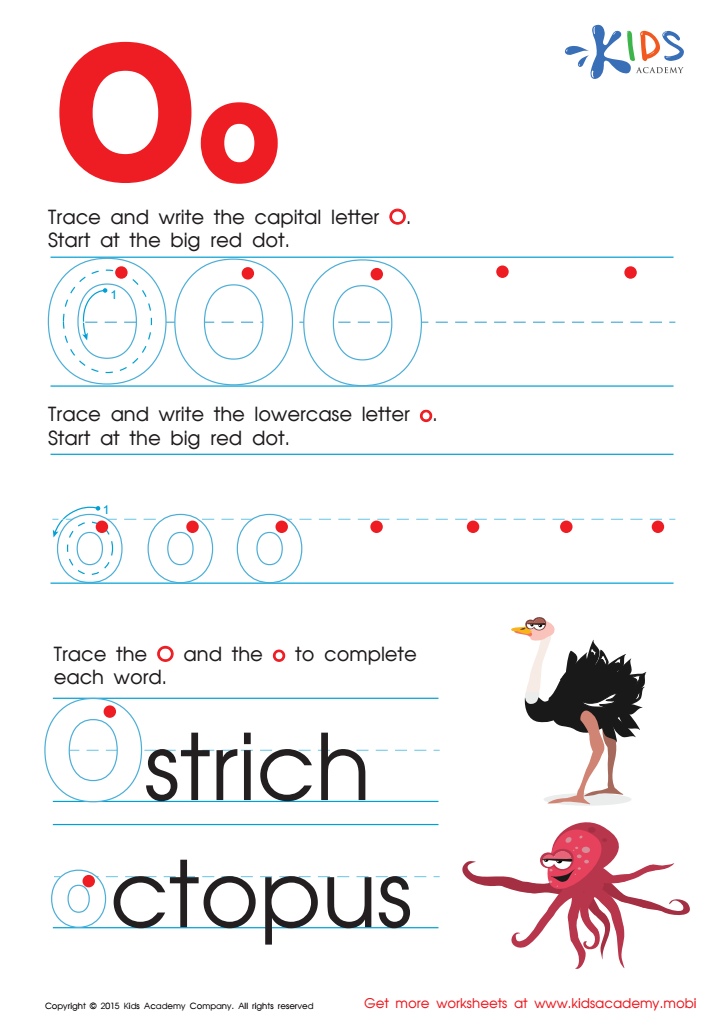
Letter O Tracing Page
Practice writing the letter "O" with our new worksheet. Trace and write the letter several times, starting at the red dot. First do the uppercase letter, then the lowercase. Use the pictures to complete the words "Ostrich" and "octopus". Kids Academy offers more fun alphabet worksheets.
 Assign to My Students
Letter O Tracing Page
Worksheet
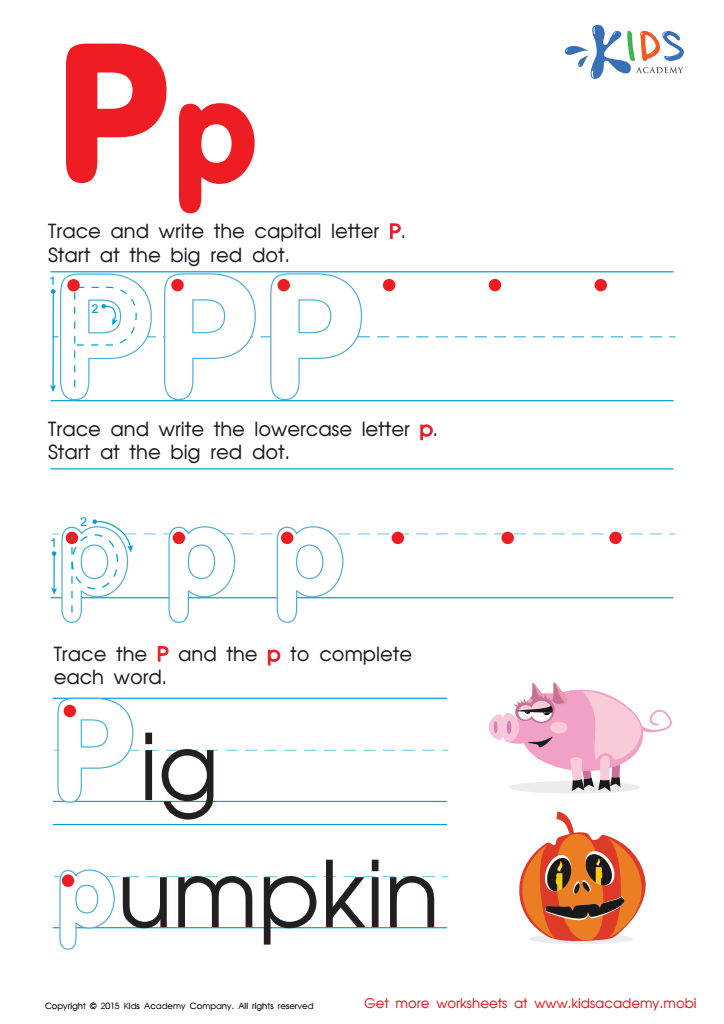
Letter P Tracing Page
Trace the lines from the red dot to learn to write "P"! Then practice this letter with the fun activities: complete the word "Pig" and "Pumpkin". Check out Kids Academy to get more free ABC worksheets.
Letter P Tracing Page
Worksheet

Letter H Tracing Page
Trace the letter "H", then practice writing its lowercase form. Finally, choose your favorite form of transport and ride away! Get our worksheets to make learning fun and easy.
Letter H Tracing Page
Worksheet
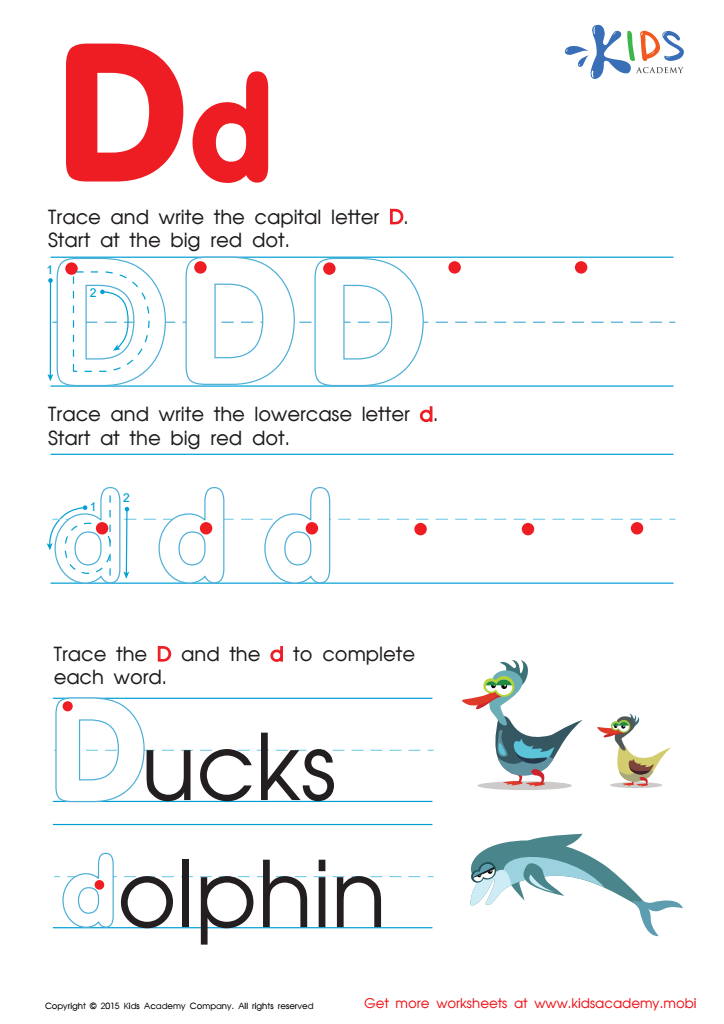
Letter D Tracing Page
Trace and write capital and lowercase letter "D" with our free printable alphabet worksheet! Be careful not to mix up "b" and "d" - just look at the ducks and write their first letter. The dolphin wants to join the fun too - do you like dolphins? Get more fun worksheets and activities at Kids Academy!
Letter D Tracing Page
Worksheet
Join Kids Academy for Free
Who is primarily going to use this learning content?








Hand-eye coordination and normal letter recognition are foundational skills that significantly impact an 8-year-old's academic and daily life. Hand-eye coordination involves the harmonious function of visual and motor skills, essential for tasks like writing, drawing, and playing sports. At this age, children refine these skills, enabling them to better control their movements and successfully complete fine motor tasks. If a child lacks adequate hand-eye coordination, they may struggle with handwriting, impacting their ability to keep pace academically and express ideas effectively. This can lead to frustration and a decreased interest in school activities.
Normal letter recognition is equally crucial. It serves as the building block for reading and writing. At the age of 8, kids are typically transitioning from learning to read to reading to learn. Competent letter recognition ensures that they can decode words quickly and focus on comprehension rather than laboriously identifying letters. This proficiency directly affects their ability to understand and engage with more complex text, which influences overall learning in subjects ranging from math to science.
Educators and parents should pay attention to these skills to facilitate a smoother educational journey. Intervening early if deficiencies are noted can prevent long-term academic challenges and bolster a child’s confidence, setting a strong foundation for future learning experiences.








