Mathematical reasoning Normal Rounding Worksheets for 8-Year-Olds
3 filtered results
-
From - To
Enhance your 8-year-old's mathematical reasoning with our engaging Normal Rounding Worksheets! Specifically designed for young learners, these worksheets introduce the concept of rounding numbers effectively. With clear instructions and fun exercises, children will practice rounding to the nearest ten and hundred, developing essential skills in number sense and approximation. Each worksheet incorporates colorful visuals and relatable examples, making learning interactive and enjoyable. Perfect for home or classroom use, our resources foster confidence in math and promote critical thinking. Equip your child with the tools they need to excel in mathematics while having fun! Start rounding today and watch their skills soar!
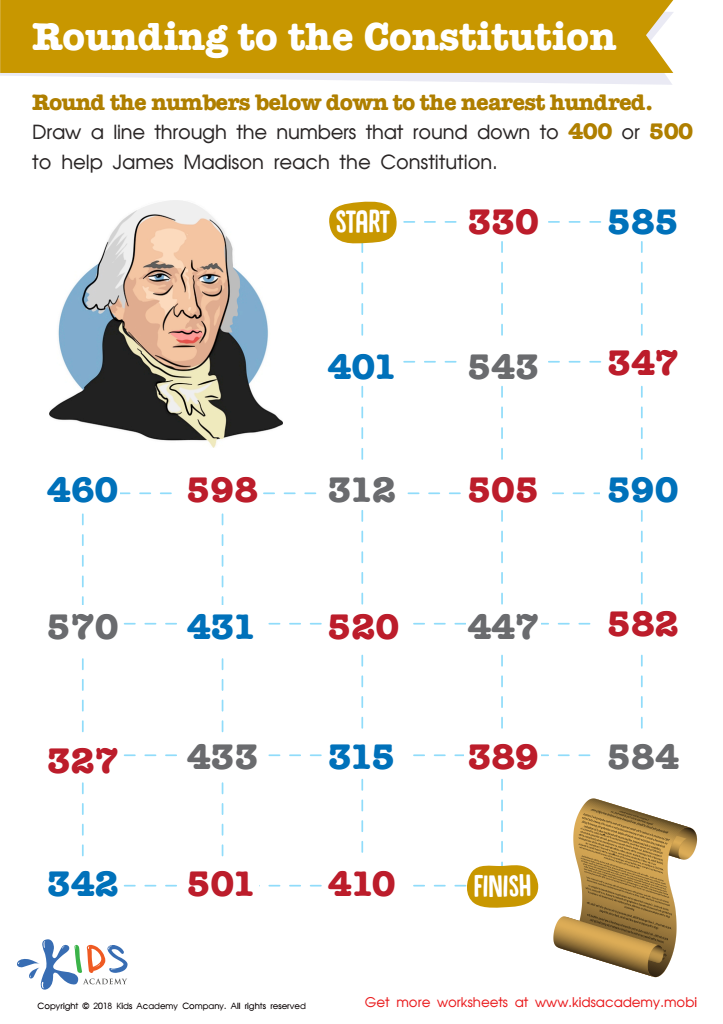
Rounding to the Constitution Worksheet
 Assign to My Students
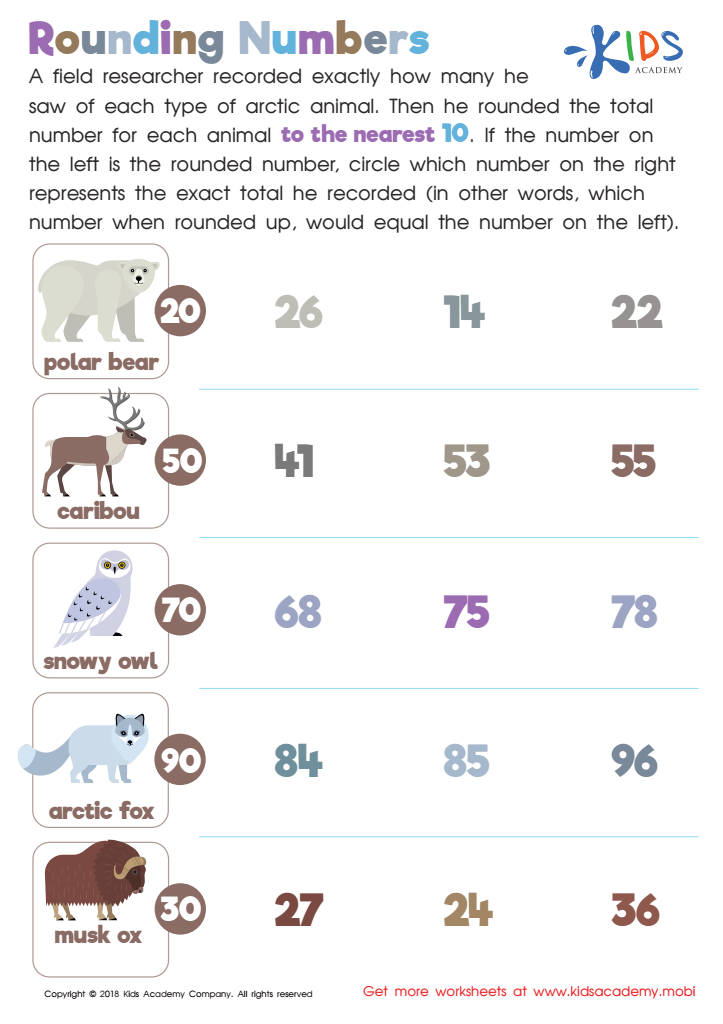
Rounding Numbers Worksheet
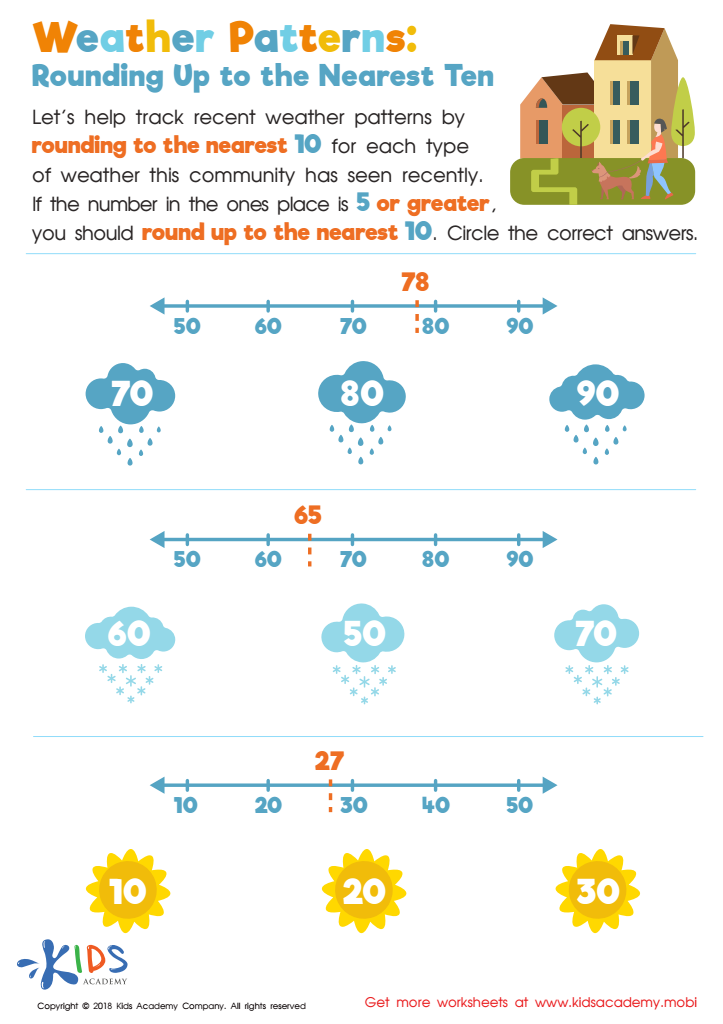
Weather Patterns Worksheet






Mathematical reasoning and normal rounding are essential skills for 8-year-olds, forming the foundation for more advanced mathematics and critical thinking. By understanding rounding concepts, children can simplify numbers, making calculations easier and more manageable. This skill is especially relevant as students progress through their education and encounter larger, more complex numbers.
For parents and teachers, nurturing mathematical reasoning enables children to approach problems analytically, fostering a growth mindset that enhances overall learning. Mastering rounding helps children estimate outcomes in everyday life, aiding in decision-making processes like budgeting, cooking, and shopping. When children grasp these concepts, they gain confidence in their mathematical abilities, which can reduce anxiety associated with challenging subjects.
Encouraging positive attitudes towards math at this stage influences long-term academic performance. Furthermore, engaging children in rounding activities can create opportunities for meaningful conversation and collaboration between parents and teachers, reinforcing a supportive learning environment. Overall, focusing on mathematical reasoning and normal rounding equips 8-year-olds with essential life skills, preparing them not just for their academic journey, but also for applications in real-world scenarios. This investment in their education captures their enthusiasm and curiosity for math, fostering lifelong learners.