Vocabulary development Normal Reading Comprehension Worksheets for 8-Year-Olds
6 filtered results
-
From - To
Enhance your child's vocabulary skills with our engaging reading comprehension worksheets, specifically designed for 8-year-olds. These normal-level worksheets combine fun, age-appropriate content with interactive activities that boost language comprehension and word recognition. Each worksheet focuses on building vocabulary through contextual learning, ensuring that your child not only understands new words but can also use them effectively. Our comprehensive resources feature illustrations and exercises that encourage critical thinking, foster a love for reading, and empower young learners to express themselves confidently. Start enriching your child's literacy journey today with our dynamic vocabulary development worksheets—learning has never been this exciting!
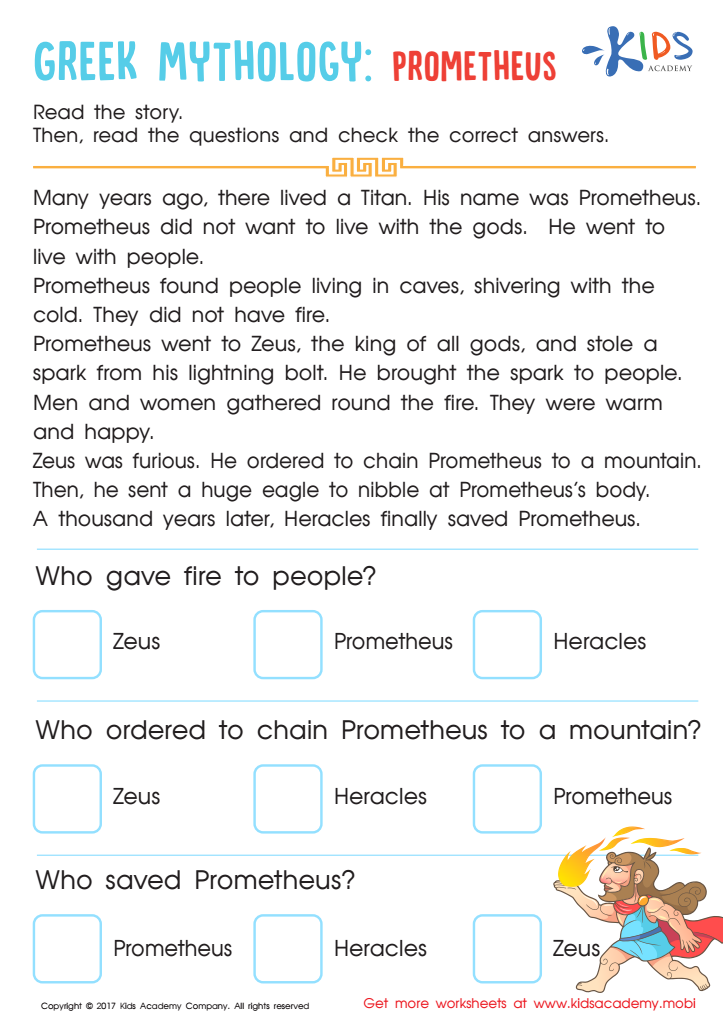
Prometheus Story Worksheet
 Assign to My Students
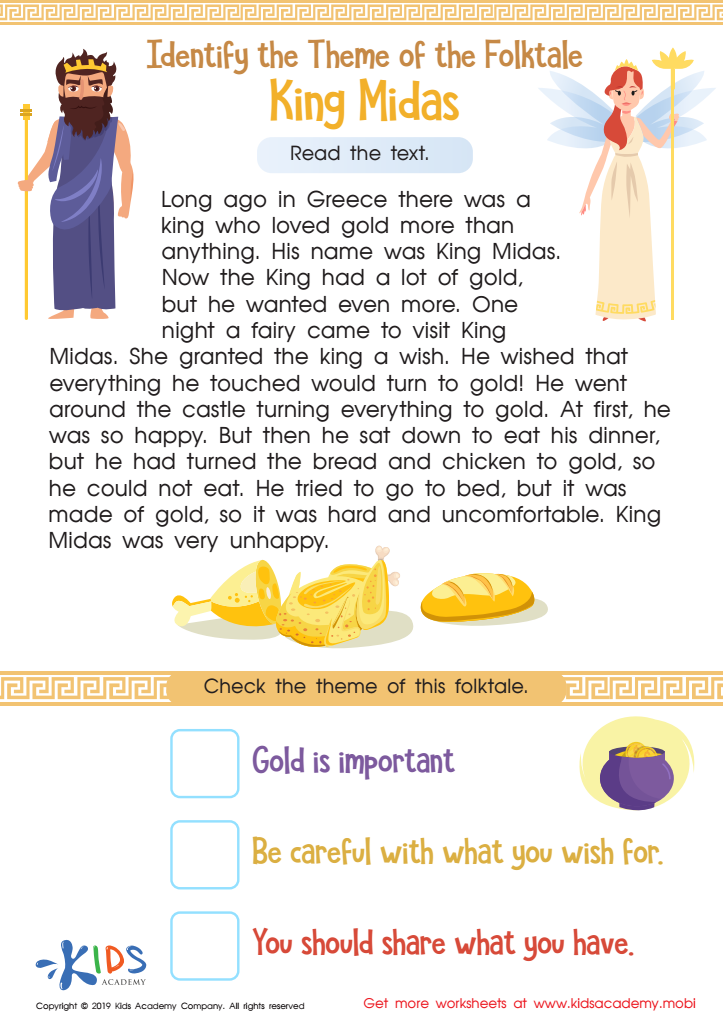
King Midas Worksheet
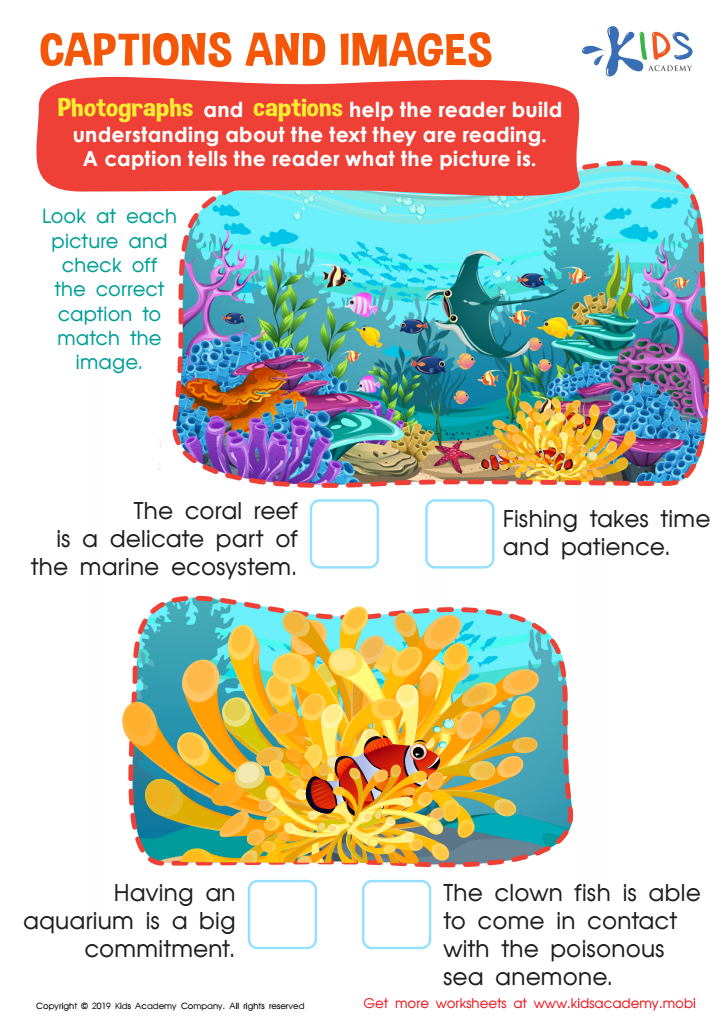
Captions and Images Worksheet
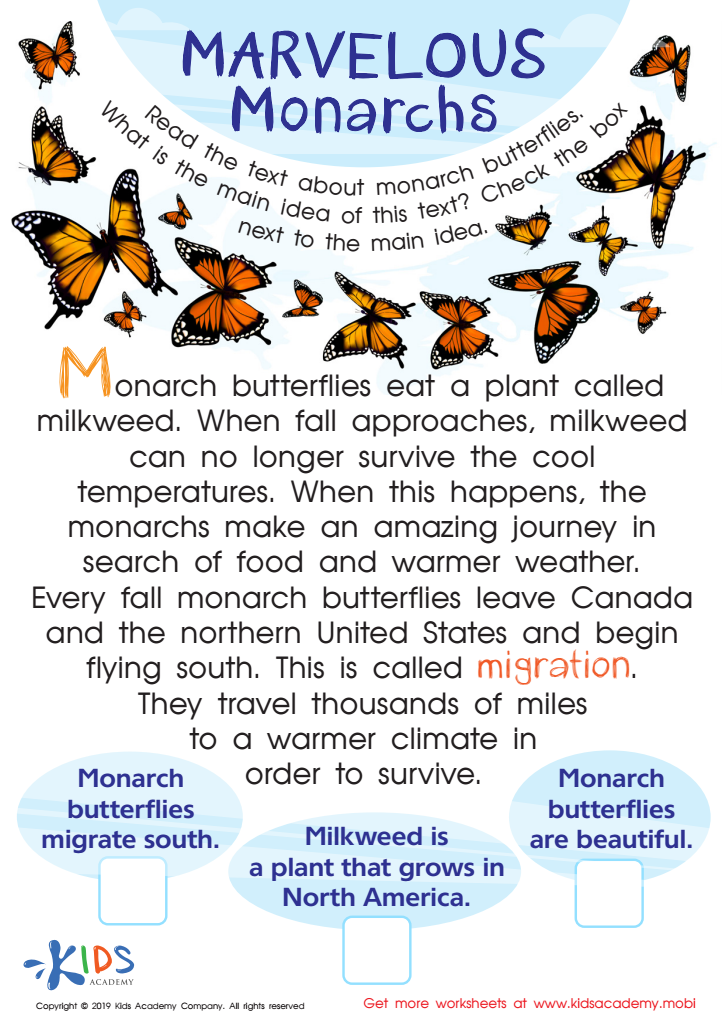
Marvelous Monarchs Worksheet
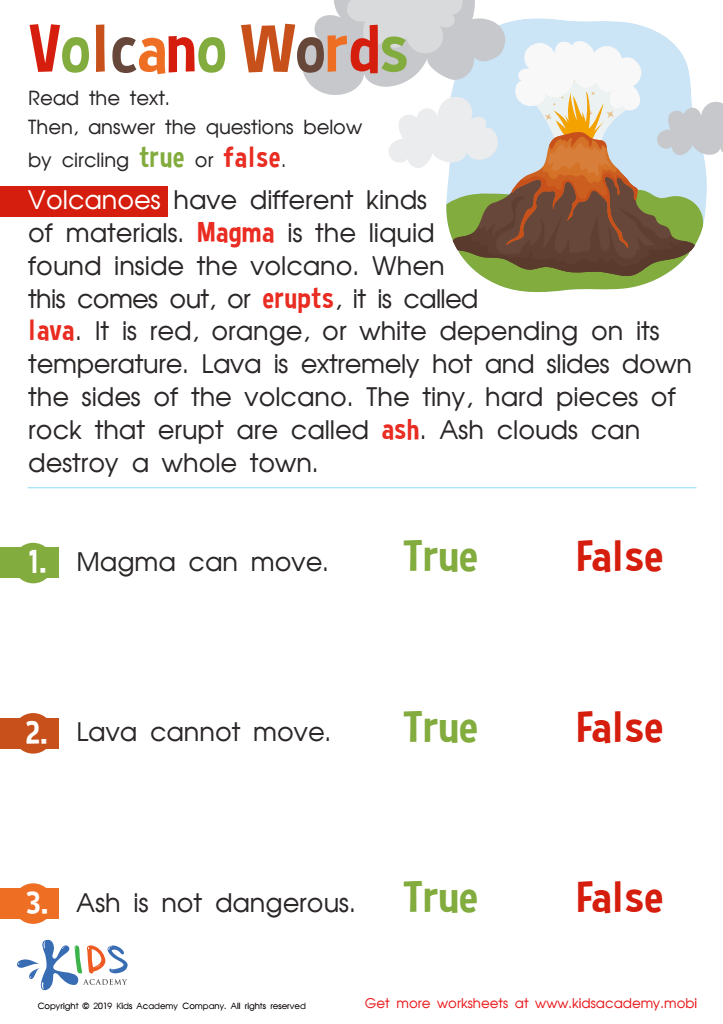
Volcano Words Worksheet
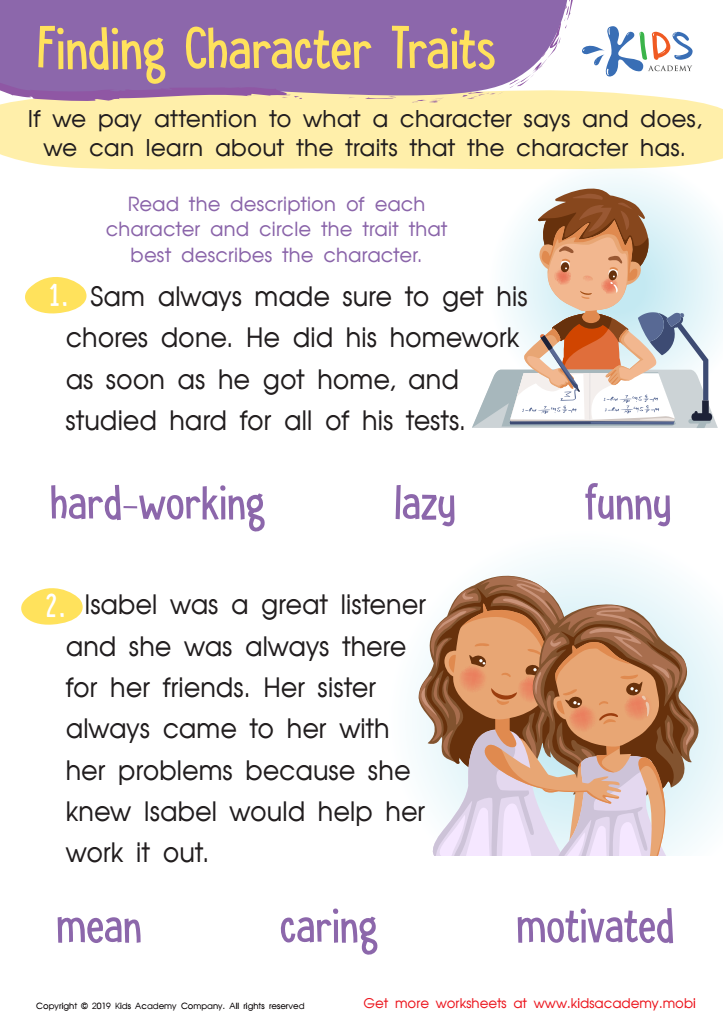
Finding Character Traits Worksheet








Vocabulary development is crucial for 8-year-olds as it directly influences their reading comprehension and overall academic success. At this age, children primarily transition from "learning to read" to "reading to learn." A robust vocabulary enables them to understand diverse texts, making it easier to grasp complex ideas and contexts. When children encounter unfamiliar words, they are likely to misinterpret information, hindering their ability to analyze and synthesize content.
Furthermore, a strong vocabulary bolsters self-confidence in reading and communication. Children who struggle with vocabulary may become discouraged, leading to negative attitudes towards literacy. Teachers and parents play a pivotal role in fostering vocabulary growth. Engaging activities like reading diverse literature, conversations, and word games stimulate interest in language, helping children expand their word bank naturally.
Additionally, vocabulary development is intertwined with critical thinking and problem-solving abilities. As children encounter new words, they also refine their understanding of concepts, enhancing their analytical skills crucial for future learning. Prioritizing vocabulary development is not just about reading; it's about equipping children with tools for lifelong learning. Ultimately, supporting vocabulary growth enriches their educational experience and fosters enthusiasm for learning.








