
Alphabet tracing Normal ABC Letters Worksheets for 9-Year-Olds
4 filtered results
Difficulty Level
Grade
Age
-
From - To
Subject
Activity
Standards
Discover our engaging Alphabet Tracing worksheets designed specifically for 9-year-olds! These printable resources provide children with the opportunity to hone their handwriting skills while reinforcing letter recognition. Each worksheet features normal ABC letters for tracing, allowing kids to practice proper letter formation in a fun, interactive way. Ideal for both classroom settings and home learning, our worksheets promote fine motor skills and enhance literacy development. With various themes and activities, children will enjoy practicing their ABCs. Let your child embark on an enjoyable learning journey by exploring our comprehensive collection of Alphabet Tracing worksheets today!
Favorites
With answer key
Interactive

Letter P Tracing Page
Trace the lines from the red dot to learn to write "P"! Then practice this letter with the fun activities: complete the word "Pig" and "Pumpkin". Check out Kids Academy to get more free ABC worksheets.
 Assign to My Students
Letter P Tracing Page
Worksheet


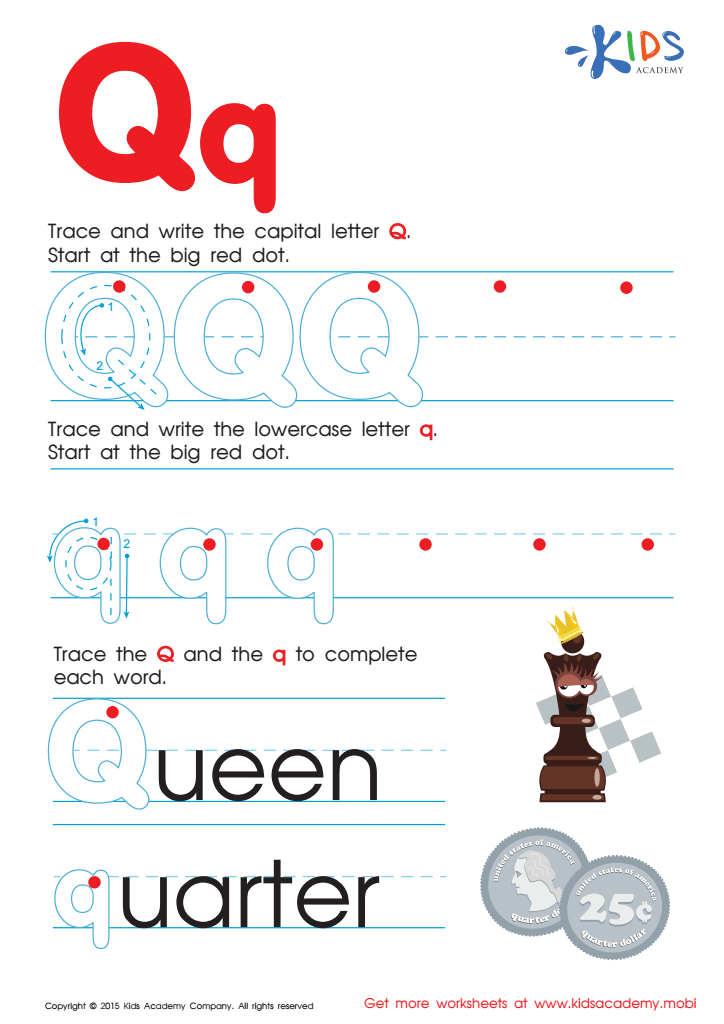
Letter Q Tracing Page
Learn the letter "Q"! Trace and write it a few times in upper and lowercase. Then help the Queen by writing her initial letter. Finally, write "quarters" and practice with more alphabet worksheets.
Letter Q Tracing Page
Worksheet

Letter H Tracing Page
Trace the letter "H", then practice writing its lowercase form. Finally, choose your favorite form of transport and ride away! Get our worksheets to make learning fun and easy.
Letter H Tracing Page
Worksheet

Letter D Tracing Page
Trace and write capital and lowercase letter "D" with our free printable alphabet worksheet! Be careful not to mix up "b" and "d" - just look at the ducks and write their first letter. The dolphin wants to join the fun too - do you like dolphins? Get more fun worksheets and activities at Kids Academy!
Letter D Tracing Page
Worksheet
Join Kids Academy for Free
Who is primarily going to use this learning content?








Alphabet tracing of normal ABC letters is an important activity for 9-year-olds, as it provides several developmental benefits that parents and teachers should recognize. First and foremost, it reinforces letter recognition, which is foundational for reading and writing skills. Tracing activities encourage young learners to develop fine motor skills and hand-eye coordination, which are essential for effective writing.
Additionally, engaging in tracing can enhance cognitive skills by encouraging focus and concentration. As children trace letters, they practice the correct formation of each character, helping to establish strong writing habits. This can lead to improved handwriting, which boosts the child's confidence in their literacy abilities.
Moreover, when children engage in tracing activities, they often experience kinesthetic learning, which complements visual and auditory literacy methods. This multi-sensory approach can further solidify their understanding of letters and strokes.
Finally, tracing can be a calming and enjoyable activity, providing a break from the fast-paced nature of schoolwork. By promoting these tracing exercises, parents and teachers contribute to a holistic learning environment that nurtures not only academic skills but also emotional well-being, ultimately fostering a love for learning in children.







