
Alphabetical order understanding Normal Letter Recognition Worksheets for 9-Year-Olds
3 filtered results
Difficulty Level
Grade
Age
-
From - To
Subject
Activity
Standards
Introduce your 9-year-old to the fundamentals of organizing with our Alphabetical Order Understanding Normal Letter Recognition Worksheets. Designed to enhance letter recognition and improve alphabetical order skills, these engaging worksheets offer a fun and educational experience. Each activity strengthens your child's ability to sequence letters, facilitating better reading and writing abilities. Perfect for classroom or home use, these resources align with common core standards to ensure your child stays ahead academically. Download these comprehensive printables from Kids Academy and watch as your child’s confidence and proficiency in handling the alphabet soar!
Favorites
With answer key
Interactive
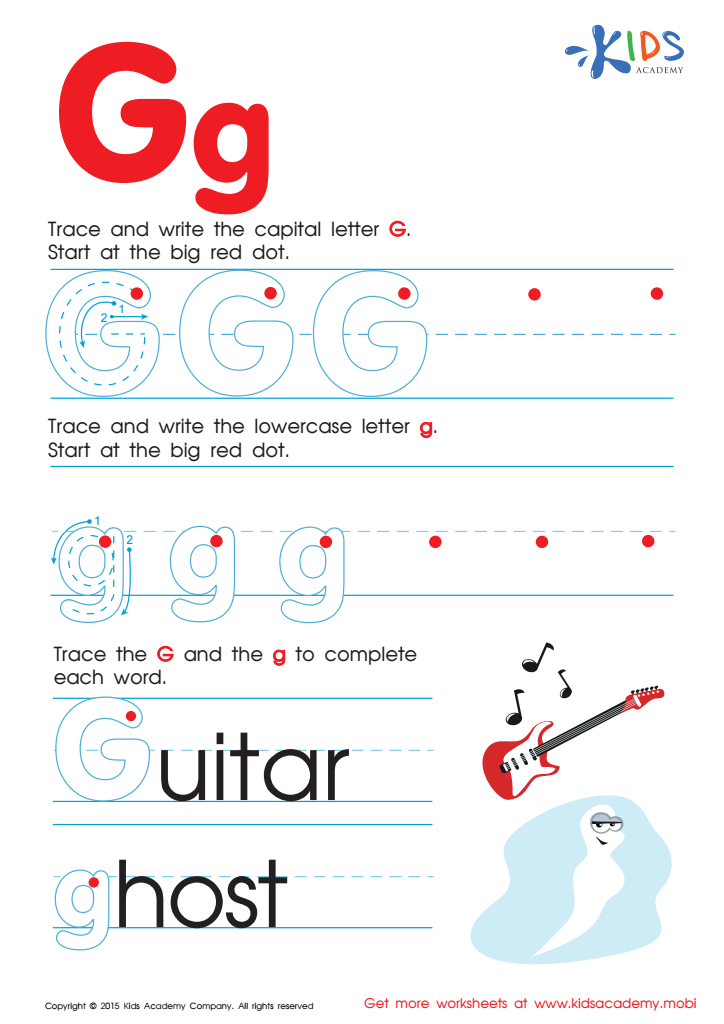
Letter G Tracing Page
Get ready to trace the letter "G" – with a big red spot as the starting point, trace the lines and watch the letter appear. Uppercase and lowercase letters are both easy and fun to write. Give it a go and finish the word "go". Play the guitar and say "hello" to a funny ghost!
Letter G Tracing Page
Worksheet
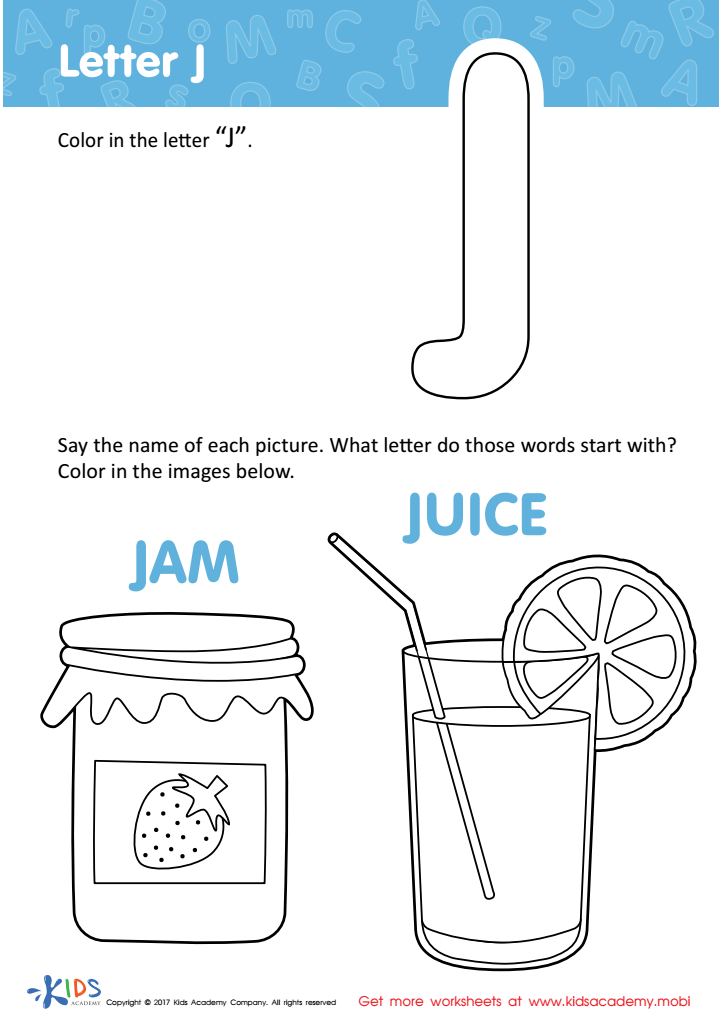
Letter J Coloring Sheet
Practice the letter 'J' with your little one with this fun coloring page! Pictures of jar, juice, jam and jelly make it an enjoyable experience for kids. Learning the letter and coloring is fun for even the youngest learners.
Download (PDF)
 Assign to My Students
Assign to My Students
Letter J Coloring Sheet
Worksheet
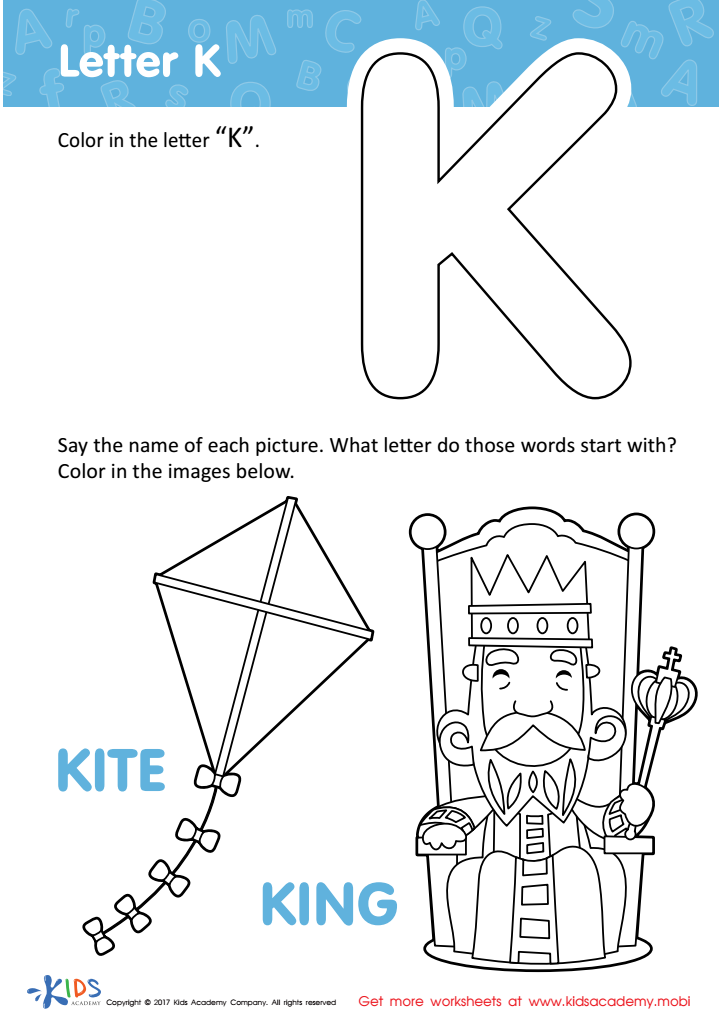
Letter K Coloring Sheet
This letter K coloring page captivates your child's creativity while learning the letter! Showcasing a king and kite, common words for their age group, it's sure to spark their imagination.
Download (PDF)
Assign to My Students
Assign to My Students
Letter K Coloring Sheet
Worksheet
Join Kids Academy for Free
Who is primarily going to use this learning content?








Understanding alphabetical order and mastering normal letter recognition are foundational skills that significantly impact a 9-year-old's literacy development, which in turn influences their broader academic performance.
Alphabetical order serves as a backbone for navigating countless systems in daily life—from using dictionaries and encyclopedias to organizing information in filing systems and digital databases. Proficiency in alphabetical order enables efficient information retrieval and cognitive organization. When children learn how to alphabetize, they acquire a systematic way to order elements, which enhances their ability to think logically and sequentially.
Normal letter recognition is equally critical. It's not only about identifying letters but also understanding their shapes, sounds, and positions within words. This ability directly affects reading fluency. Smooth and automatic letter recognition allows children to decode words more quickly and accurately, supporting better comprehension and spelling accuracy. Without competent letter recognition, the process of reading can become laborious, deterring kids from engaging fully with texts and hindering their academic growth.
For teachers and parents, emphasizing these skills ensures that children build a strong reading foundation. Mastery in these areas opens up a world of knowledge and improves academic self-confidence, equipping kids to tackle more complex literacy tasks as they progress in their education.








