
Handwriting Skills Normal Letter Recognition Worksheets for 9-Year-Olds
5 filtered results
Difficulty Level
Grade
Age
-
From - To
Subject
Activity
Standards
Boost your 9-year-old's handwriting with our expertly crafted Normal Letter Recognition Worksheets. Specifically designed for this age group, these engaging worksheets assist children in honing their penmanship through diverse activities focused on letter recognition. This targeted practice not only improves handwriting but also reinforces their understanding of the alphabet, enhancing their overall literacy skills. Our worksheets combine fun exercises with educational benefits, helping kids develop fine motor skills and confidence in their writing abilities. Perfect for both classroom use and home practice, these printables are a fantastic aid in your child's handwriting journey. Download now and watch their skills flourish!
Favorites
With answer key
Interactive
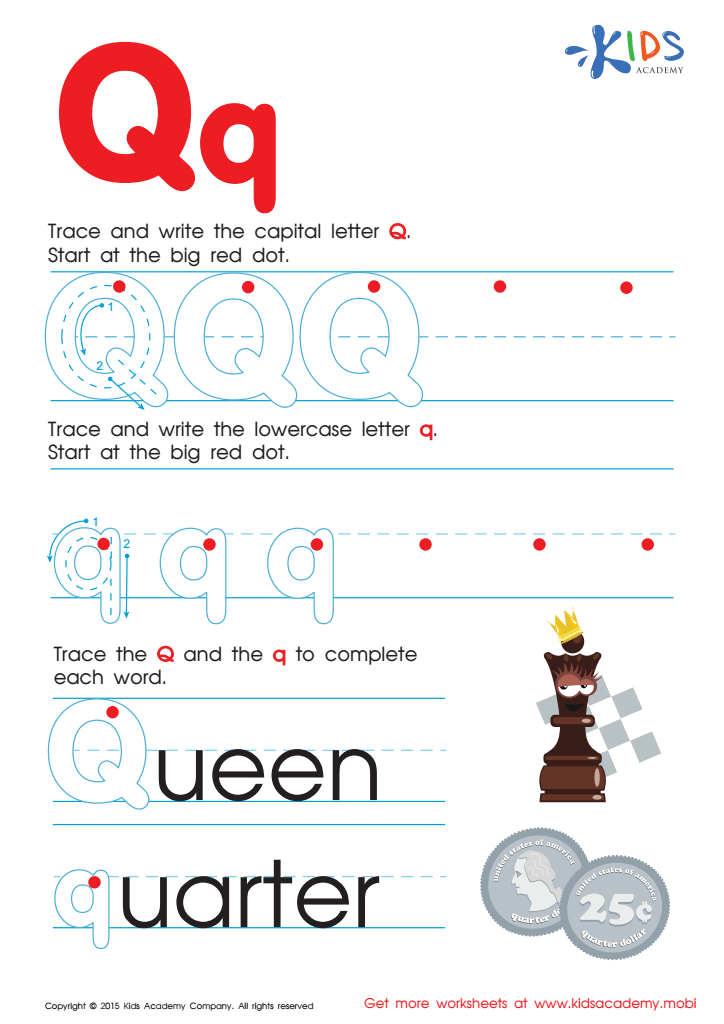
Letter Q Tracing Page
Learn the letter "Q"! Trace and write it a few times in upper and lowercase. Then help the Queen by writing her initial letter. Finally, write "quarters" and practice with more alphabet worksheets.
 Assign to My Students
Letter Q Tracing Page
Worksheet
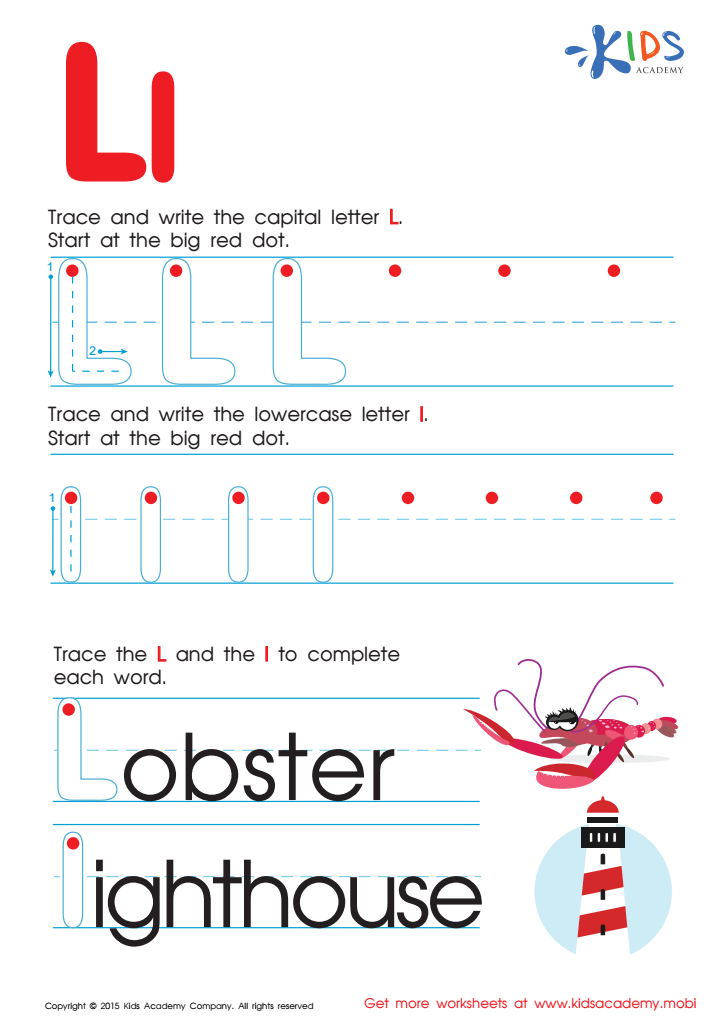
Letter L Tracing Page
Trace uppercase and lowercase letters to practice writing. Pay attention to the lowercase letters, like the "L", that are not as tall as an uppercase "I" or as short as a lowercase "i". Words like "lobster" and "lighthouse" are waiting to be completed. Enjoy!
Letter L Tracing Page
Worksheet
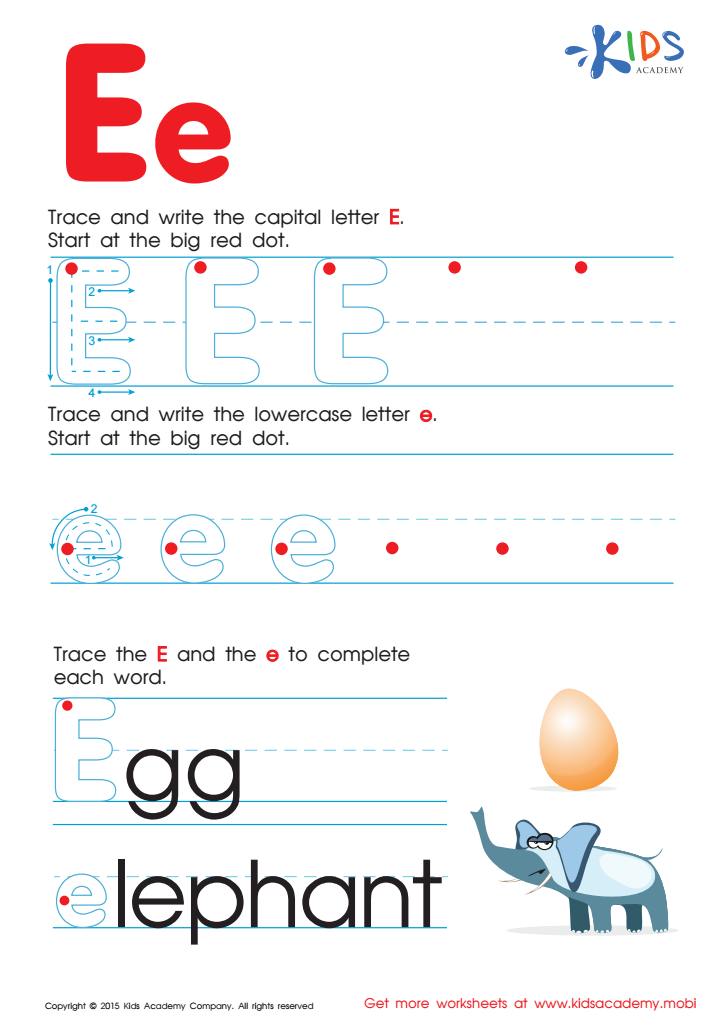
Letter E Tracing Page
Trace and write the uppercase and lowercase "E" starting at the big red dot. Complete words to perfect letter writing. Egg and Elephant must be written carefully. More alphabet worksheets for kindergarten are available for download to spend more time with your children learning.
Letter E Tracing Page
Worksheet
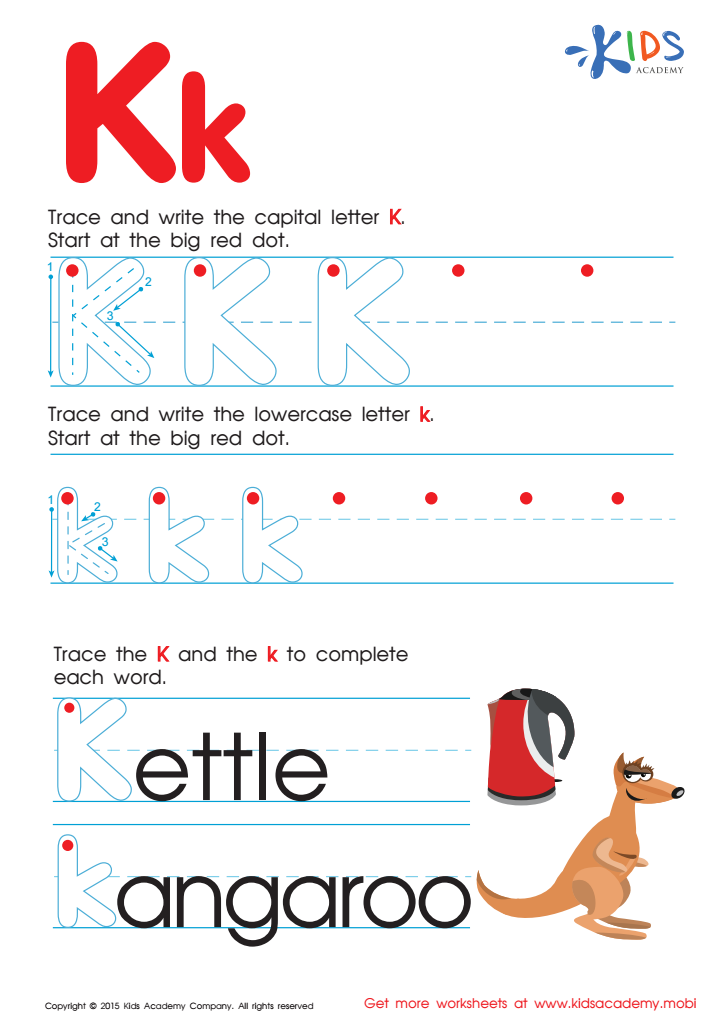
Letter K Tracing Page
Trace and write the letter K; start at the big red dot. Use it to complete words like "Kettle" and "Kangaroo". Visit Kids Academy for more free alphabet worksheets for kindergarten.
Letter K Tracing Page
Worksheet
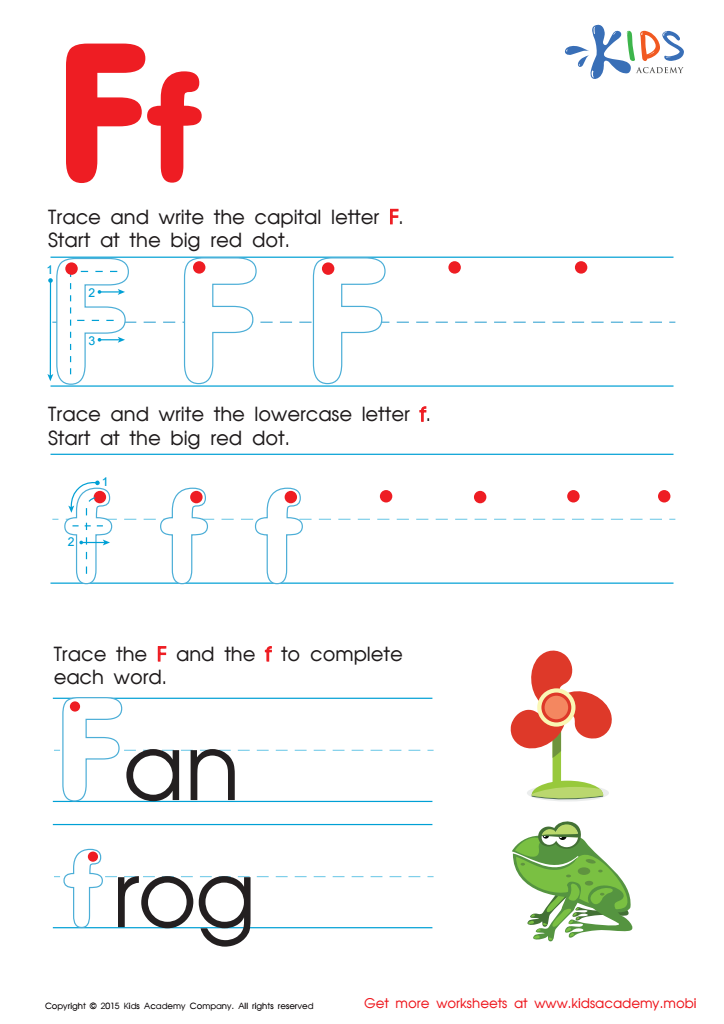
Letter F Tracing Page
Trace "F" with your pencil! Start at the red dot and draw lines — it's fun! Check it out — it looks great! Keep practicing to make it even better. Then, try completing words. Help out the broken fan and funny frog! Get free alphabet worksheets and activities for your kids. Come see our new tracing pages!
Letter F Tracing Page
Worksheet
Join Kids Academy for Free
Who is primarily going to use this learning content?








Handwriting skills and normal letter recognition are fundamental elements in a child's educational development, particularly around the age of nine. These foundational abilities play a critical role in communication, cognitive function, and academic success. Handwriting involves complex motor skills, coordination, and muscle memory, which are crucial for overall fine motor development. When children practice proper handwriting, they enhance their visual and motor integration abilities, making it easier to perform other tasks that require manual dexterity.
Moreover, normal letter recognition is essential for reading fluency and comprehension. Children who struggle with recognizing letters or forming them correctly are more likely to face difficulties in reading and writing tasks. This struggle can have a ripple effect, potentially impacting their performance across various subjects, as these skills are interconnected with other areas of learning such as grammar, spelling, and composition.
Additionally, fluency in handwriting and letter recognition can boost a child's self-esteem. Successfully mastering these skills instills a sense of accomplishment and independence, encouraging a more active participation in class and better social interaction with peers. Therefore, investing effort in nurturing these abilities during early childhood creates a robust foundation for lifelong learning and overall personal development.








