Understanding times tables Normal Multiplication Worksheets for 9-Year-Olds
3 filtered results
-
From - To
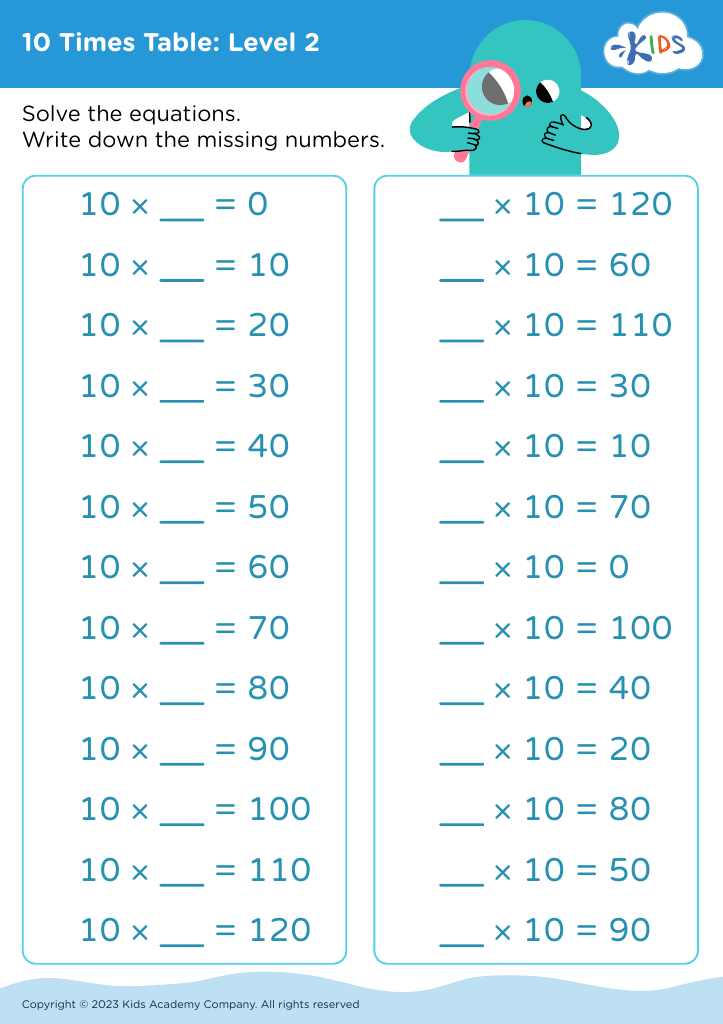
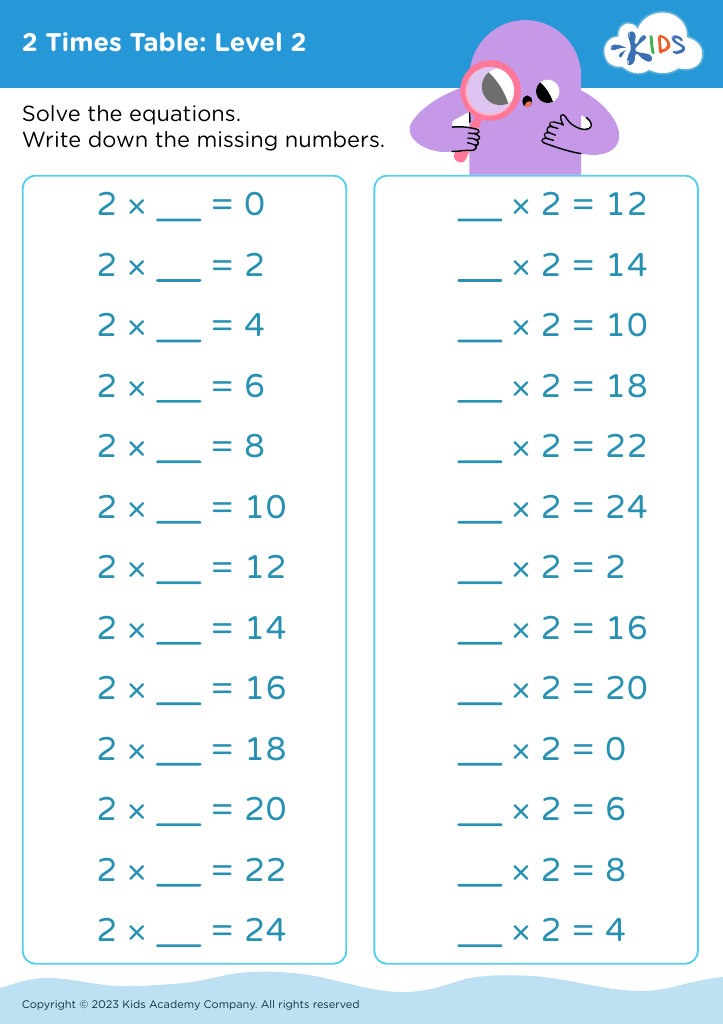
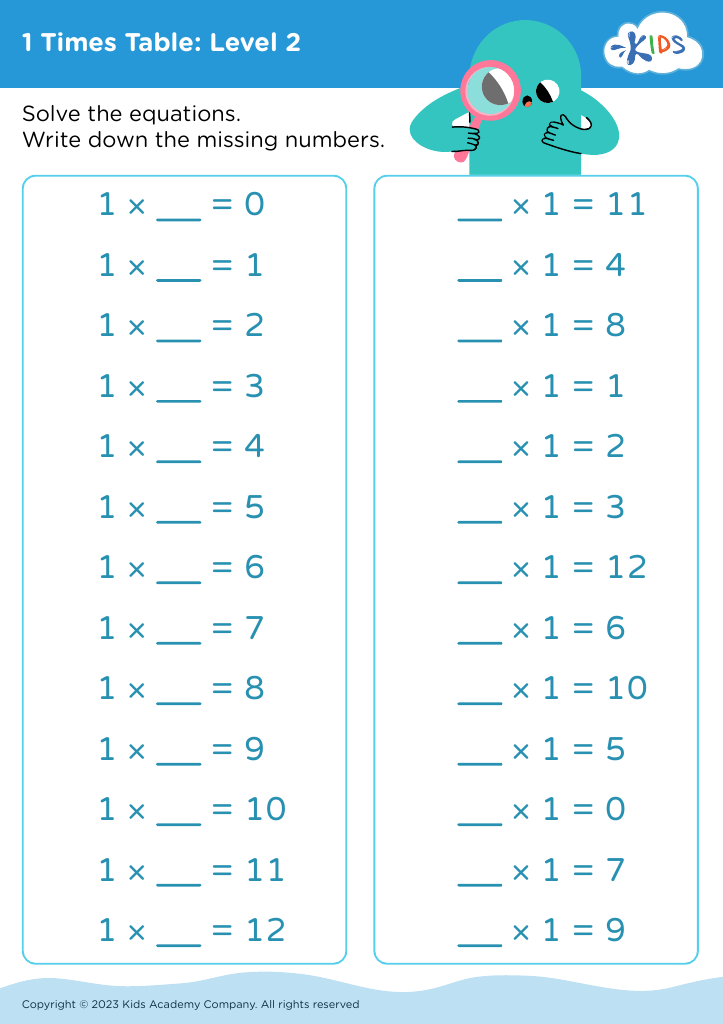
Unlock the world of multiplication for 9-year-olds with our engaging Normal Multiplication Worksheets focused on understanding times tables. Designed to enhance learning, these worksheets provide a variety of exercises that help children grasp the principles of multiplication and improve their mathematical skills. Our user-friendly resources encourage independent practice and reinforce foundational concepts, making math a fun and accessible subject. With vibrant illustrations and interactive elements, students will find themselves motivated to explore times tables confidently. Whether in the classroom or at home, these worksheets are perfect for building a solid foundation in multiplication that will benefit children throughout their academic journey.







Understanding times tables and normal multiplication is crucial for 9-year-olds, as it serves as the foundation for mathematical proficiency. At this age, children are transitioning from simple arithmetic to more complex mathematical concepts, making a firm grasp of multiplication essential. Mastery of times tables enables students to perform calculations more efficiently, boosting their confidence and reducing math anxiety.
Furthermore, multiplication is not just a standalone concept; it is instrumental in fractions, decimals, and eventual algebraic expressions. When children understand times tables, they are better equipped to tackle word problems, which require them to apply multiplication in real-world scenarios. This understanding encourages critical thinking and problem-solving skills that are invaluable later in their educational journey.
Parents and teachers play a vital role in this process by providing engaging activities that reinforce these concepts, whether through games, songs, or real-life applications. Supporting children emotionally during this learning phase reinforces their progress and helps form a positive attitude towards math. Overall, a solid understanding of multiplication lays the groundwork for academic success and fosters a lifelong appreciation for mathematics.








