Understanding times tables Normal Times Tables Worksheets for 9-Year-Olds
3 filtered results
-
From - To
Discover the joy of mastering times tables with our engaging worksheets designed specifically for 9-year-olds. Understanding times tables is crucial for building a strong math foundation, and our normal times tables worksheets offer a variety of exercises to reinforce this essential skill. With clear explanations and fun practice problems, kids can learn multiplication concepts at their own pace. Whether tackling simple multiplication or preparing for more complex math, our resources make learning enjoyable and effective. Explore our collection today and transform math struggles into confidence, ensuring your child is ready for future mathematical challenges!
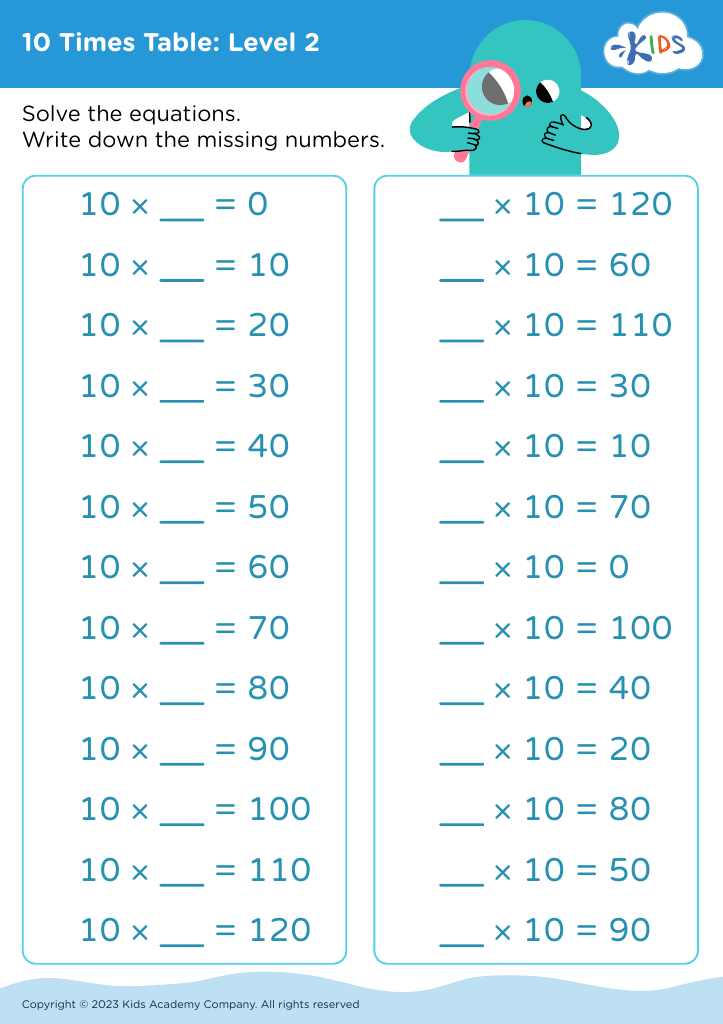
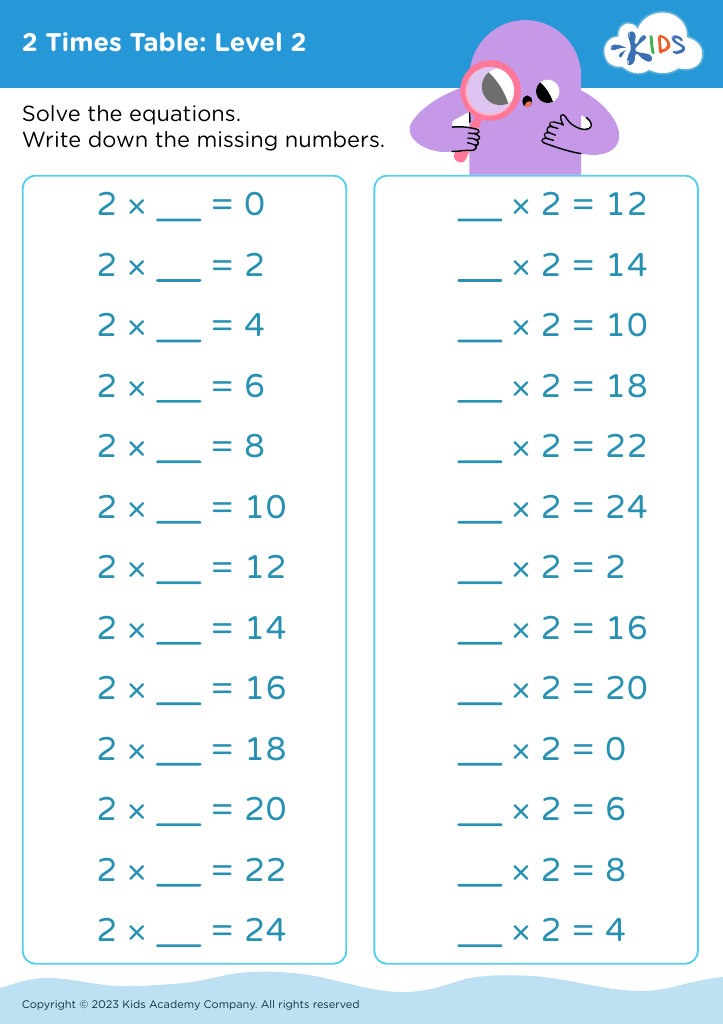
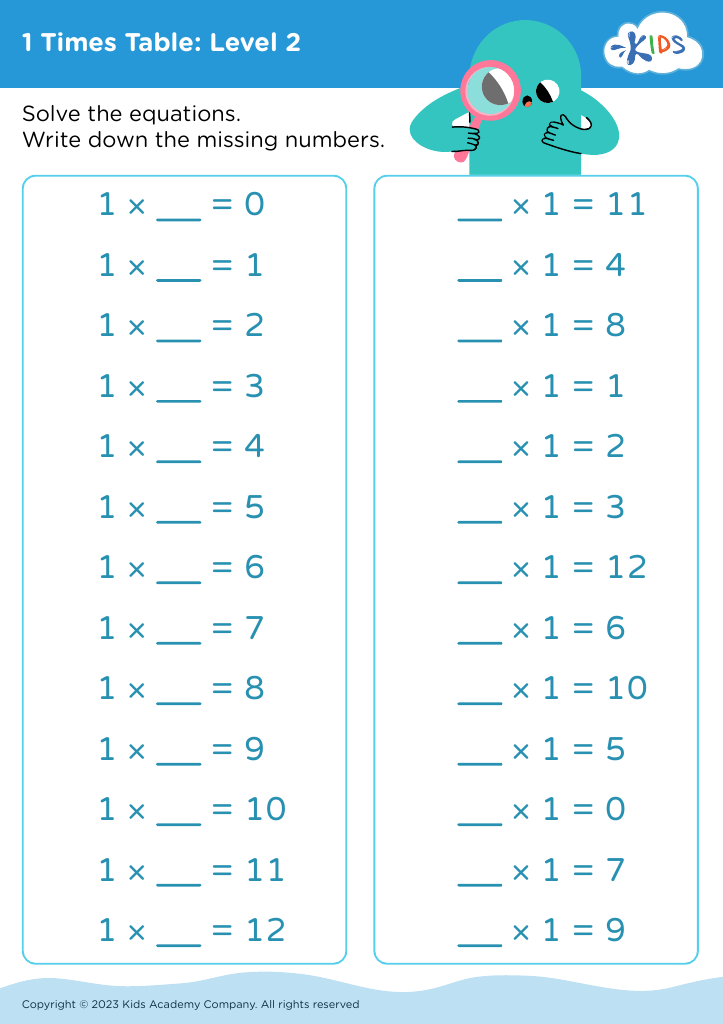





Understanding multiplication and the times tables is crucial for 9-year-olds as they lay the foundation for advanced math concepts and everyday problem-solving. At this age, children are transitioning from concrete to abstract thinking, and mastering times tables equips them with the essential skills needed for higher-level math, such as division, fractions, and algebra.
For parents and teachers, fostering a strong understanding of times tables can enhance a child’s confidence in mathematics. Children who are proficient in multiplication often experience less anxiety during math lessons and tests, which encourages a more positive attitude towards learning. Moreover, times tables are commonly used in various real-life situations, such as estimating costs, measuring distances, and managing time, making them an essential tool for everyday life.
Additionally, studies show that students with strong foundational skills in multiplication perform better academically in their overall studies. Parents and teachers should consider incorporating engaging methods—such as games, songs, or visual aids—to make learning times tables more enjoyable and effective. Ultimately, ensuring that 9-year-olds grasp this fundamental aspect of math not only supports their academic growth but also builds a lifelong appreciation and interest in mathematics.








