Division practice Normal Science Worksheets for 9-Year-Olds
5 filtered results
-
From - To
Explore our engaging Division Practice Normal Science Worksheets designed specifically for 9-year-olds! These worksheets seamlessly integrate science concepts with fundamental division skills, helping young learners build confidence and proficiency in mathematics. Children will not only enhance their division abilities but also discover fascinating scientific principles through interactive exercises. Ideal for classroom use or at-home learning, our worksheets encourage critical thinking and problem-solving in an enjoyable way. Perfect for teachers and parents looking to support their child’s educational journey, these printable resources make mastering division in science both fun and effective. Start your journey toward math mastery today!
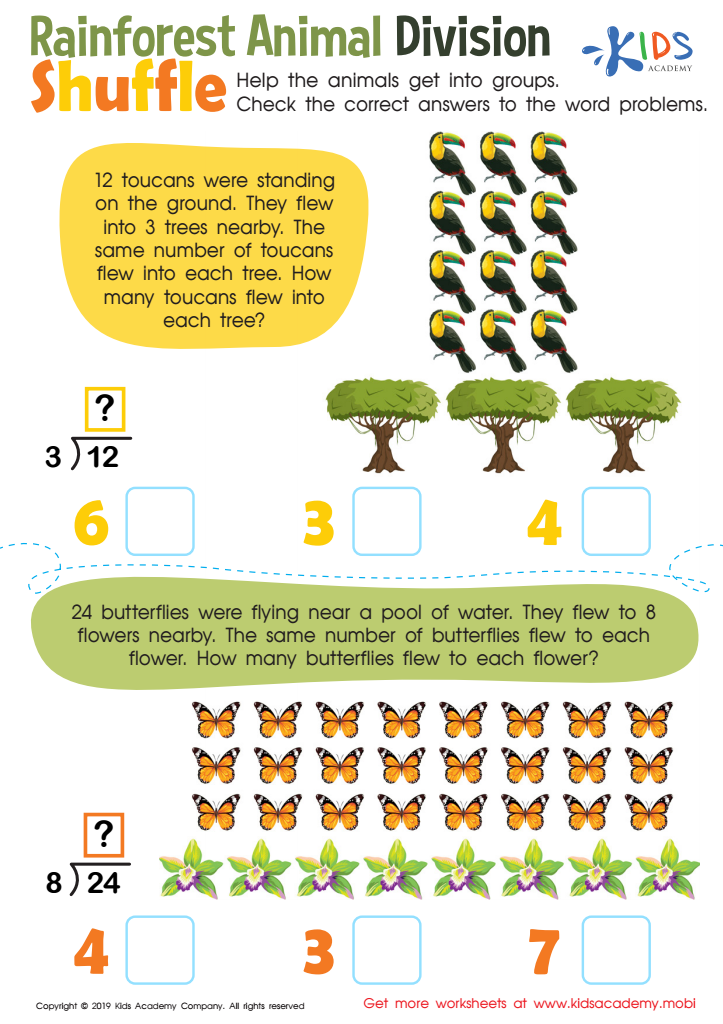
Rainforest Animal Division Worksheet
 Assign to My Students
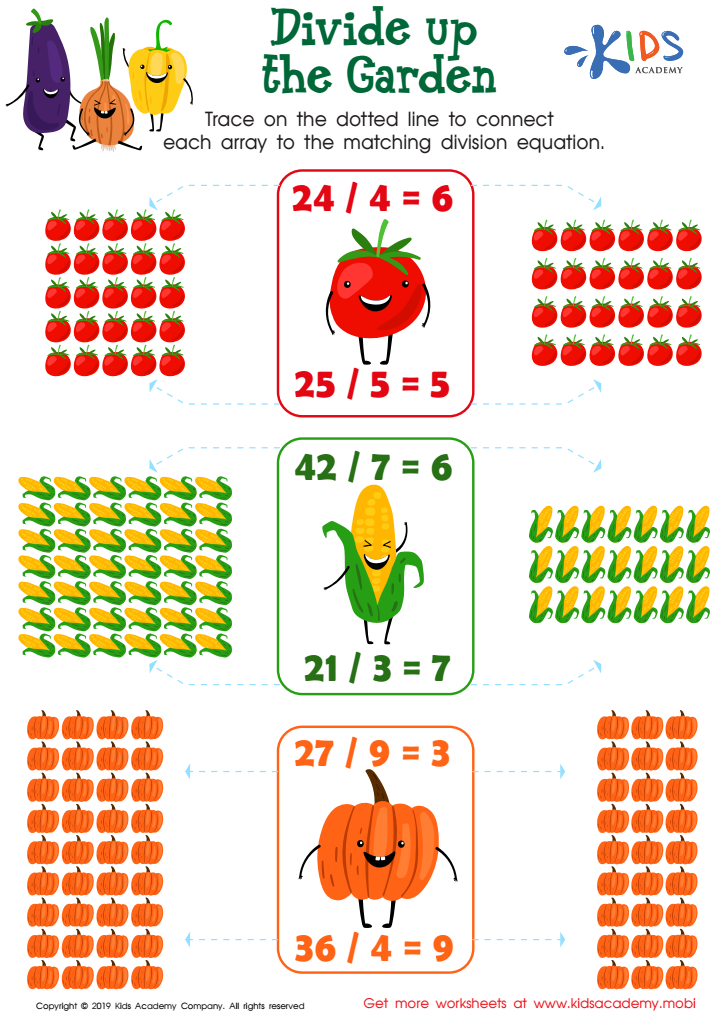
Divide up the Garden Worksheet
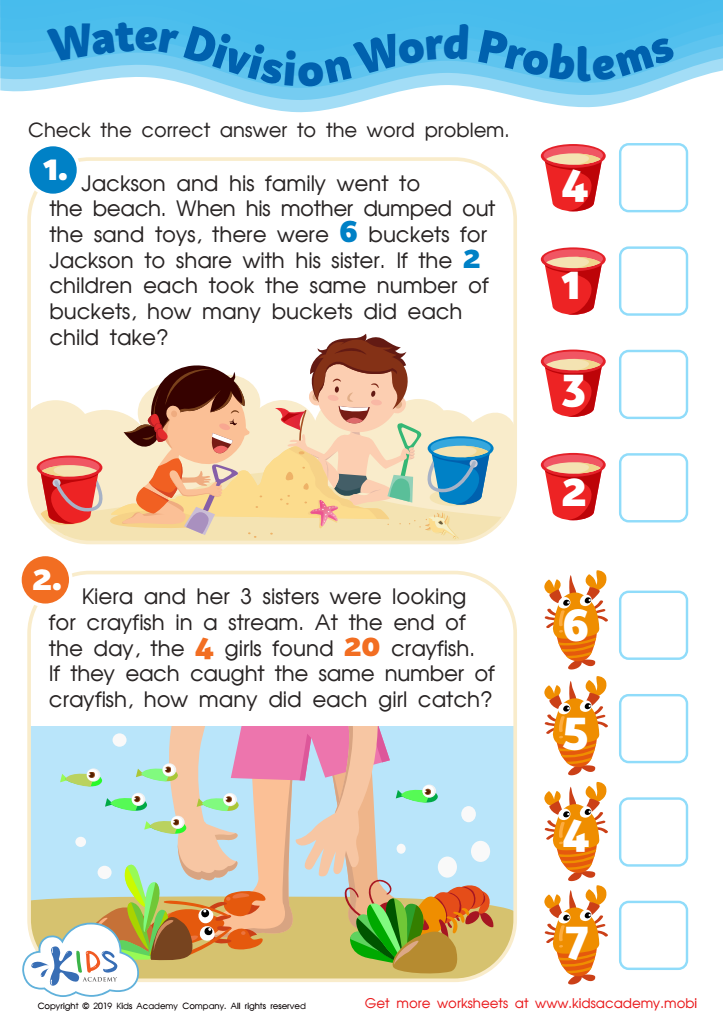
Water Division Word Problems Worksheet
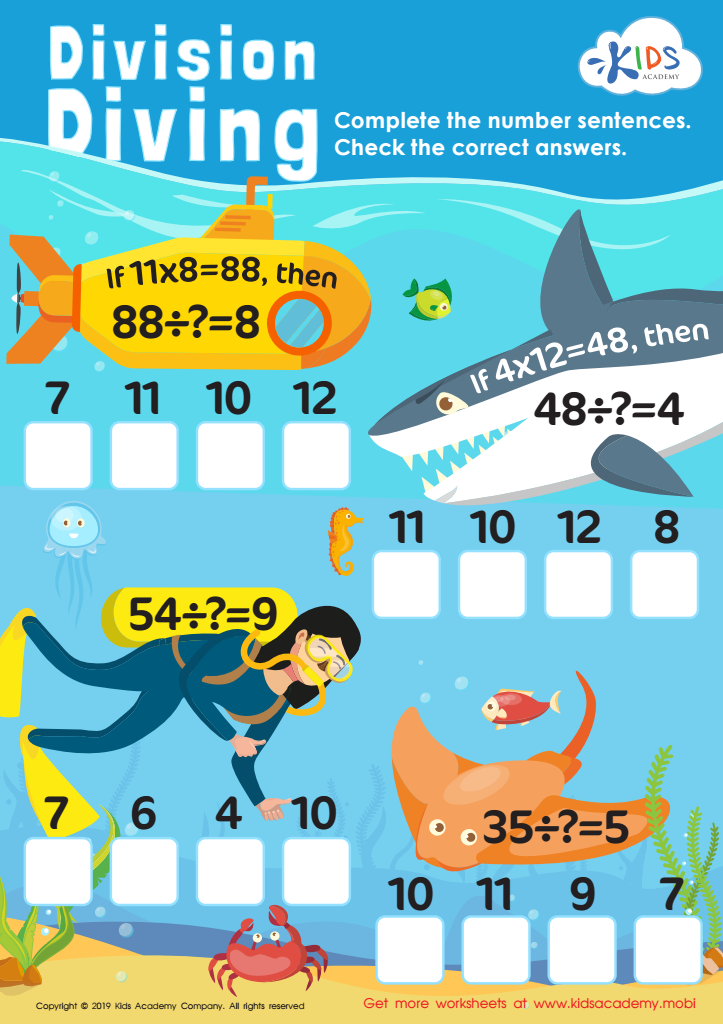
Division Diving Worksheet
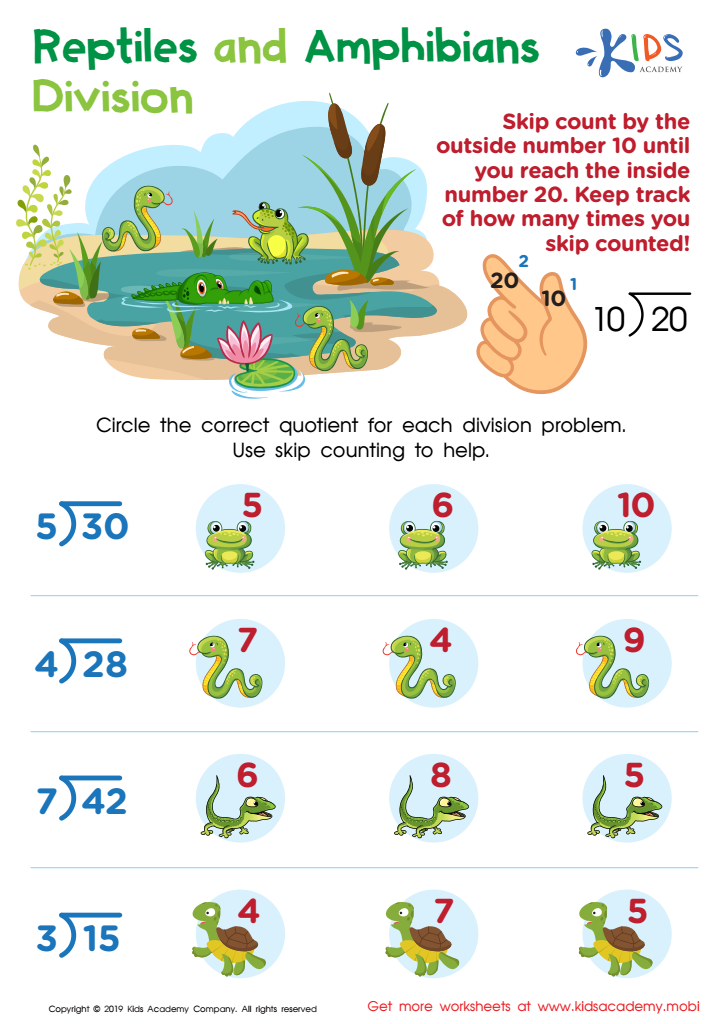
Reptile and Amphibians Division Worksheet






.jpg)
Parents and teachers should prioritize division practice as part of a normal science curriculum for 9-year-olds because it lays a critical foundation for mathematical understanding and problem-solving skills. At this age, children are developing their ability to think logically and abstractly, making it an ideal time to introduce division as it requires organizing information and reasoning through patterns.
Division not only reinforces basic arithmetic skills but also enhances children’s capacity to handle fractions, ratios, and various real-world applications. Practicing division helps children develop their critical thinking; they learn how to break down complex problems into manageable parts, a skill relevant in both math and everyday life.
Moreover, positive experiences with division during this developmental stage can foster a love for math, boosting confidence and encouraging further exploration of math-related subjects. Collaborative division activities can also enhance social skills as children work together to solve problems.
Lastly, understanding division equips 9-year-olds with the tools they need for future academic challenges across subjects, thereby ensuring a more rounded and comprehensive educational experience. It nurtures resilience as children learn that mistakes can lead to understanding, further solidifying their mathematical competence.







