Understanding timelines Normal History Worksheets for 9-Year-Olds
3 filtered results
-
From - To
Discover our engaging "Understanding Timelines" worksheets designed specifically for 9-year-olds! These activities help young learners grasp the concept of timelines, enhancing their historical understanding and chronological skills. Through vibrant illustrations and interactive exercises, students will learn to sequence events, recognize historical milestones, and connect key events in history. Our worksheets cater to various learning styles, ensuring every child can participate actively. Ideal for classrooms or at-home practice, these resources encourage critical thinking and make history fun. Equip your child with essential skills while instilling a love for learning. Explore our comprehensive collection and help them make sense of the past today!
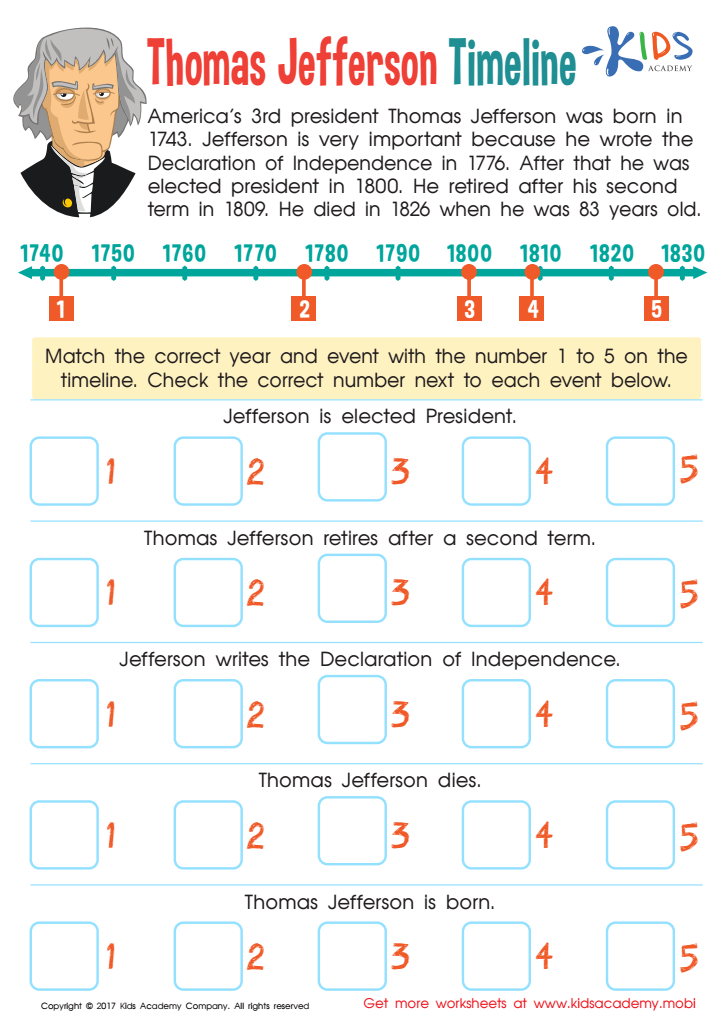
Thomas Jefferson Timeline Worksheet
 Assign to My Students
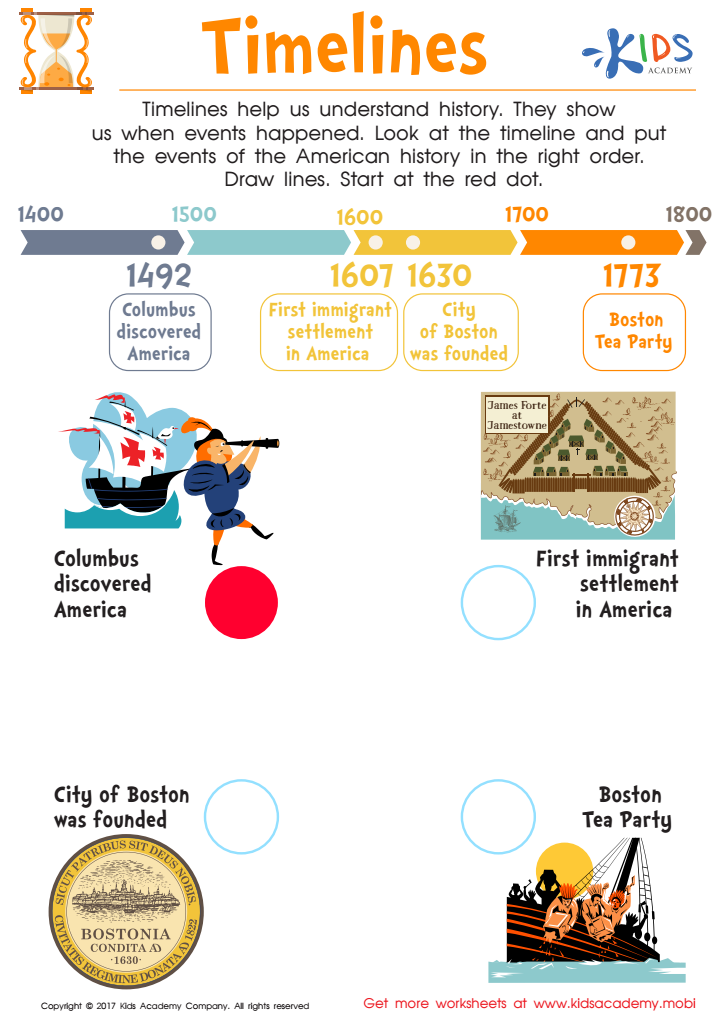
American History Timeline Worksheet
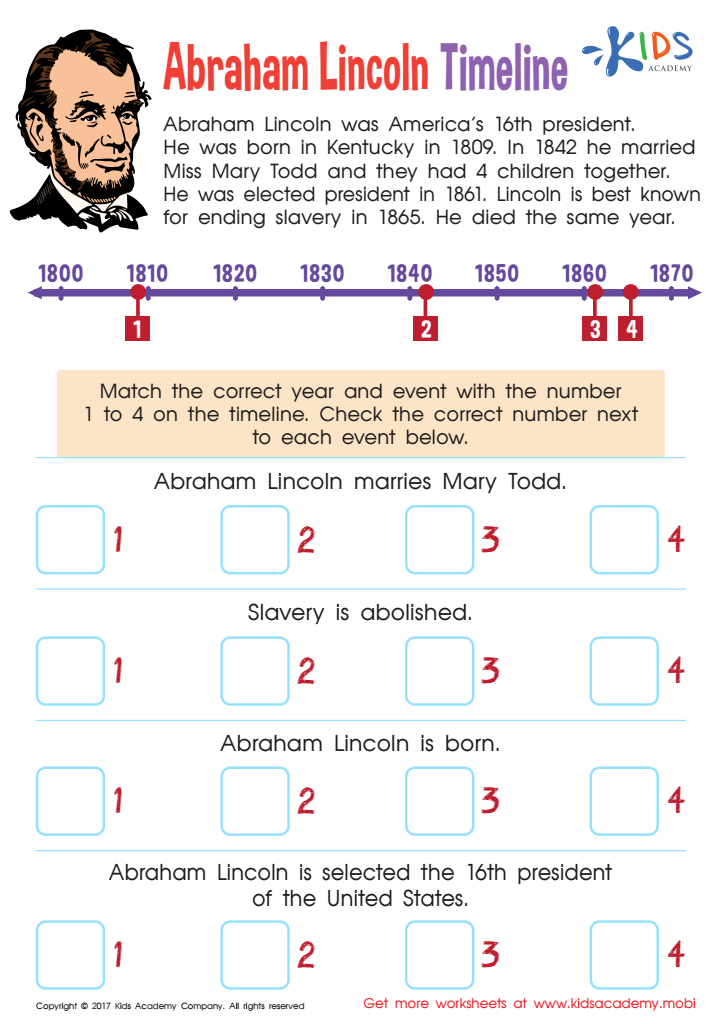
Abraham Lincoln Timeline Worksheet




.jpg)


Understanding timelines and history is essential for 9-year-olds as it helps them develop a sense of context and connection to the world around them. Parents and teachers should care about this skill because it lays the groundwork for critical thinking and analytical abilities. When children learn to recognize the sequence of events, they gain insight into how historical figures and moments shape contemporary society. This understanding fosters a sense of identity, encouraging children to appreciate their heritage and the diverse cultures that contribute to their community.
Moreover, knowledge of timelines enhances their comprehension of cause-and-effect relationships, which are vital in all branches of learning. By placing events in chronological order, children can better grasp concepts in subjects like science and literature that rely on understanding progression and change over time.
Encouraging kids to create and explore their own timelines of significant events, whether personal or historical, also promotes engagement and motivation to learn. In a rapidly changing world, the ability to connect past to present helps build informed citizens who understand the importance of history in shaping our future. Thus, incorporating timelines into learning not only enriches children's knowledge but also equips them with skills necessary for lifelong learning.








