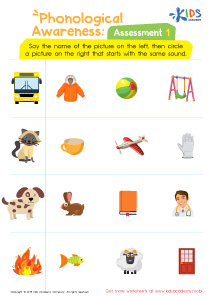
Reading readiness Normal Beginning Sounds Worksheets
3 filtered results
-
From - To
Enhance your child's reading readiness with our "Normal Beginning Sounds Worksheets." Designed for early learners, these engaging worksheets focus on the crucial skill of identifying beginning sounds. Each activity encourages kids to connect letters with sounds, aiding their phonemic awareness and fostering a love for reading. With vibrant illustrations and child-friendly formats, these worksheets make learning fun and interactive. Perfect for homeschooling or classroom settings, they provide the practice necessary for mastering phonics basics. Give your child the confidence they need as they embark on their reading journey with our thoughtfully crafted resources. Get started today!
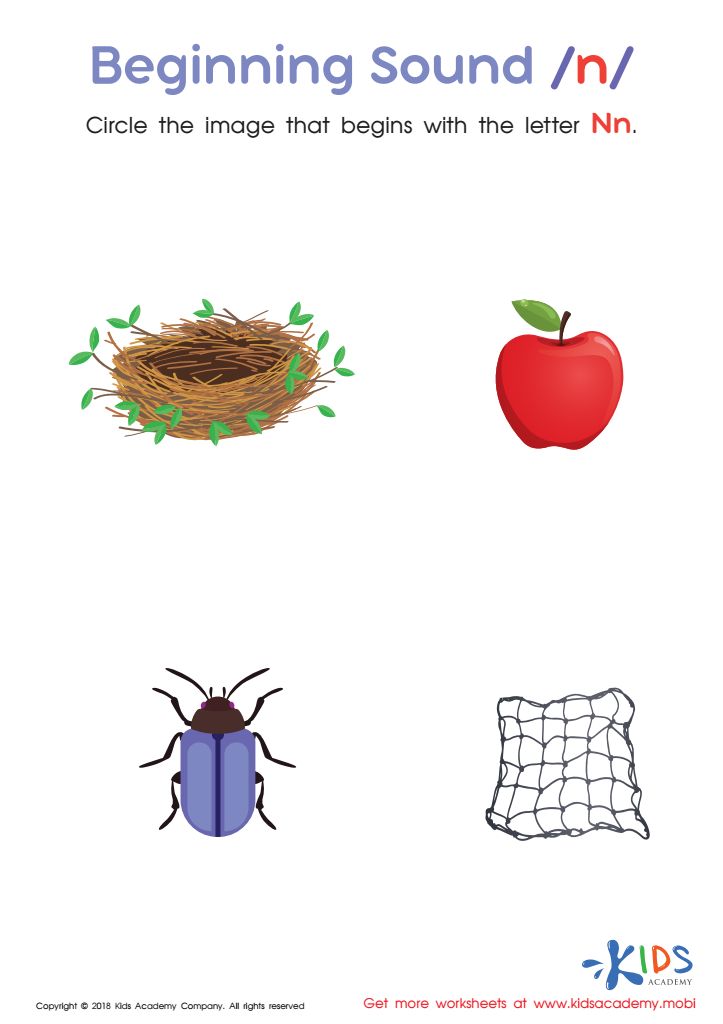
Beginning Sound «n» Worksheet
 Assign to My Students
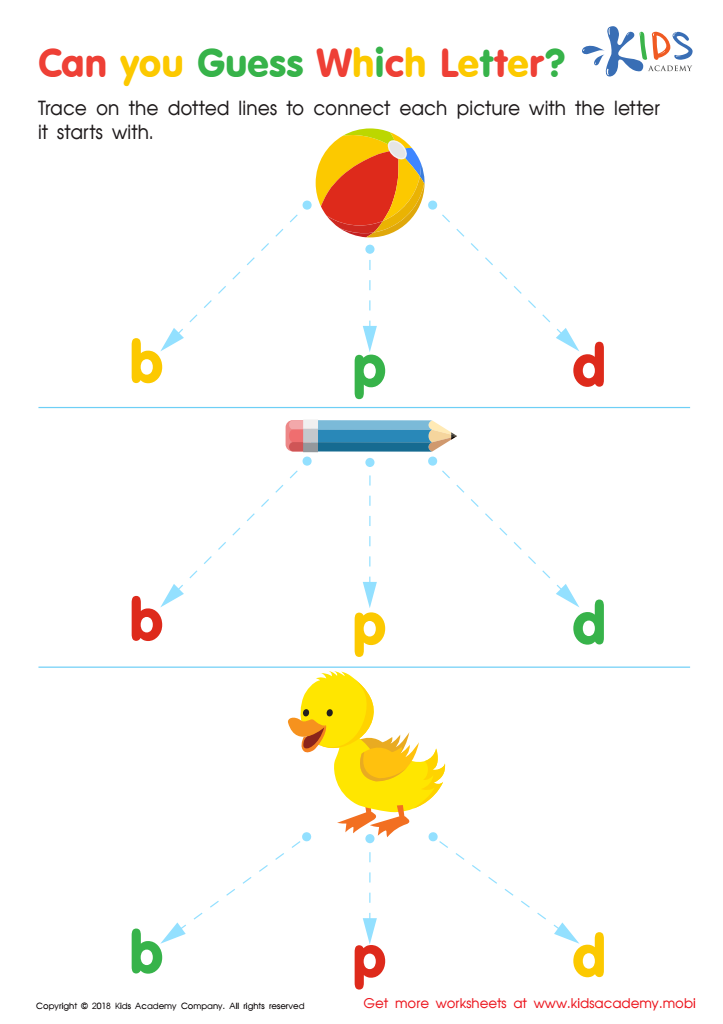
Can you Guess Which Letter? Worksheet
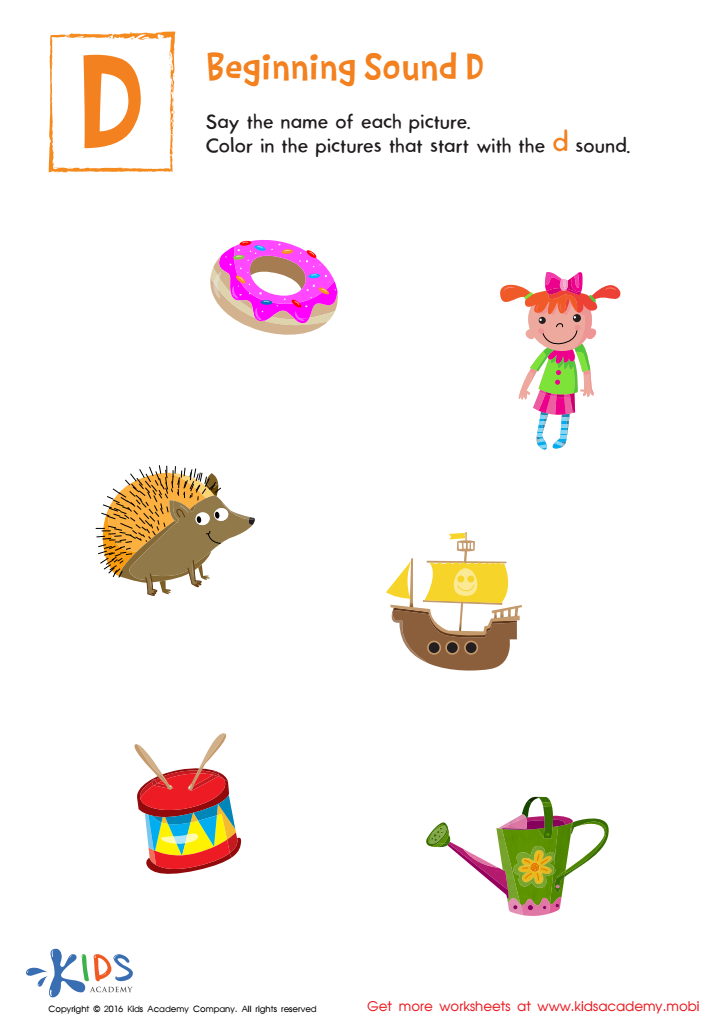
Beginning Sound D Worksheet








Reading readiness is a crucial milestone in a child's early education, and understanding normal beginning sounds is an essential component. When parents or teachers emphasize the importance of recognizing and mastering these sounds, they lay the foundation for successful reading skills. Beginning sounds, or initial phonemes, are the very first sounds both in words and within the structure of language. This understanding supports phonemic awareness, enabling children to decode words and develop strong literacy skills.
Recognizing beginning sounds helps children make connections between patterns in language, enhancing their ability to sound out new words and building confidence in reading. When children can identify the initial sounds of words, they begin to grasp how language works, paving the way for vocabulary expansion and comprehension.
Additionally, a focus on these sounds encourages interactive learning experiences, fostering a positive attitude toward reading. Engaging activities like rhymes, songs, and games can enrich young learners’ phonemic skills, making learning both effective and enjoyable. Parents and teachers play a pivotal role in nurturing these skills, ensuring children are prepared for future academic success. Thus, investing in reading readiness and beginning sounds is critical for shaping reluctant readers into confident, enthusiastic learners.