Vowel Recognition Normal Letter Recognition Worksheets
4 filtered results
-
From - To
Enhance your child’s early literacy skills with our Vowel Recognition Normal Letter Recognition Worksheets! Designed for young learners, these engaging worksheets help children identify and master vowels in various contexts. Children will enjoy fun activities that reinforce their understanding of vowel sounds and usage while also improving their overall letter recognition. Our worksheets are easy to print and adaptable for diverse learning styles, making them perfect for classroom or home use. Foster a love for reading and writing by supporting your child's foundational skills with these interactive resources. Start building literacy confidence today! Visit us to access these educational tools.
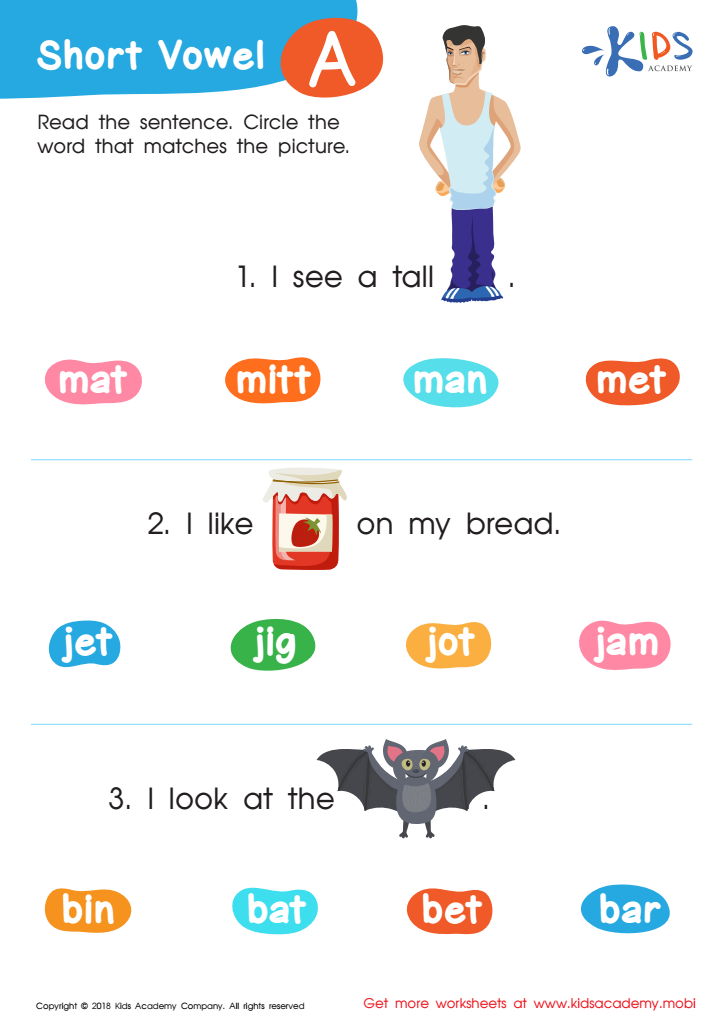
Short Vowel /a/ Worksheet
 Assign to My Students
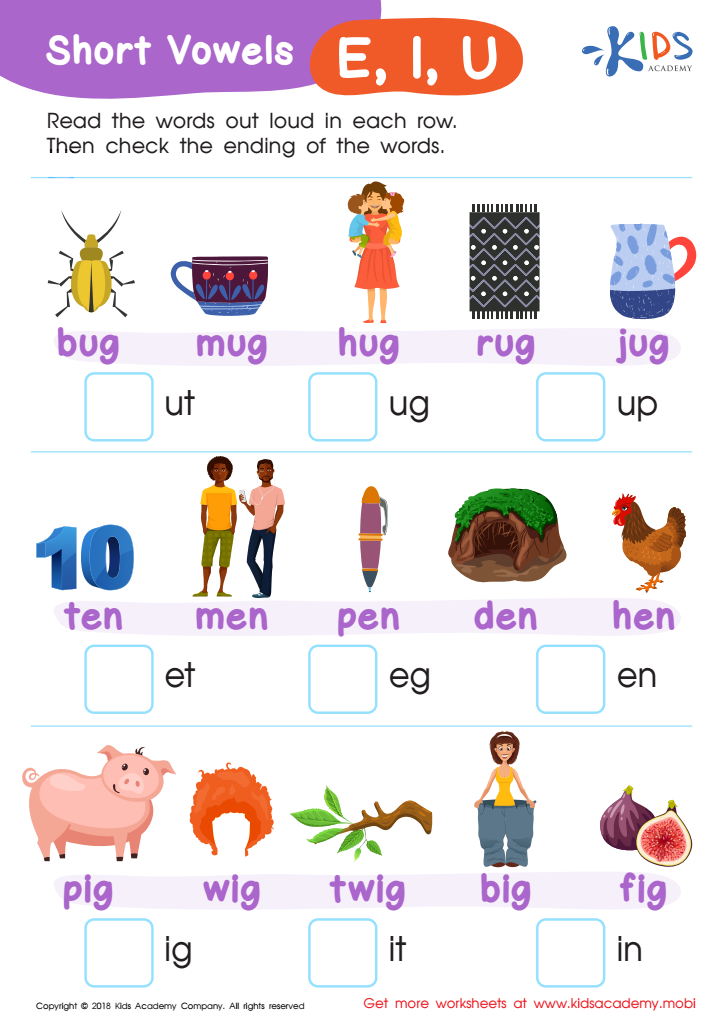
Short Vowels /e/, /i/, and /u/ Worksheet
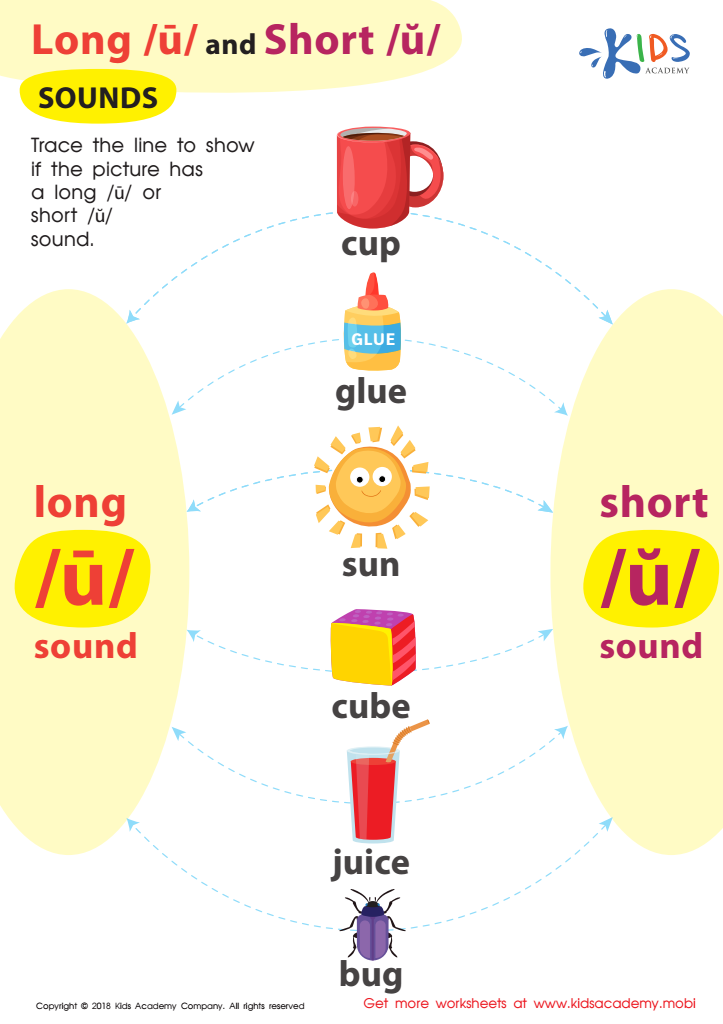
Reading: Long U and Short U Sounds Worksheet
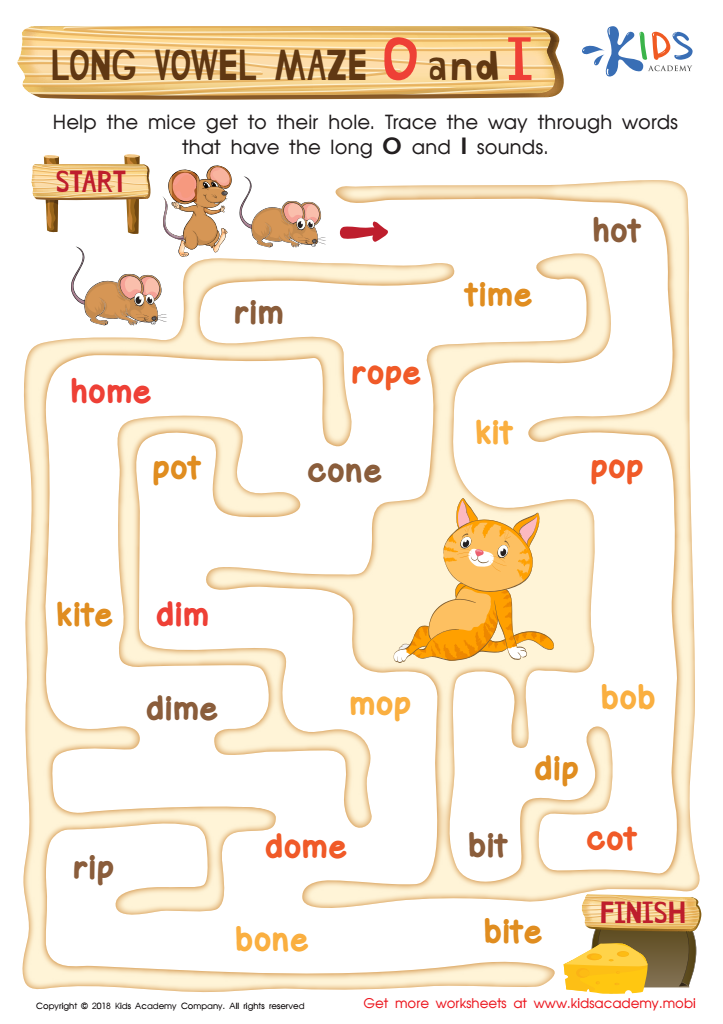
Long Vowel Maze /o/ and /i/ Worksheet








Vowel recognition and letter recognition are foundational skills in early literacy development that significantly impact a child's reading and writing abilities. Parents and teachers should care about these skills for several reasons.
Firstly, vowels are integral to the structure of words. Understanding vowel sounds (both short and long) helps children decode words more effectively, enabling them to read fluently. Without a solid grasp of vowels, students may struggle with pronunciation and comprehension, hindering their overall reading proficiency.
Secondly, letter recognition serves as a precursor to reading. Recognizing letters enables children to identify and sound out words, fostering a love for reading. When children are equipped with strong letter recognition skills, they are more confident in their writing abilities as well, leading to better communication skills.
Moreover, these skills lay the groundwork for more advanced literacy concepts, such as phonics and vocabulary development. By investing time and resources in enhancing vowel and letter recognition, parents and teachers not only boost children's academic performance but also cultivate a lifelong love for reading.
In summary, vowel and letter recognition are crucial elements of early literacy that encourage successful reading, writing, and communication, making it essential for caregivers to prioritize these skills in young learners.








