Phonics recognition Normal Letter Sounds Worksheets
5 filtered results
-
From - To
Boost your child’s reading journey with our Phonics Recognition Normal Letter Sounds Worksheets, designed for early learners! These engaging, printable exercises focus on recognizing and pronouncing each letter's standard sounds, creating a solid foundation for reading fluency. Perfect for kindergarten and first-grade students, our worksheets blend fun activities with educational rigor, ensuring that kids learn while staying entertained. Through colorful graphics and interactive tasks, children practice listening, identifying, and articulating letter sounds. Ideal for classroom or home use, these resources make phonics learning accessible and enjoyable. Start strengthening your child’s literacy skills today with our expertly crafted materials!
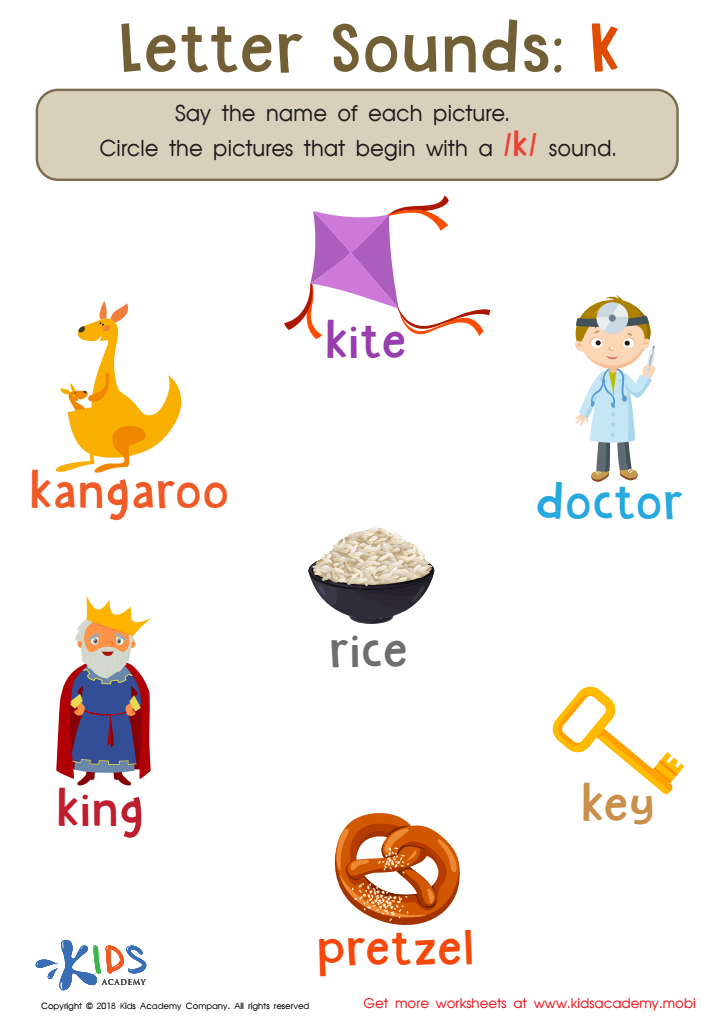
Letter K Sounds Worksheet
 Assign to My Students
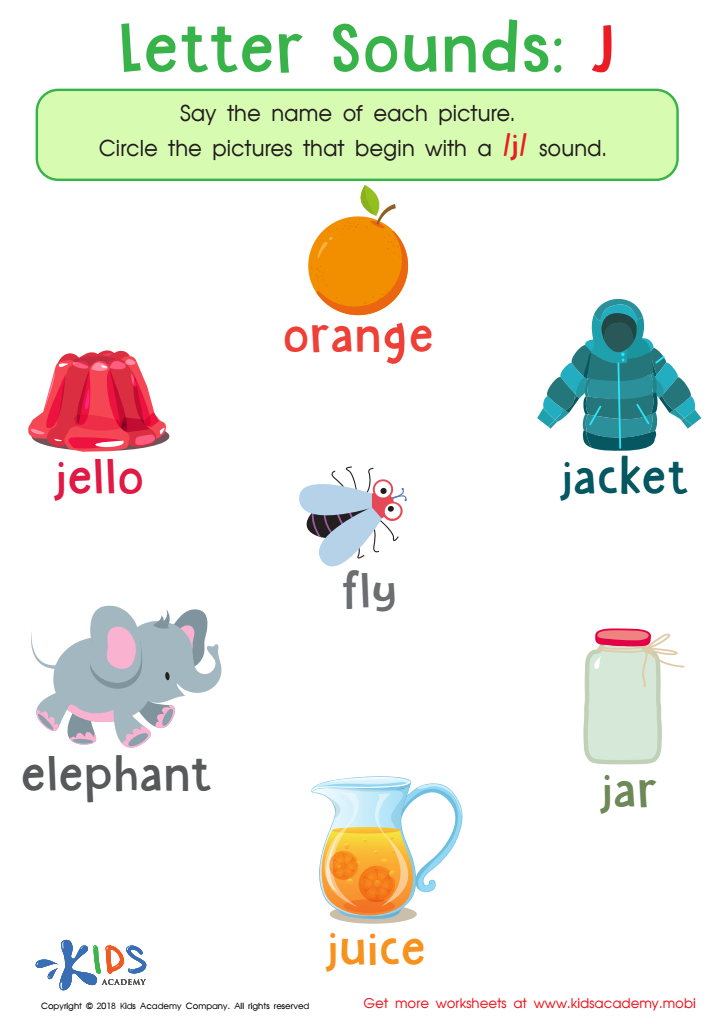
Letter Sounds: J Printable Worksheet
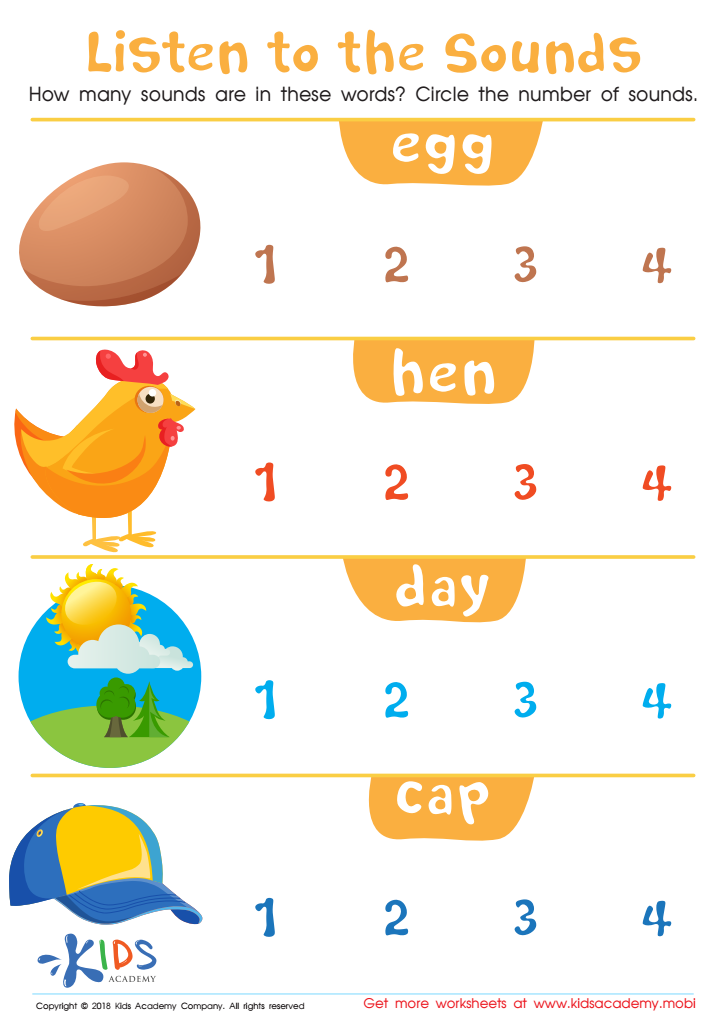
Listen to the Sounds Worksheet
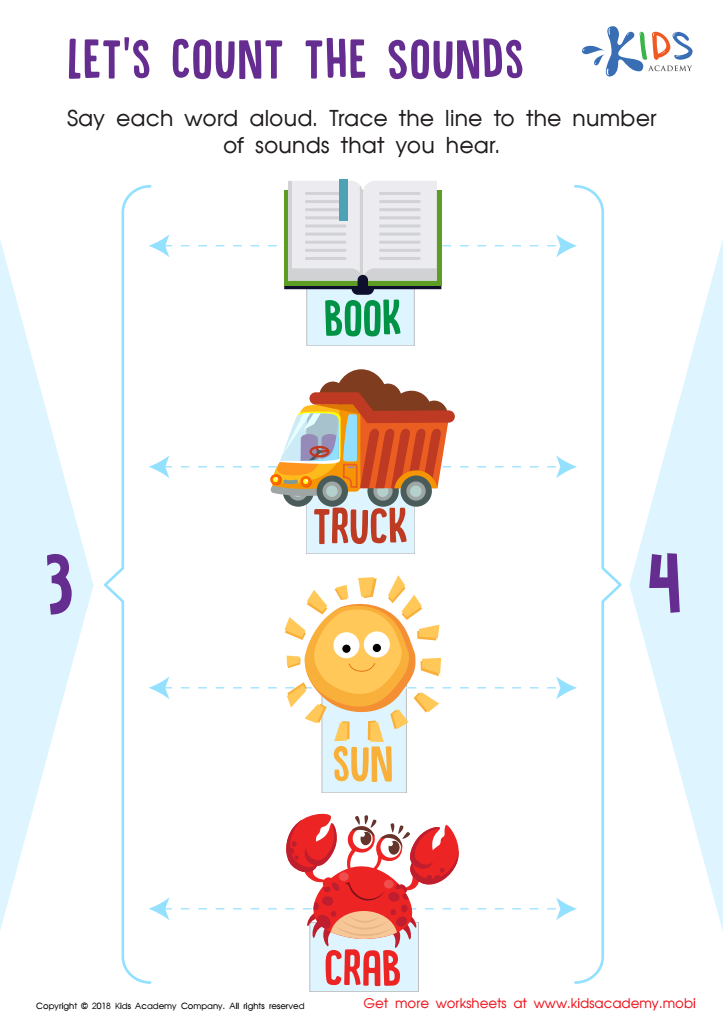
Let's Count the Sounds Worksheet
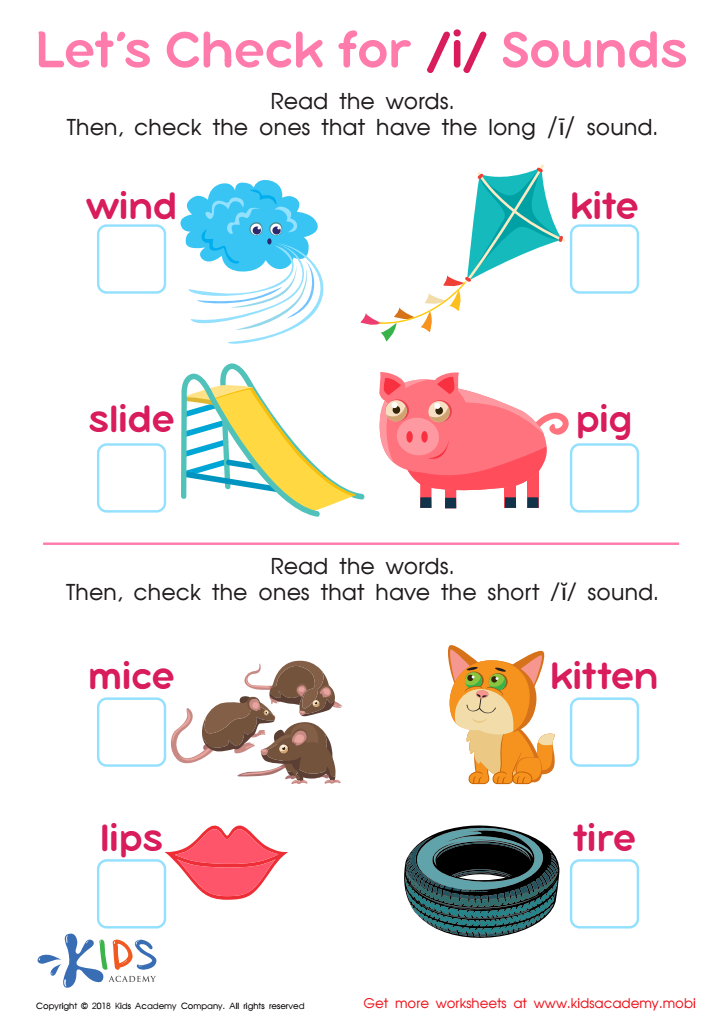
Let's Check for «i» Sounds Worksheet








Phonics recognition and understanding normal letter sounds is a crucial component of early literacy development for children. For both parents and teachers, mastering these phonics principles is significant because it lays the foundation for reading and writing proficiency. When children grasp the relationships between letters and their sounds, they can decode new words independently, boosting their reading confidence. This competency facilitates a smoother progression from recognizing words to comprehending text and understanding stories, thereby fostering a love for reading.
Moreover, strong phonics skills contribute to better spelling and writing abilities, as children become adept at associating phonemes with their corresponding graphemes. Early phonics education enables young learners to develop critical thinking and analytical skills, as they learn to segment and blend sounds to form words. This skill translates into better academic performance across subjects, as literacy is foundational to all areas of learning.
For parents, familiarity with phonics provides tools to support their children’s education at home through shared reading activities and word games, creating an encouraging and nurturing learning environment. For teachers, a focus on phonics in the classroom ensures structured and systematic instruction, enabling them to cater to varying learning styles and paces.
In essence, investing in phonics recognition encourages stronger literacy skills, setting children up for long-term academic success and a lifelong joy of learning.






