Lowercase letter writing Normal Upper & Lowercase Letters Worksheets
3 filtered results
-
From - To
Discover the engaging "Lowercase Letter Writing Normal Upper & Lowercase Letters Worksheets" designed to enhance young learners' writing skills! These printable worksheets offer a variety of exercises that help children practice forming lowercase letters correctly, ensuring they develop a strong foundation in writing. With colorful visuals and fun activities, students will enjoy mastering letter recognition and improved hand-eye coordination. Ideal for preschool and early elementary classrooms, these worksheets build confidence in writing by blending learning with creativity. Foster your child's literacy journey today with our comprehensive resources! Perfect for teachers and parents aiming to support their child’s educational growth.
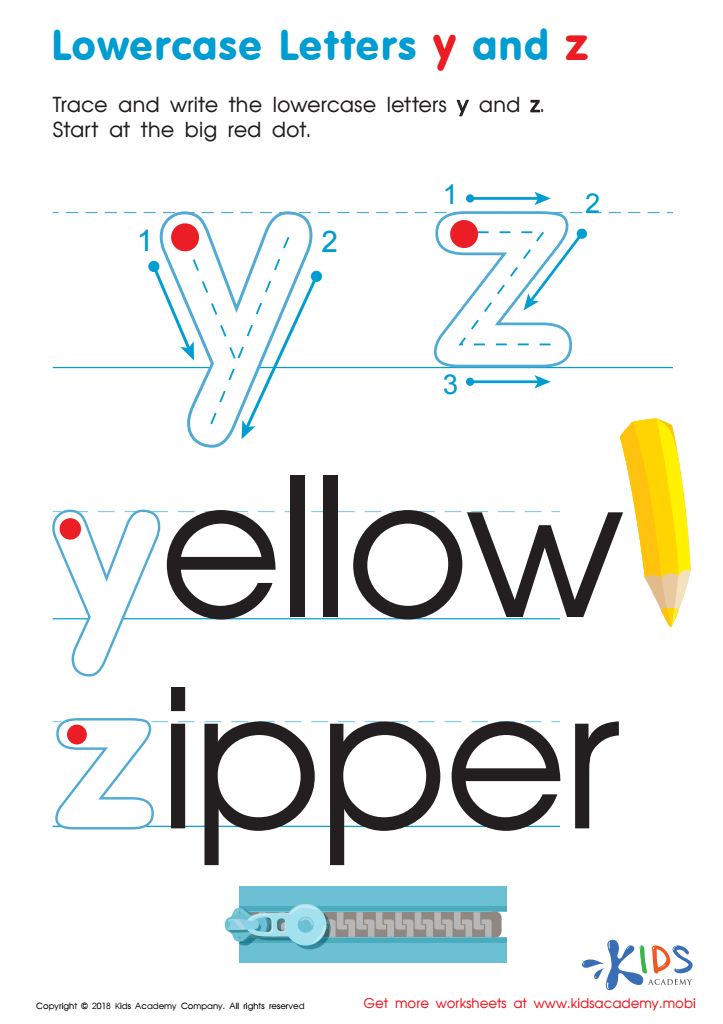
Lowercase Letters y z Worksheet
 Assign to My Students

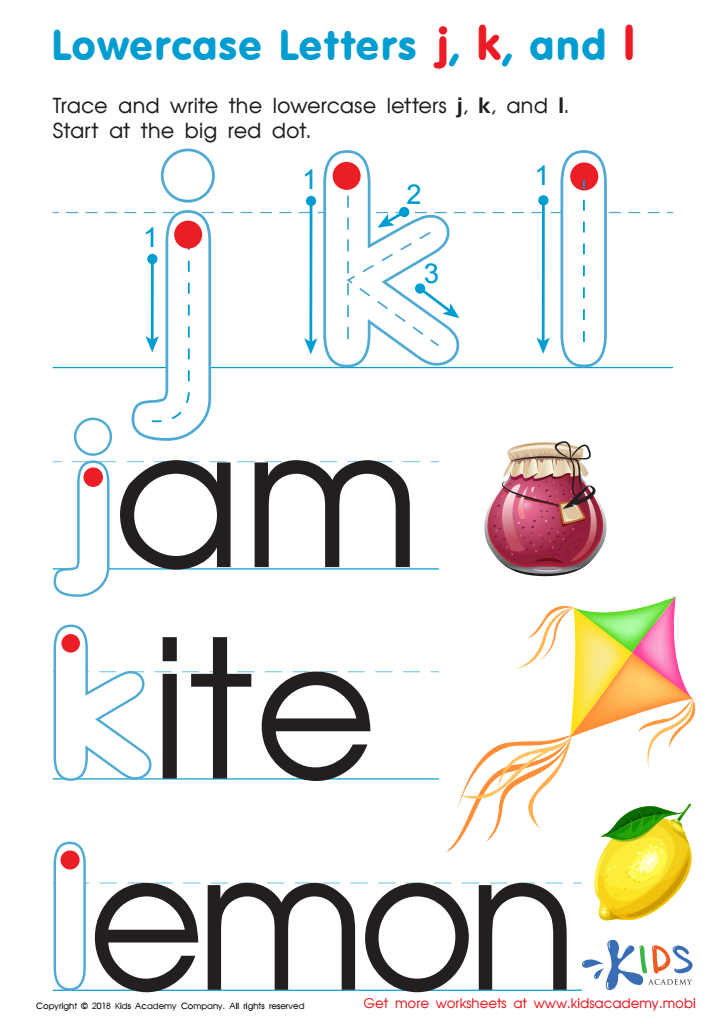
Lowercase Letters j k l Worksheet
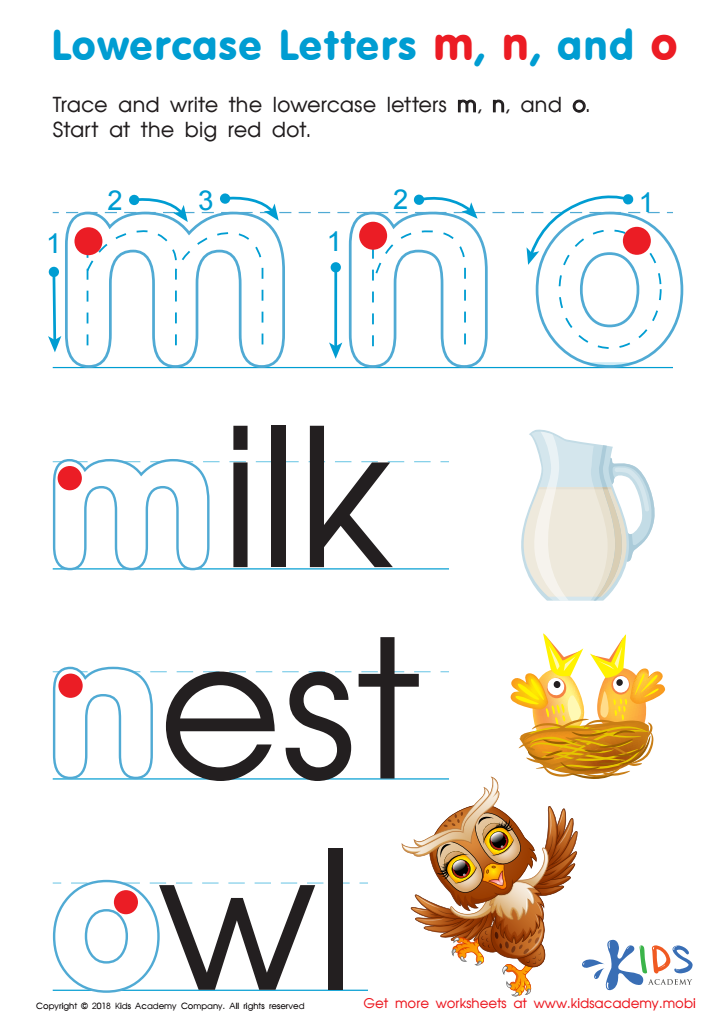
Lowercase Letters m n o Worksheet






Parents and teachers should prioritize teaching lowercase letter writing because it plays a fundamental role in early literacy development. Lowercase letters are the most commonly used forms in written language; thus, children will encounter them frequently in their reading and writing tasks. Mastering lowercase letter formation helps build a solid foundation for effective communication skills.
Furthermore, learning to write lowercase letters aids in improving fine motor skills. The physical act of writing engages children, developing their hand-eye coordination and dexterity, important skills for a variety of tasks beyond writing.
In addition, mastering both lower and normal uppercases promotes a better understanding of letter recognition and differentiation, enhancing phonemic awareness and reading fluency. When children are confident in writing small letters alongside capital ones, they are more likely to express their thoughts clearly and stay engaged in writing activities.
Moreover, building a strong base in writing normal upper and lowercase letters fosters a sense of accomplishment in children, boosting their self-confidence. Teachers and parents should encourage consistent practice, providing support and positive reinforcement to instill a love for writing and reading. Ultimately, this cultivates essential literacy skills that benefit a child's academic journey and lifelong learning.







