Uppercase identification Normal Upper & Lowercase Letters Worksheets
5 filtered results
-
From - To
Help young learners master the essentials of letter recognition with our "Uppercase Identification Normal Upper & Lowercase Letters Worksheets." Designed for preschoolers and kindergarten students, these engaging worksheets encourage children to differentiate between uppercase and lowercase letters. Each activity is crafted to enhance their ability to identify and correctly write uppercase letters, fostering early literacy skills. Perfect for classroom use or at-home practice, our worksheets make learning fun and effective. Boost your child's confidence and prepare them for reading success with our expertly designed resources. Download now and watch them thrive!
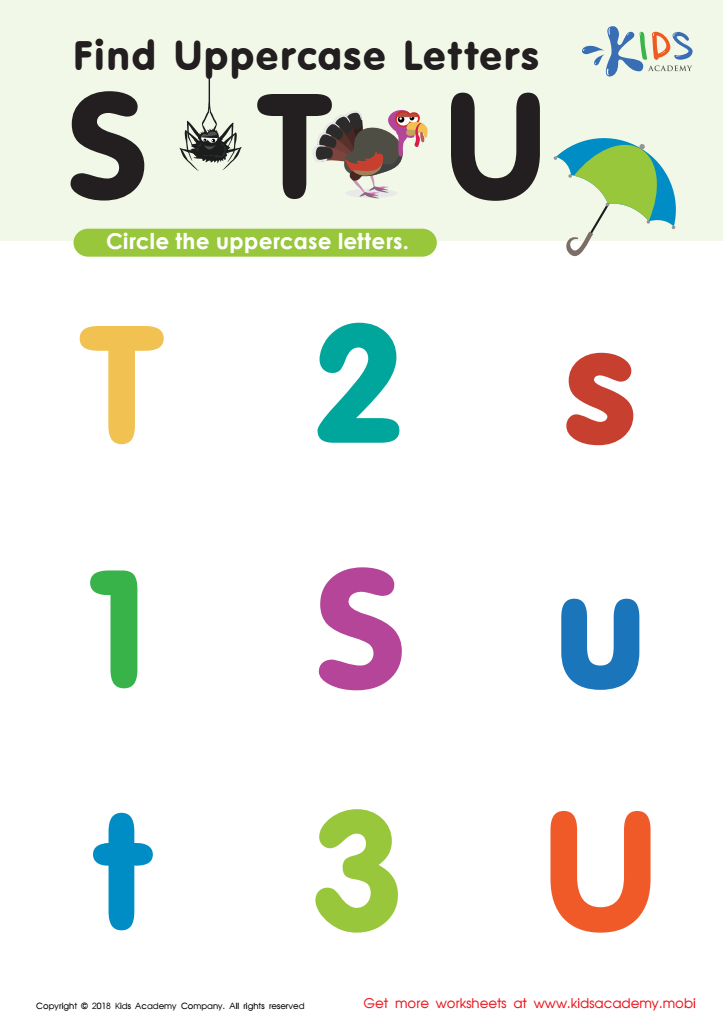
Find Uppercase Letters Worksheet
 Assign to My Students

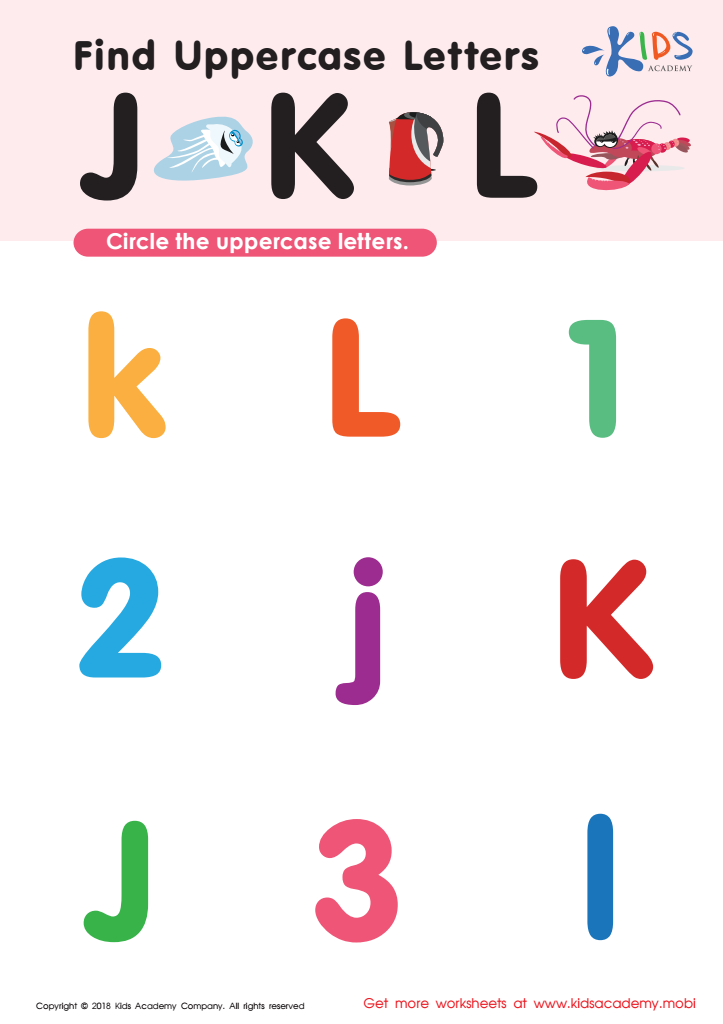
Find Uppercase Letters J, K, and L Worksheet
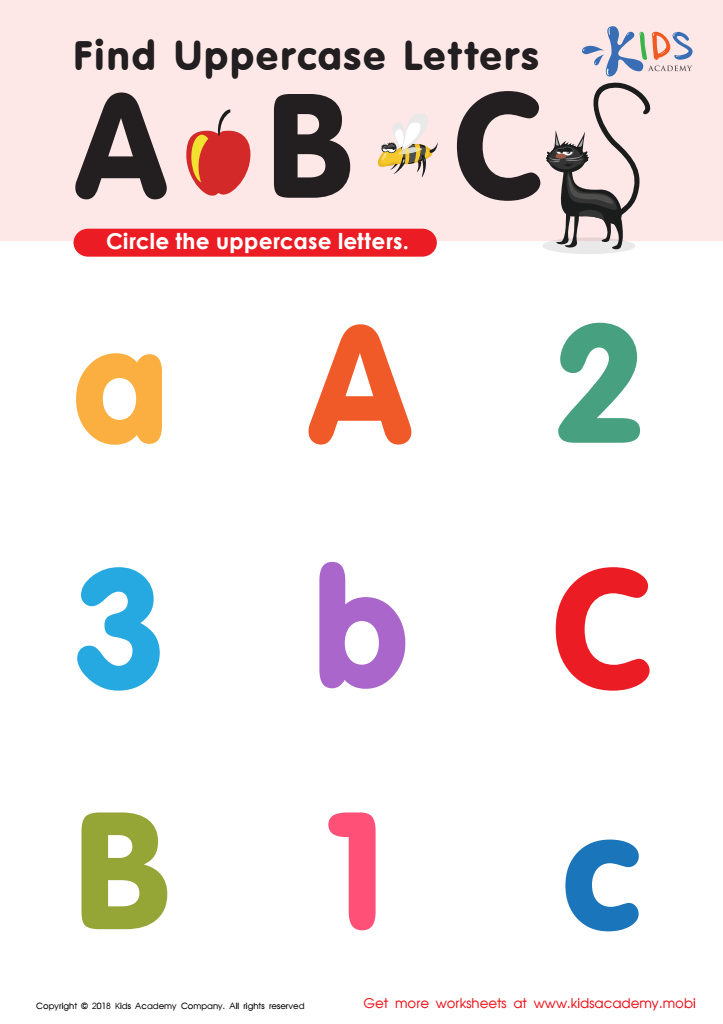
Find Uppercase Letters A, B, and C Worksheet
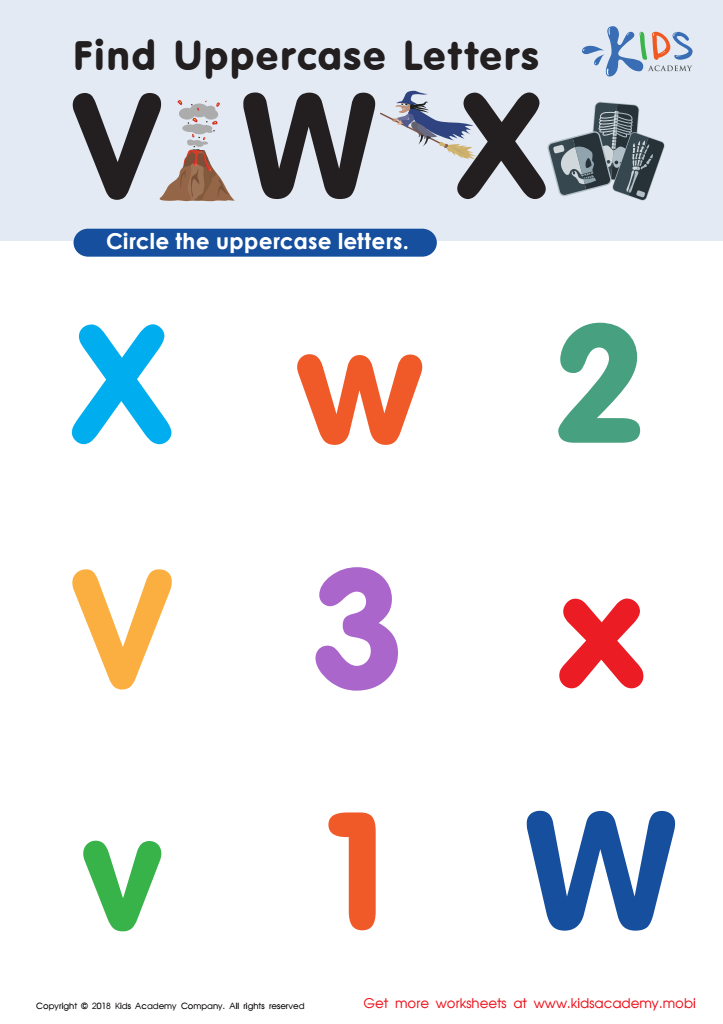
Find Uppercase Letters V, W, X Worksheet
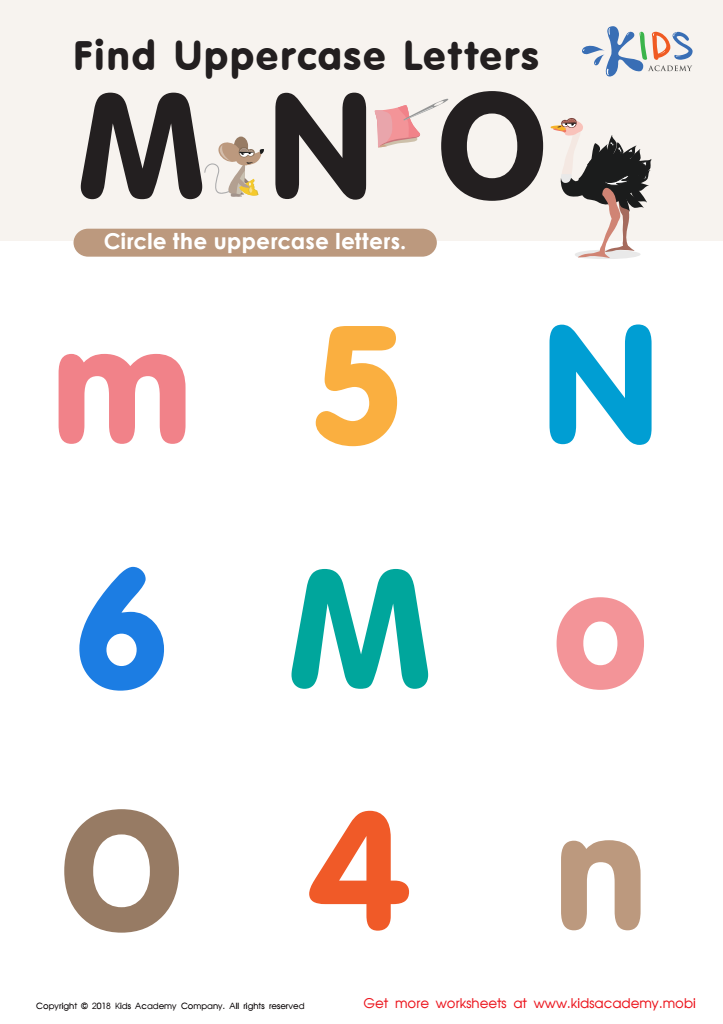
Find Uppercase Letters M, N, and O Worksheet






Parents and teachers should care about children’s ability to identify uppercase and normal uppercase and lowercase letters due to its crucial role in early literacy development. Recognizing these letters forms the cornerstone of reading and writing skills. Understanding the distinction between uppercase and lowercase letters enables children to decode written text more effectively, paving the way for improved reading fluency and comprehension.
Moreover, from a teaching perspective, having a strong grasp of letter identification directly impacts word formation and sentence construction. Students who are adept at recognizing and differentiating between the two cases are better equipped to follow basic grammar rules, such as understanding proper nouns and sentence initiation, which conventionally start with uppercase letters.
For parents, fostering these skills at home strengthens the learning reinforcement provided in school. Interactive activities that target letter recognition can make learning fun and engaging, accelerating proficiency in these foundational skills. Ignorance of these abilities can lead to struggles in more advanced literacy tasks, causing frustration and hampering academic progress. Ultimately, strong letter identification contributes to better overall academic success and a lifelong love for learning, making it a critical focus for both educators and caregivers.







