Visual discrimination Normal Upper & Lowercase Letters Worksheets
4 filtered results
-
From - To
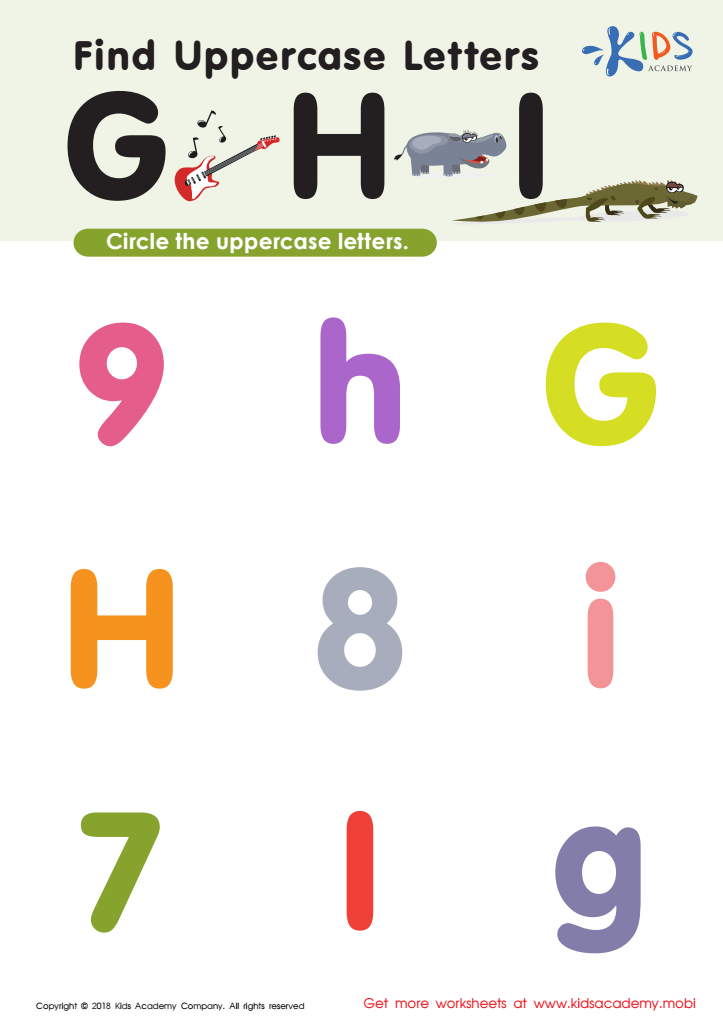
Enhance your child's visual discrimination skills with our engaging Normal Upper & Lowercase Letters Worksheets. Designed for early learners, these worksheets provide fun and effective practice for distinguishing between similar-looking letters. By engaging with the activities, children will improve their ability to identify and differentiate upper and lowercase letters. Each worksheet is crafted to support letter recognition and reinforce essential reading foundations. Ideal for home or classroom use, our printable resources foster independent learning through colorful, interactive challenges. Empower your young learner to master the alphabet with confidence and build a strong literacy foundation today!
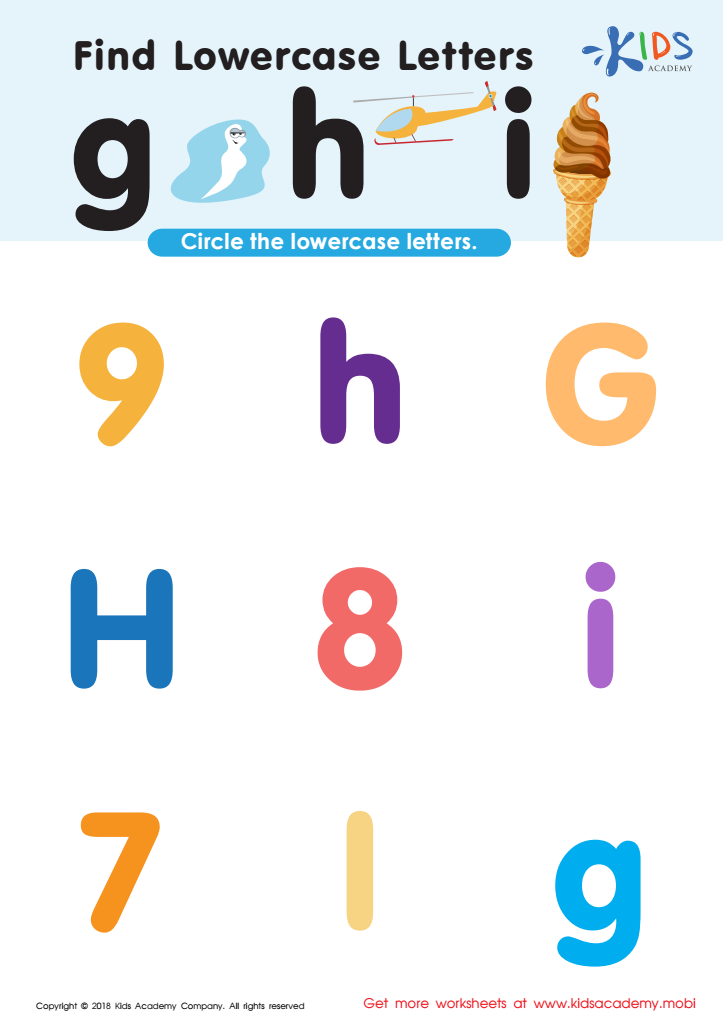
Find Lowercase Letters g h i Worksheet
 Assign to My Students
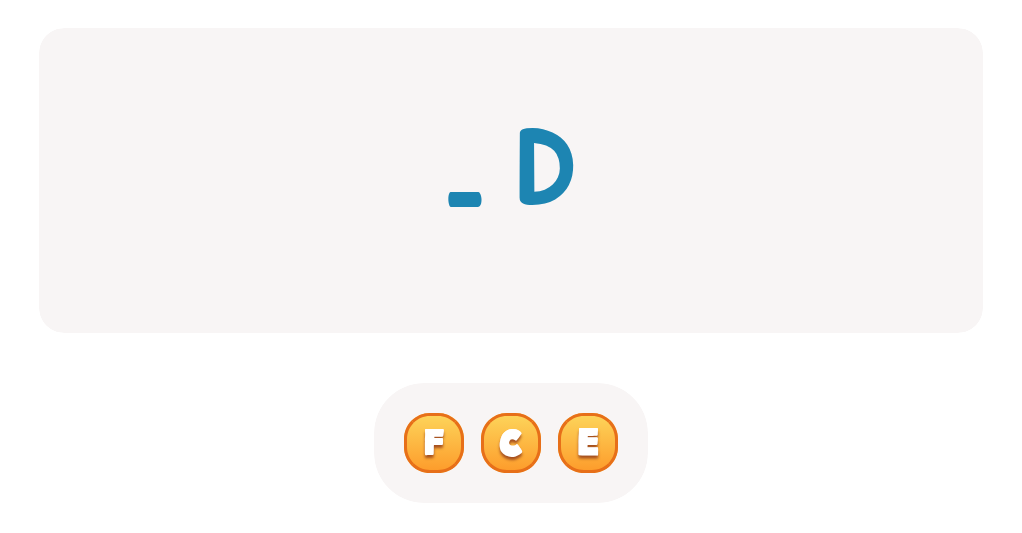

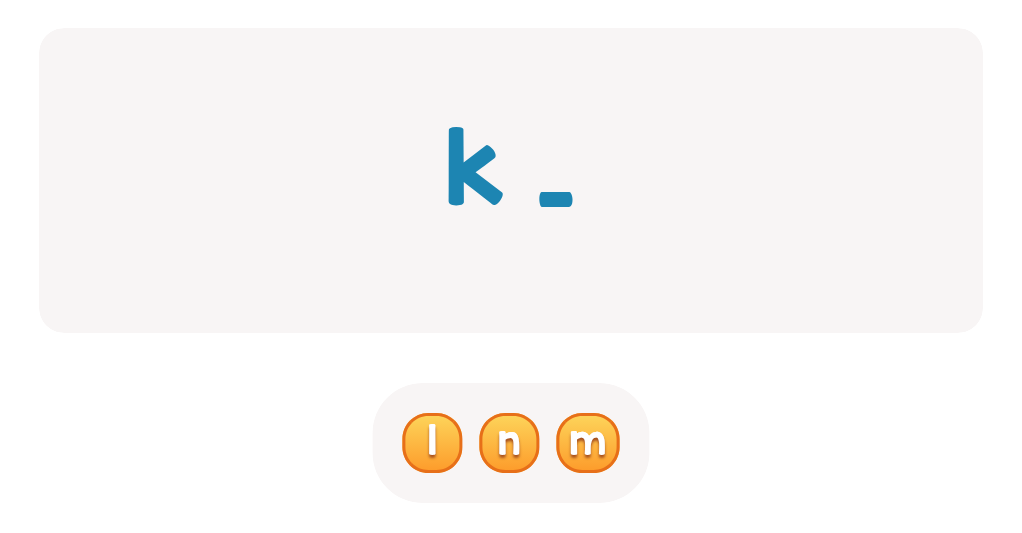
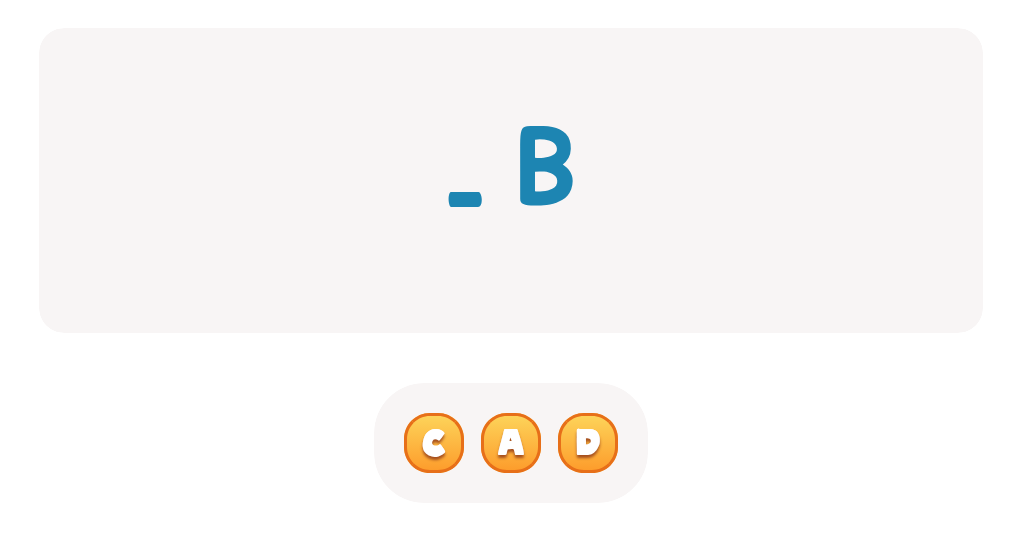
Find Uppercase Letters G, H, and I Worksheet
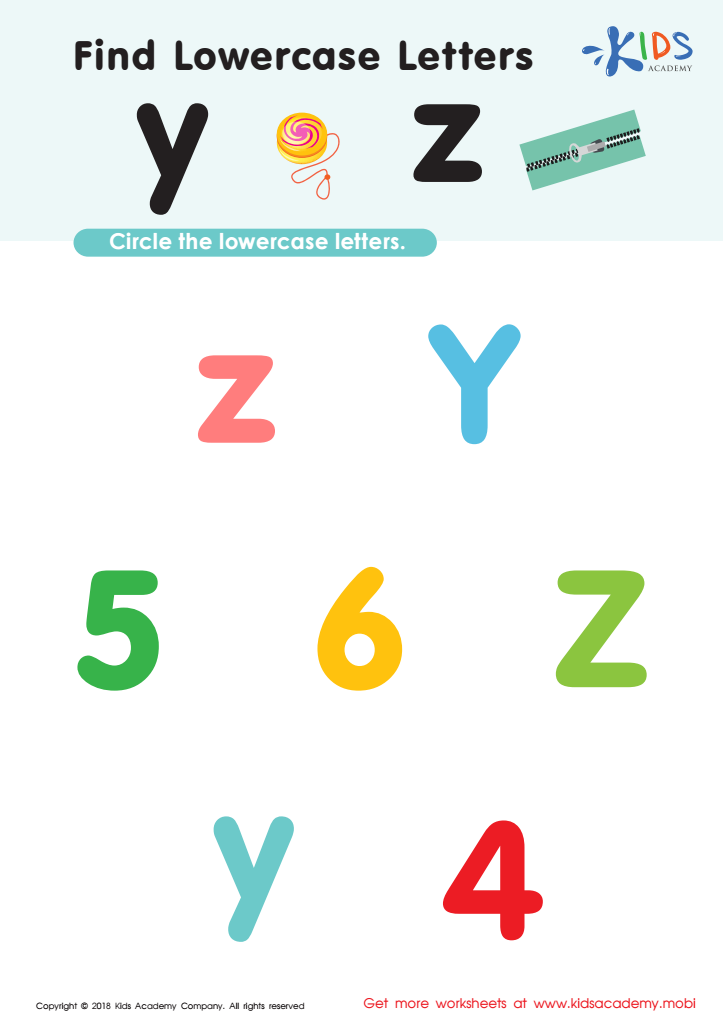
Find Lowercase Letters y z Worksheet
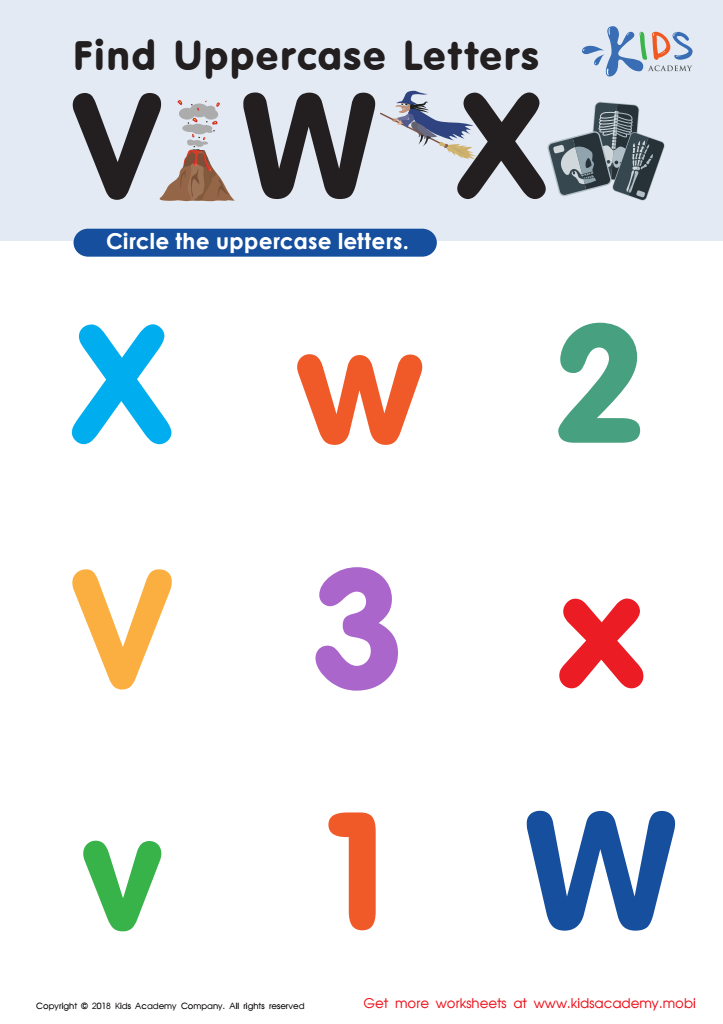
Find Uppercase Letters V, W, X Worksheet






Visual discrimination is the ability to recognize and differentiate between shapes, letters, and symbols, which is crucial for children’s literacy development. For parents and teachers, encouraging visual discrimination of uppercase and lowercase letters is essential to promote reading and writing skills.
Understanding the differences between uppercase and lowercase letters aids children in not only recognizing words but also in grasping basic grammar rules. Children learn that uppercase letters are often used at the beginning of sentences or for proper nouns, while lowercase letters make up the majority of the text they read. This foundational knowledge is key to overall literacy.
Furthermore, strong visual discrimination skills can reduce confusion and frustration in young learners, fostering confidence in their ability to read and write. When children can quickly identify letters and their variations, they are more likely to develop fluency, increasing comprehension and retention of information.
Finally, mastery of letter recognition supports positive classroom experiences. Teachers fostering these skills can better engage students, while parents reinforcing these lessons at home create a consistent learning environment. Ultimately, prioritizing visual discrimination lays the groundwork for future academic success and lifelong learning.







