Motor skills development Normal English for Beginners Worksheets
3 filtered results
Difficulty Level
Grade
Age
-
From - To
Subject
Activity
Standards
Discover our engaging "Motor Skills Development Normal English for Beginners" worksheets designed to enhance children's coordination and fine motor skills. These printable resources provide fun activities that incorporate basic English vocabulary, making learning enjoyable and interactive. Ideal for ESL learners, each worksheet encourages children to practice tracing, cutting, and coloring, promoting hand-eye coordination while developing language skills. Our user-friendly design ensures that educators and parents can easily integrate these activities into lesson plans or at-home learning. Support your child's growth with our delightful worksheets, fostering both motor skills and English language proficiency in young learners. Start exploring today!
Favorites
With answer key
Interactive

Letter H Tracing Page
Trace the letter "H", then practice writing its lowercase form. Finally, choose your favorite form of transport and ride away! Get our worksheets to make learning fun and easy.
Letter H Tracing Page
Worksheet
Letter O Coloring Sheet
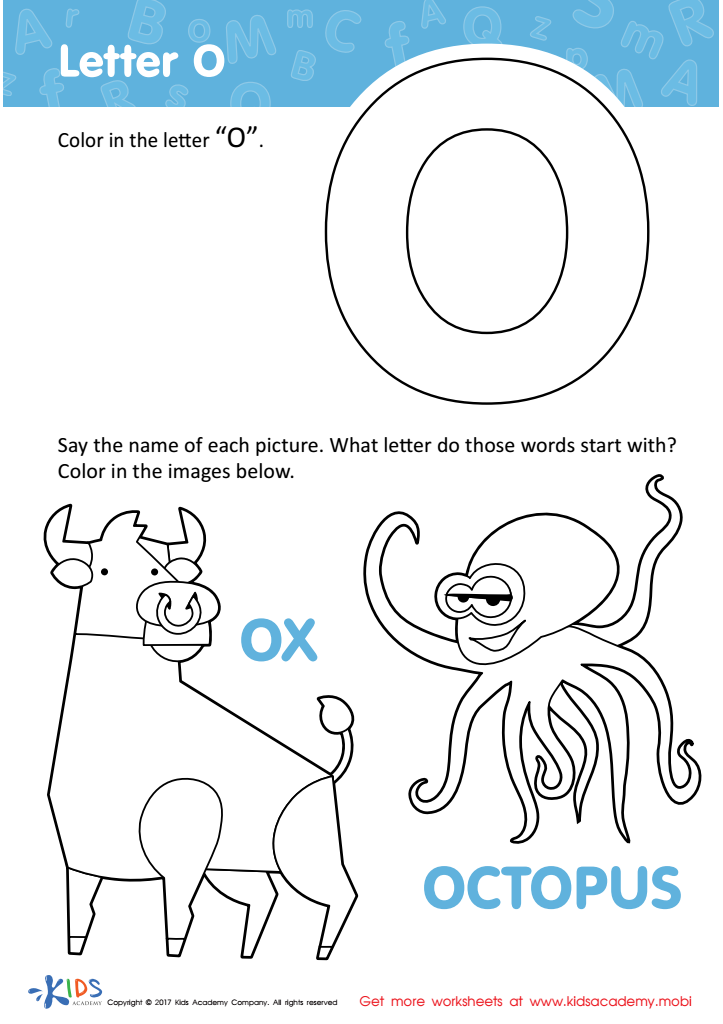
Oh my! The letter "O" is so much fun. Coloring in the octopus and ox on this delightful letter "O" coloring page can help your child have fun while strengthening their recognition of the letter and sound.
Download (PDF)
 Assign to My Students
Assign to My Students
Letter O Coloring Sheet
Worksheet
Letter B Tracing Page
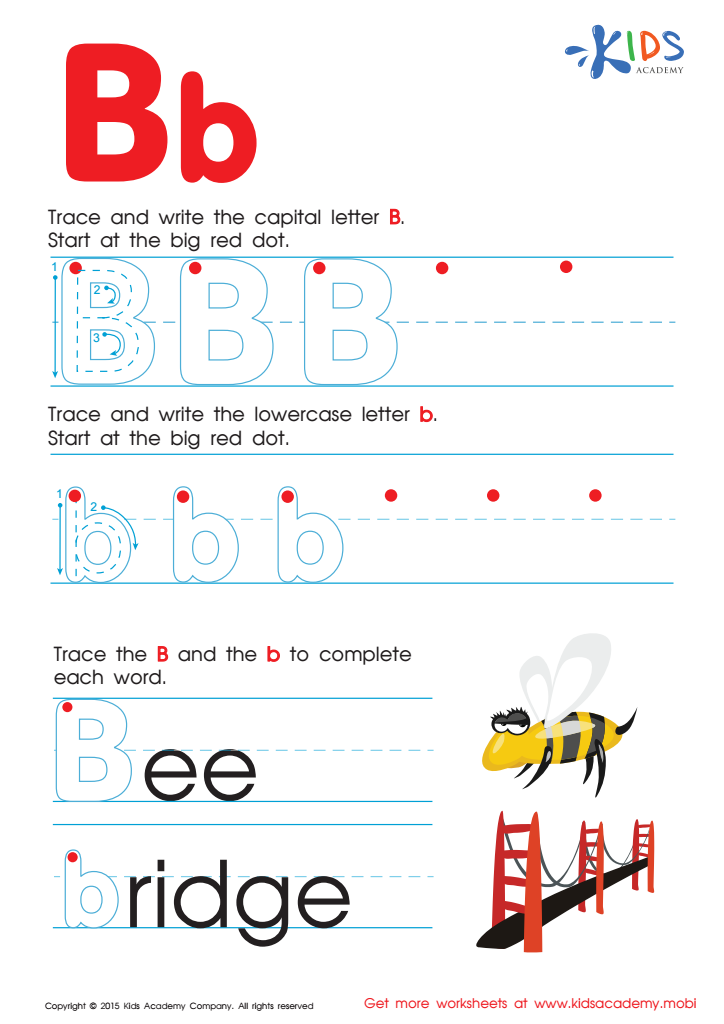
Ready to learn the Alphabet? Put your pencil on the red dot and trace & write both capital & lowercase "B". Then have a look at the pictures. Catch the bee, cross the bridge & write the letters to complete the words. More ABC worksheets for kindergarten available!
Letter B Tracing Page
Worksheet
Join Kids Academy for Free
Who is primarily going to use this learning content?




Motor skills development is very important for young children, and parents and teachers should care about it. Motor skills are movements we make with our bodies. There are two types: gross motor skills and fine motor skills.
Gross motor skills involve big movements, like running, jumping, and climbing. They help children learn to control their bodies and have fun playing. Fine motor skills are smaller movements, like holding a pencil, tying shoes, and cutting paper.
When children develop these skills, they build confidence and independence. For example, a child who can run and jump feels strong. A child who can use scissors or button their shirt feels grown-up. These skills also help with learning. Good motor skills can help children write better, pay attention, and even solve problems.
Additionally, developing motor skills often happens when children play. This gives them a chance to be active and socialize with others. Parents and teachers can support motor skills development by providing opportunities for play and activities. They can encourage children to climb, dance, draw, and play games. When children grow strong and skilled, they can learn better and enjoy life more. That is why motor skills development is so important!