Motor skills development Normal Grade 1 Alphabet Worksheets
3 filtered results
-
From - To
Enhance your child’s motor skills with our engaging Grade 1 Alphabet Worksheets designed to promote hand-eye coordination and fine motor abilities. These activities encourage students to trace, write, and recognize letters while building confidence in their writing skills. Our carefully crafted worksheets include fun exercises that incorporate coloring, connecting dots, and letter formation to stimulate young minds. Perfect for use at home or in the classroom, these worksheets create a hands-on approach to learning the alphabet. Help your child develop essential motor skills while making learning enjoyable and interactive with our diverse selection of activities tailored for first graders.
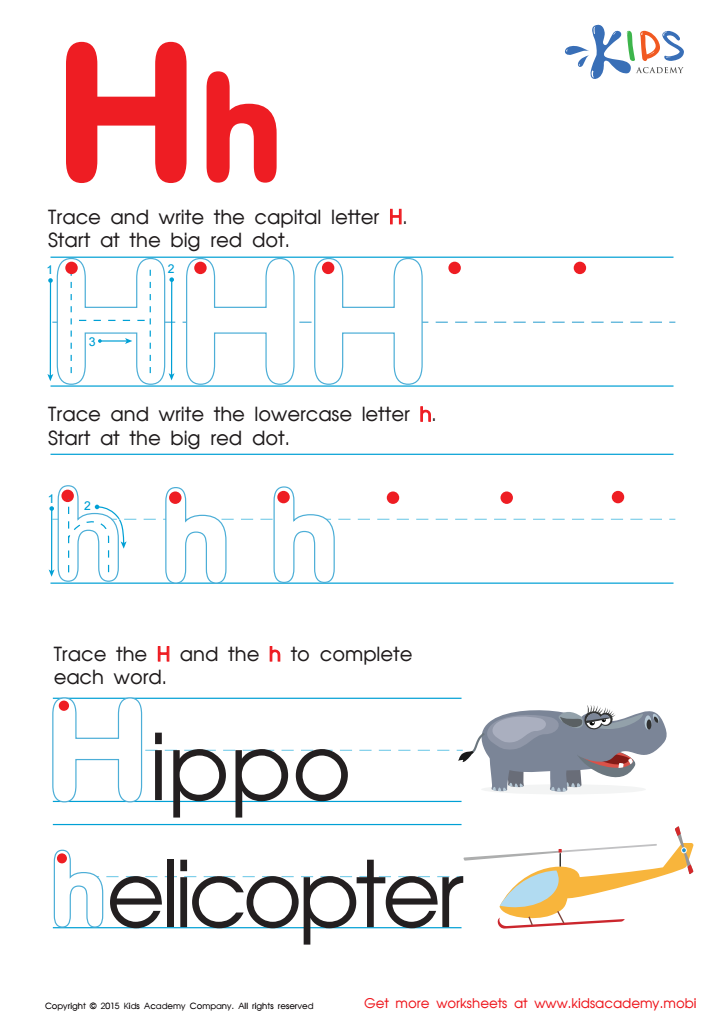
Letter H Tracing Page
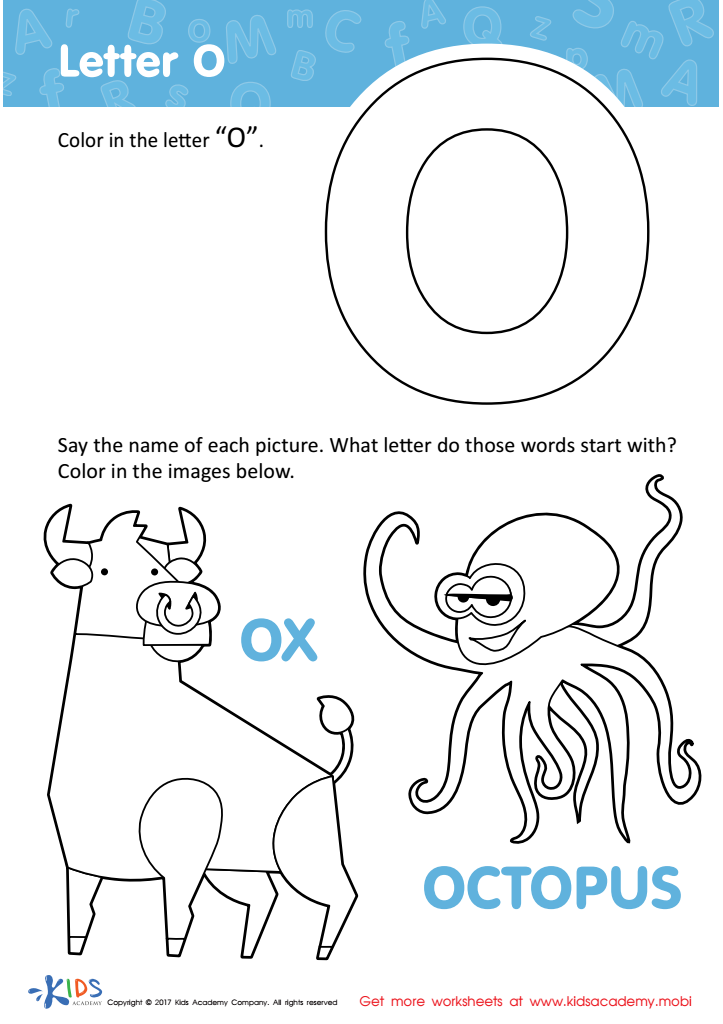
Letter O Coloring Sheet
 Assign to My Students
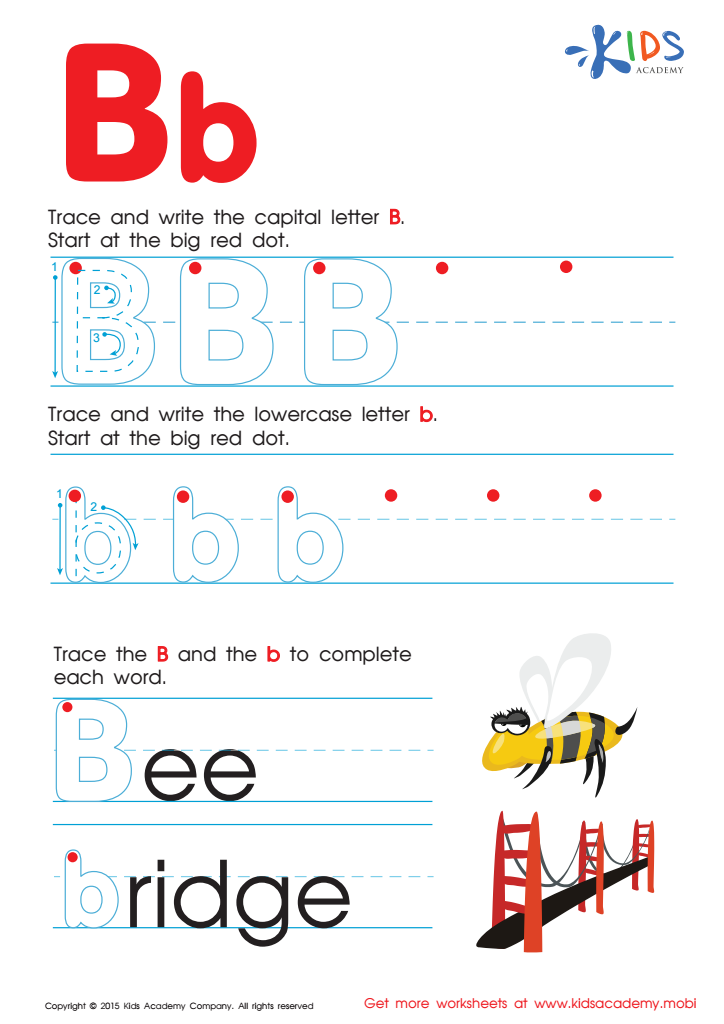
Letter B Tracing Page








Motor skills development is crucial for young learners, especially in Grade 1, as it directly impacts their academic and social success. Fine motor skills, which involve small muscle movements, play an essential role in activities such as writing, drawing, and manipulating classroom tools. When children develop these skills, they can better grasp a pencil, control their hand movements, and eventually write letters of the alphabet legibly. This ability transforms into reading and writing fluency, foundational elements of literacy.
Furthermore, gross motor skills, involving larger movements, are equally significant as they support overall coordination and body awareness. Engaging in activities like running, jumping, and balancing can enhance children's concentration and focus in the classroom.
Teachers and parents should care about motor skills because they not only influence academic performance but also build confidence and social interactions. As children engage in group activities, they learn teamwork and cooperation. Supporting motor skill development through playful activities, games, and crafts could foster both academic growth and social-emotional skills.
In summary, attention to motor skills in Grade 1 creates a strong foundation for literacy and overall well-being, ensuring children are equipped to tackle future challenges in learning and life.