Handwriting Skills Normal Grade 1 Letter Recognition Worksheets
5 filtered results
Difficulty Level
Grade
Age
-
From - To
Subject
Activity
Standards
Enhance your first grader's handwriting skills with our engaging Letter Recognition Worksheets! Designed specifically for Grade 1 students, these printable resources aid in developing essential letter recognition and fine motor skills. Children will enjoy various activities that encourage them to practice writing both uppercase and lowercase letters while becoming more confident in their letter recognition abilities. Our worksheets are thoughtfully crafted to keep learners motivated and provide a solid foundation for their literacy journey. Perfect for home or classroom use, these exercises will help your child learn to write letters beautifully while reinforcing their understanding of the alphabet!
Favorites
With answer key
Interactive
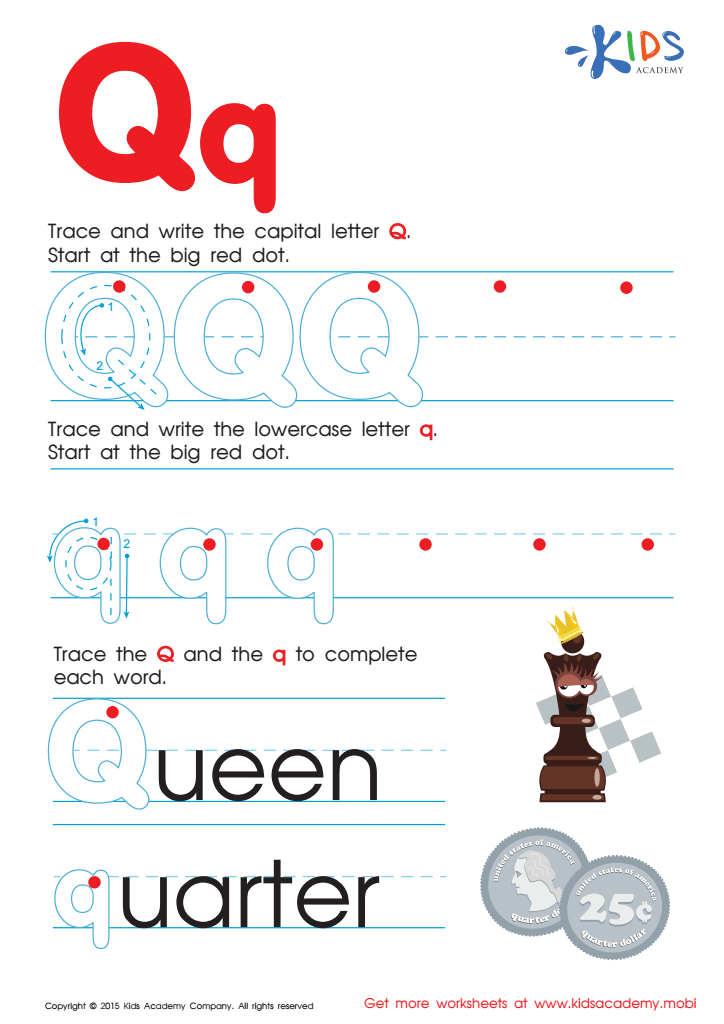
Letter Q Tracing Page
Learn the letter "Q"! Trace and write it a few times in upper and lowercase. Then help the Queen by writing her initial letter. Finally, write "quarters" and practice with more alphabet worksheets.
 Assign to My Students
Letter Q Tracing Page
Worksheet
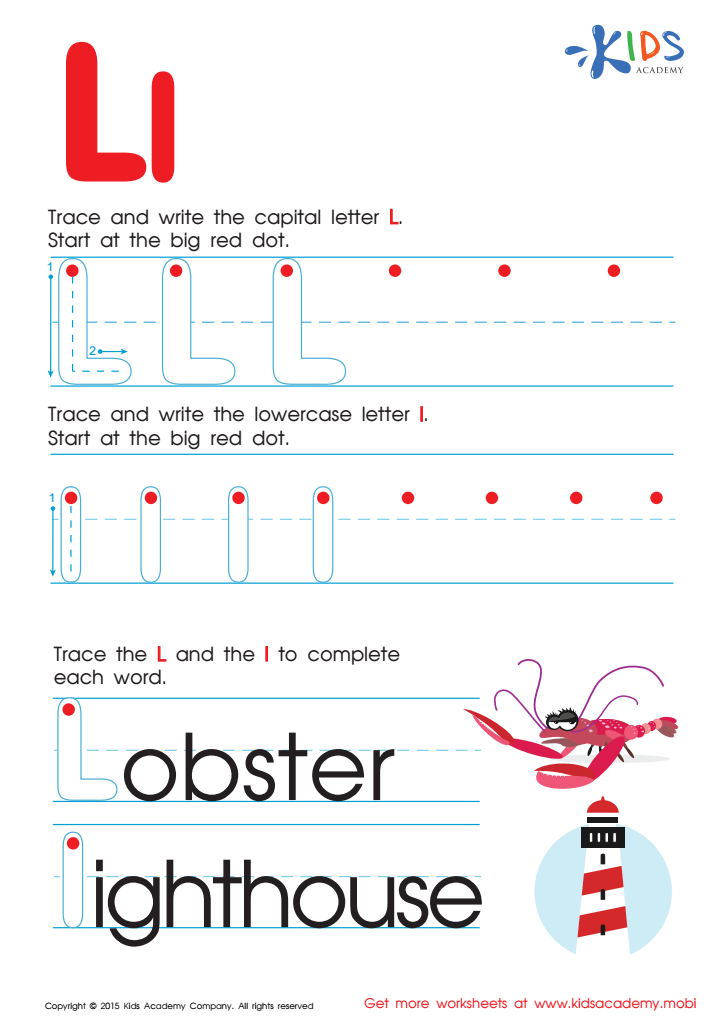
Letter L Tracing Page
Trace uppercase and lowercase letters to practice writing. Pay attention to the lowercase letters, like the "L", that are not as tall as an uppercase "I" or as short as a lowercase "i". Words like "lobster" and "lighthouse" are waiting to be completed. Enjoy!
Letter L Tracing Page
Worksheet
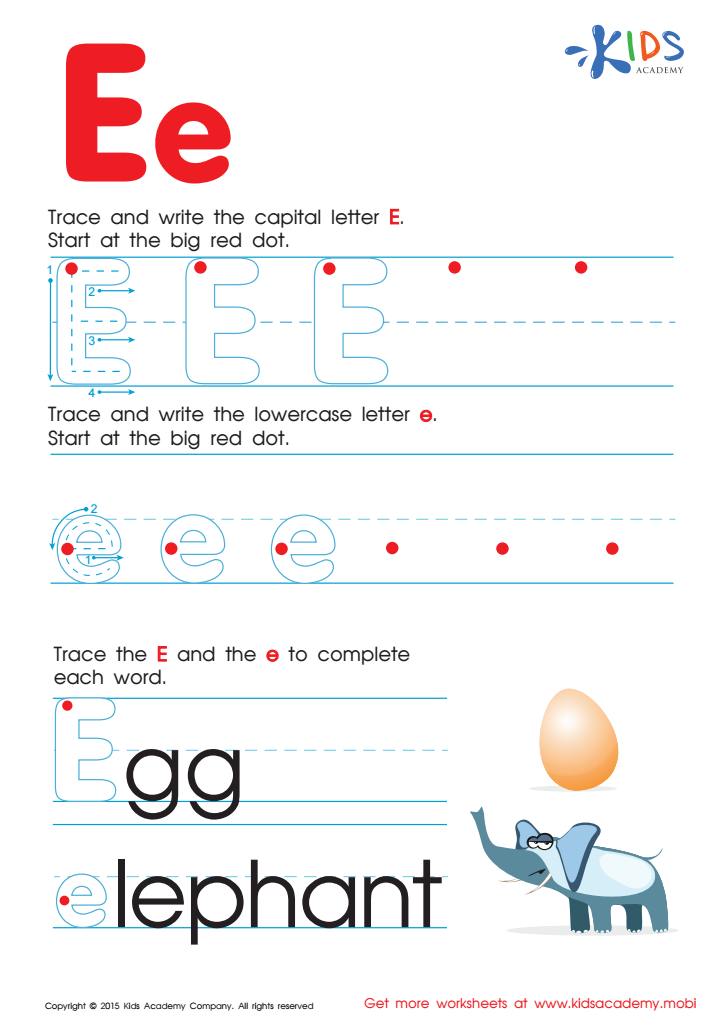
Letter E Tracing Page
Trace and write the uppercase and lowercase "E" starting at the big red dot. Complete words to perfect letter writing. Egg and Elephant must be written carefully. More alphabet worksheets for kindergarten are available for download to spend more time with your children learning.
Letter E Tracing Page
Worksheet
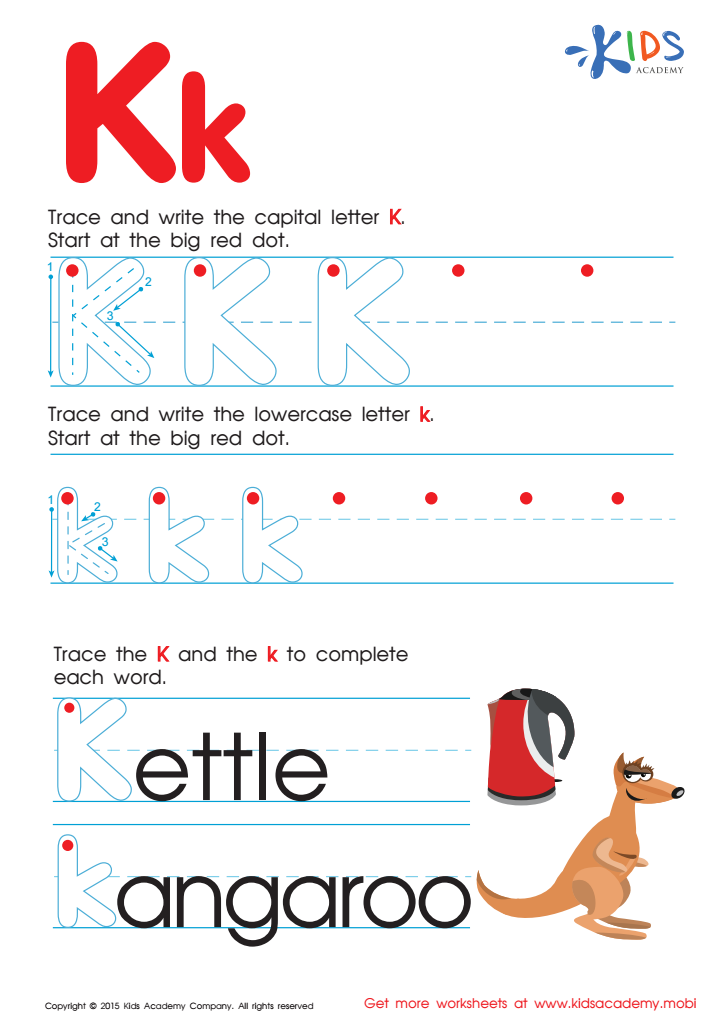
Letter K Tracing Page
Trace and write the letter K; start at the big red dot. Use it to complete words like "Kettle" and "Kangaroo". Visit Kids Academy for more free alphabet worksheets for kindergarten.
Letter K Tracing Page
Worksheet
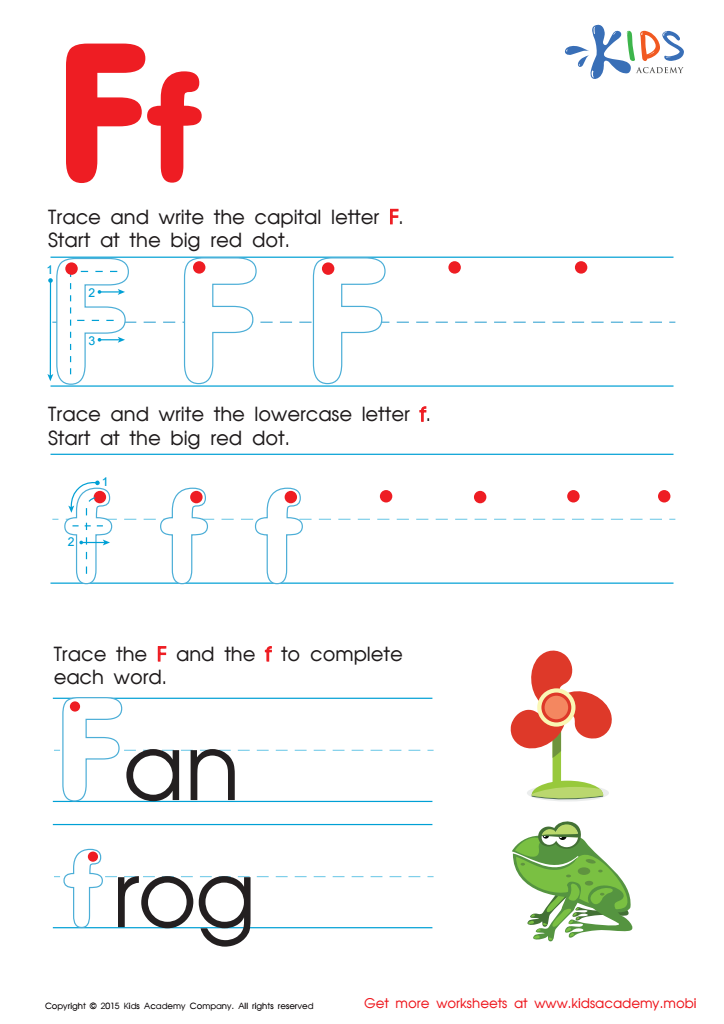
Letter F Tracing Page
Trace "F" with your pencil! Start at the red dot and draw lines — it's fun! Check it out — it looks great! Keep practicing to make it even better. Then, try completing words. Help out the broken fan and funny frog! Get free alphabet worksheets and activities for your kids. Come see our new tracing pages!
Letter F Tracing Page
Worksheet
Join Kids Academy for Free
Who is primarily going to use this learning content?



Handwriting skills and letter recognition are foundational components of early childhood education, particularly in Grade 1. At this stage, children learn to connect spoken language with written forms, making letter recognition crucial. It supports literacy development, allowing children to read and write with increasing confidence.
Parents and teachers should prioritize handwriting skills because they foster fine motor development, enhancing hand strength and coordination necessary for writing. Proper handwriting encourages self-expression; children gain the ability to communicate their thoughts effectively. Additionally, mastering handwriting during this formative year promotes academic success, as it is directly connected to standardized assessments that measure literacy.
Furthermore, attention to handwriting and letter recognition can boost a child's self-esteem. When children can write legibly, they feel a sense of accomplishment. This positive reinforcement motivates them to engage further in reading and writing activities.
Ultimately, by focusing on handwriting skills and letter recognition, parents and teachers equip children with tools not only vital for academic achievement but also essential for lifelong communication skills. Emphasizing these skills lays the groundwork for fluency and comprehension, ensuring children are prepared for more complex literacy tasks as they progress in their education.