Alphabetical order understanding Normal Grade 1 Worksheets
3 filtered results
Difficulty Level
Grade
Age
-
From - To
Subject
Activity
Standards
Our Alphabetical Order Understanding Normal Grade 1 Worksheets are designed to help first graders master the basics of alphabet organization in a fun and engaging way. These printable worksheets encourage young learners to familiarize themselves with the sequence of the alphabet and improve their reading and writing skills. Each worksheet is filled with interactive exercises, such as arranging words or letters in alphabetical order, which aids in memory retention and cognitive development. Perfect for classroom use or at-home practice, these worksheets make learning both effective and enjoyable for first-grade students. Download now to give your child a head start on literacy skills!
Favorites
With answer key
Interactive
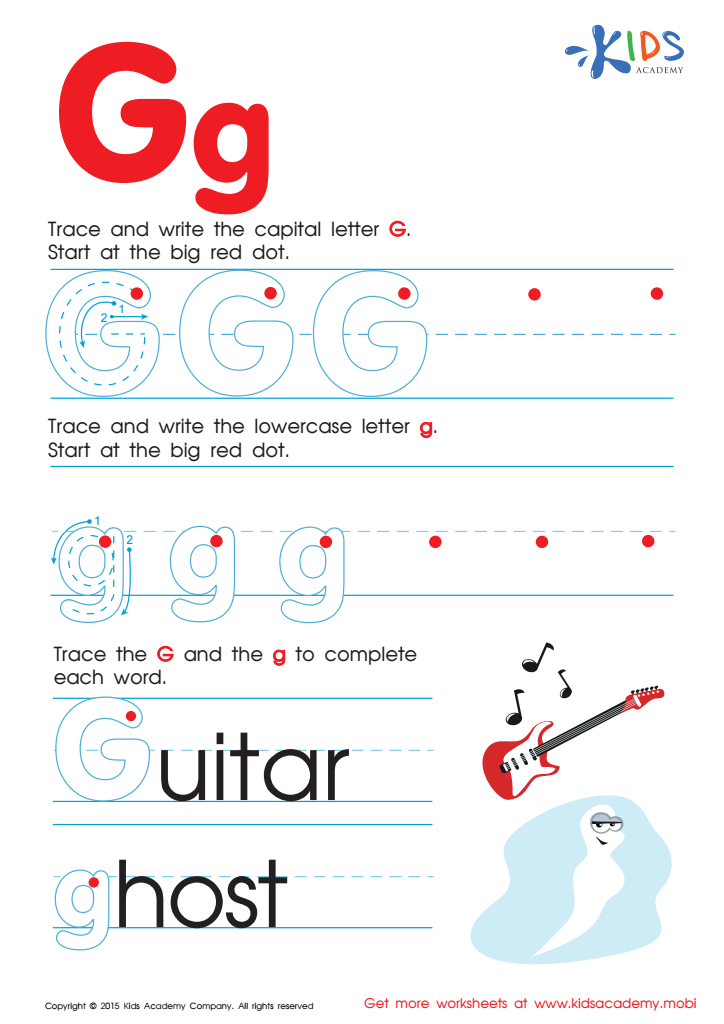
Letter G Tracing Page
Get ready to trace the letter "G" – with a big red spot as the starting point, trace the lines and watch the letter appear. Uppercase and lowercase letters are both easy and fun to write. Give it a go and finish the word "go". Play the guitar and say "hello" to a funny ghost!
Letter G Tracing Page
Worksheet
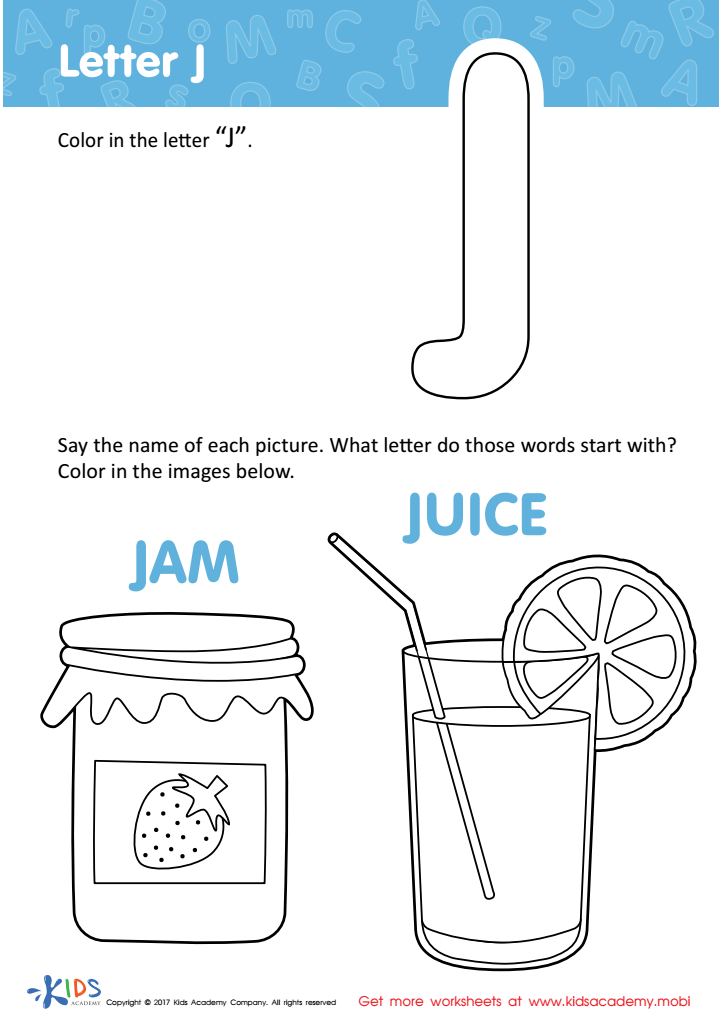
Letter J Coloring Sheet
Practice the letter 'J' with your little one with this fun coloring page! Pictures of jar, juice, jam and jelly make it an enjoyable experience for kids. Learning the letter and coloring is fun for even the youngest learners.
Download (PDF)
 Assign to My Students
Assign to My Students
Letter J Coloring Sheet
Worksheet
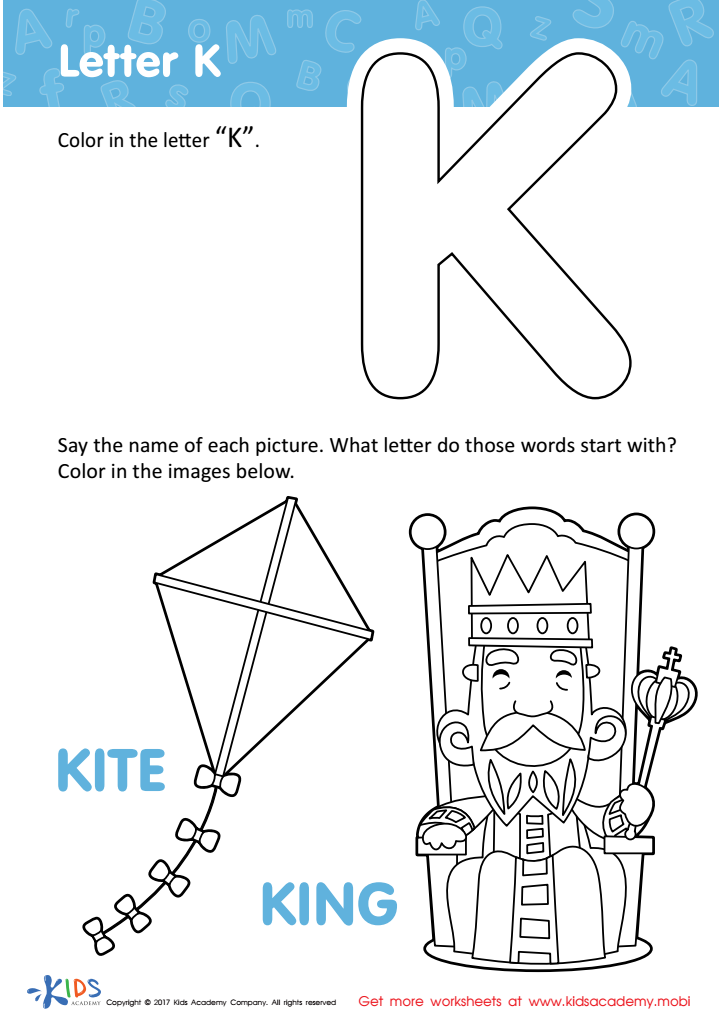
Letter K Coloring Sheet
This letter K coloring page captivates your child's creativity while learning the letter! Showcasing a king and kite, common words for their age group, it's sure to spark their imagination.
Download (PDF)
Assign to My Students
Assign to My Students
Letter K Coloring Sheet
Worksheet
Join Kids Academy for Free
Who is primarily going to use this learning content?






Understanding alphabetical order is crucial for Grade 1 students as it lays the foundation for a wide range of essential skills that support their academic and personal development. For parents and teachers, ensuring students grasp this concept plays a pivotal role in their early education journey.
Firstly, familiarity with alphabetical order enables children to organize information more efficiently. This organizational skill is fundamental for activities like using a dictionary, telephone directory, or library catalog, which becomes increasingly significant as they advance in their educational journey. Secondly, it enhances their ability to sort, categorize, and retrieve information effortlessly, fostering independent learning.
Moreover, alphabetical order bolsters their literacy skills. It aids in the quick recognition of letters and familiarizes them with the sequencing of the alphabet, which is essential for spelling and reading development. For instance, recognizing that 'ball' comes before 'bat' cultivates their comprehension of nuanced differences in words and enhances their cognitive sorting skills.
For teachers, it provides a standardized method to manage classroom resources, lists, and expectations, making it easier for students to follow instructions and stay organized. For parents, supporting the understanding of alphabetical order at home can build a robust academic and cognitive framework, instilling a sense of confidence and preparedness in their children for future academic challenges.