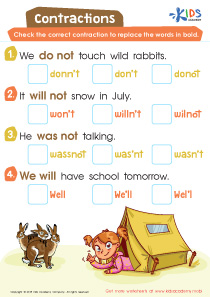
Attention to Detail Normal Grade 1 Worksheets
4 filtered results
-
From - To
Discover our engaging "Attention to Detail Grade 1 Worksheets" designed to enhance observational skills and critical thinking in young learners. Tailored for first graders, these worksheets provide fun activities that encourage students to focus on specific details, improving their concentration and analytical abilities. With interactive tasks such as matching, spotting differences, and identifying patterns, children will develop essential skills while enjoying their learning journey. Perfect for classroom or homeschooling settings, our worksheets align with educational standards and support skill-building through playful, age-appropriate exercises. Boost your child's confidence and academic success with these captivating attention-to-detail worksheets!
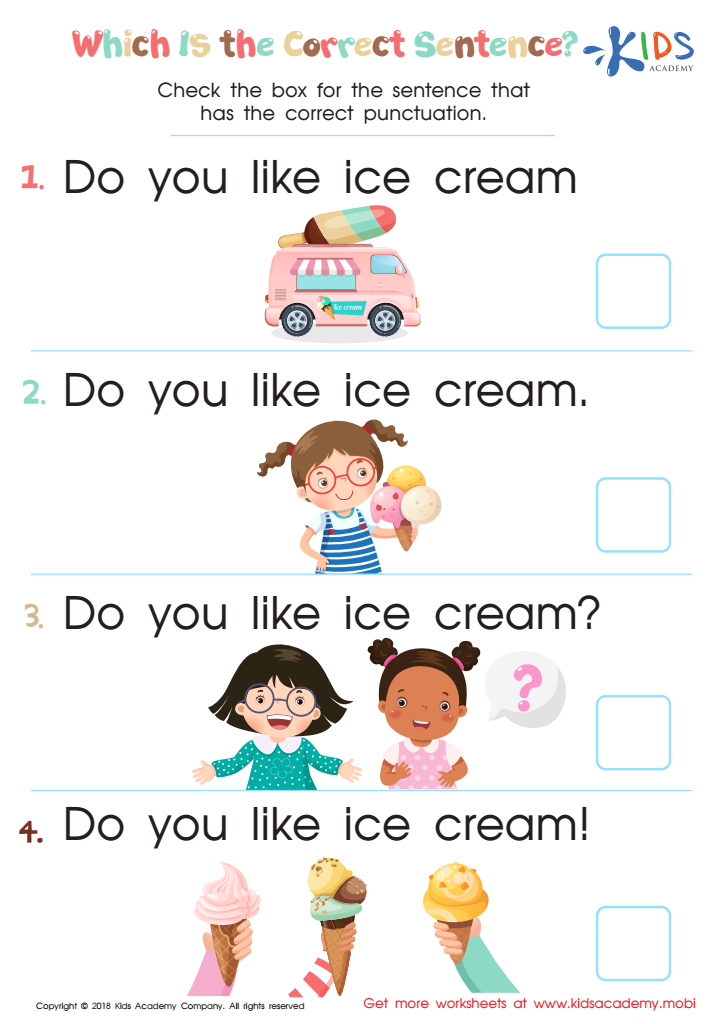
Which is the Correct Sentence? Worksheet
 Assign to My Students
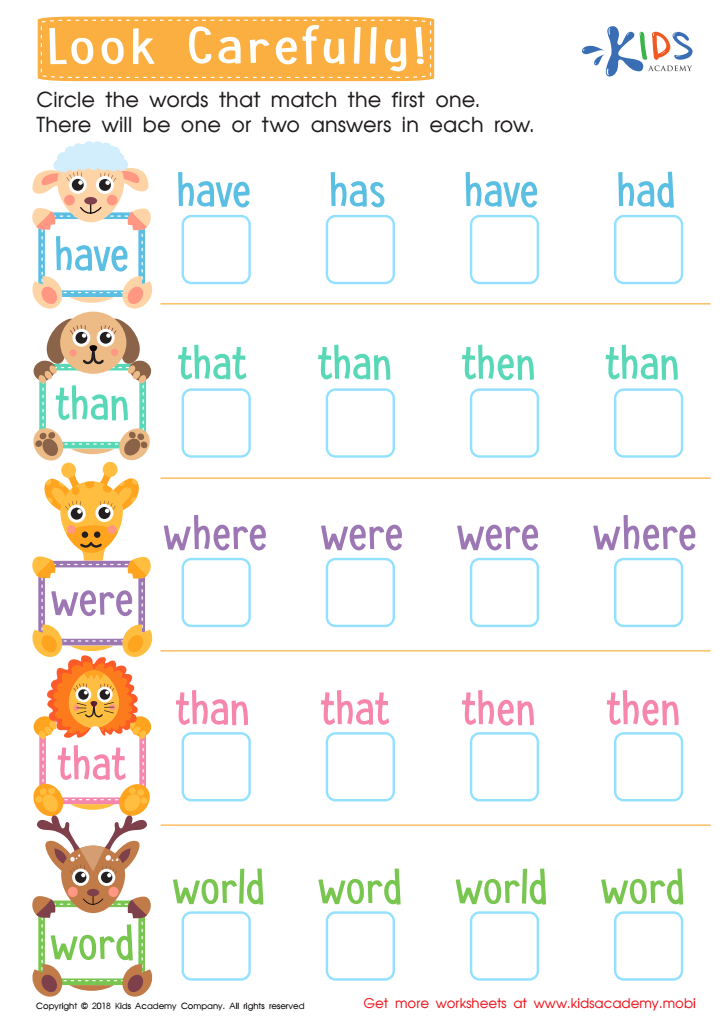
Look Carefully Worksheet
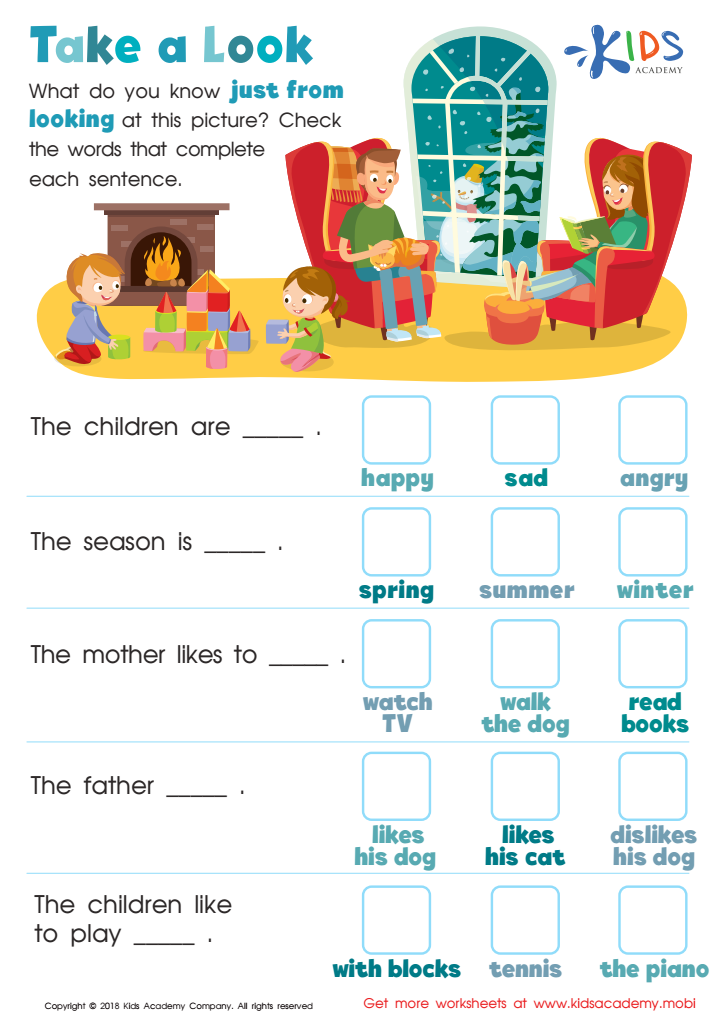
Take a Look - Part 1 Worksheet
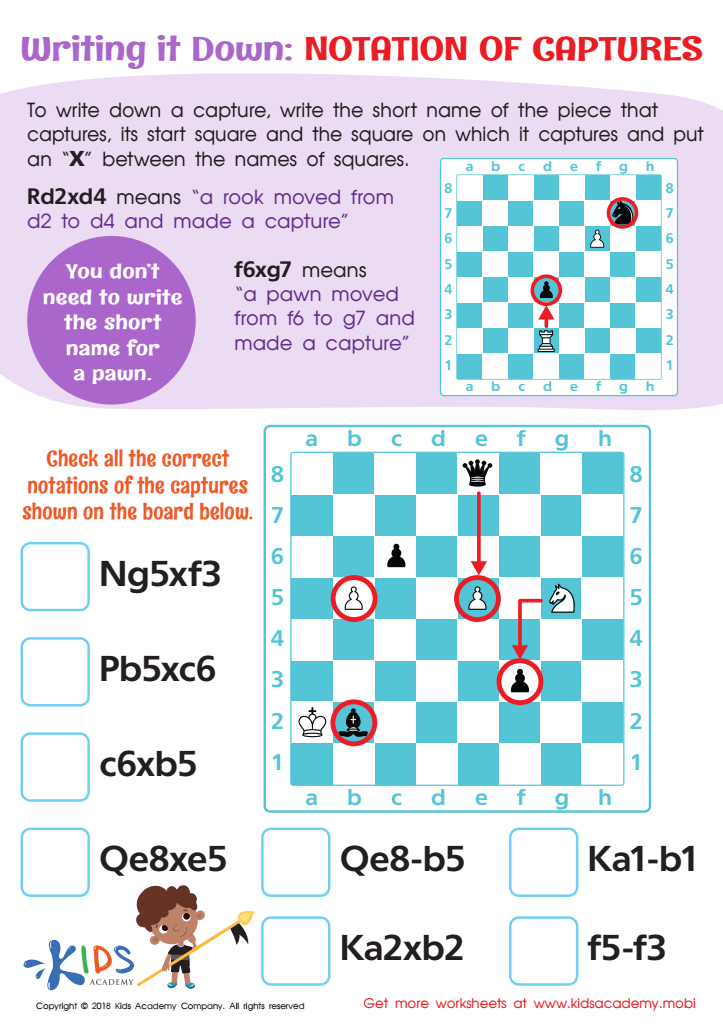
Notation of Captures Writing it Down Worksheet








Attention to detail is an essential skill that significantly impacts a Grade 1 child's academic and social development. For parents and teachers, nurturing this skill helps children improve their focus, comprehension, and accuracy in their work and interactions. In educational settings, attention to detail enhances a child's ability to follow multi-step instructions, solve problems, and engage in critical thinking. When children pay close attention to details, they are more likely to produce high-quality homework, recognize patterns in math, or decode words while reading.
Socially, children who exhibit strong attention to detail can better understand non-verbal cues and communicate effectively with peers and adults. They learn to appreciate small aspects of interactions, such as listening to others' feelings or considering diverse perspectives.
Moreover, fostering attention to detail cultivates patience and persistence, which can bolster a child's self-confidence and motivation. As they discern the importance of accuracy, they take pride in their efforts, encouraging a growth mindset.
Investing time to enhance this skill lays a foundation for lifelong learning and success. Parents and teachers play a critical role by providing engaging activities that strengthen a child's attention to detail, setting the stage for more complex learning as they progress through their educational journey.