Recognizing Patterns Normal Grade 1 Worksheets
5 filtered results
-
From - To
Discover engaging "Recognizing Patterns" worksheets designed specifically for Grade 1 students on our website. These printable resources help young learners identify and understand patterns, enhancing their critical thinking and problem-solving skills. With fun activities, including visuals, shapes, and sequences, your child will enjoy exploring the world of patterns while reinforcing essential math concepts. Our worksheets are perfect for both classroom learning and at-home practice, providing a variety of exercises tailored to different learning styles. Encourage your child's analytical abilities and make learning enjoyable with our collection of Grade 1 pattern recognition worksheets! Access them today to support your child's education.
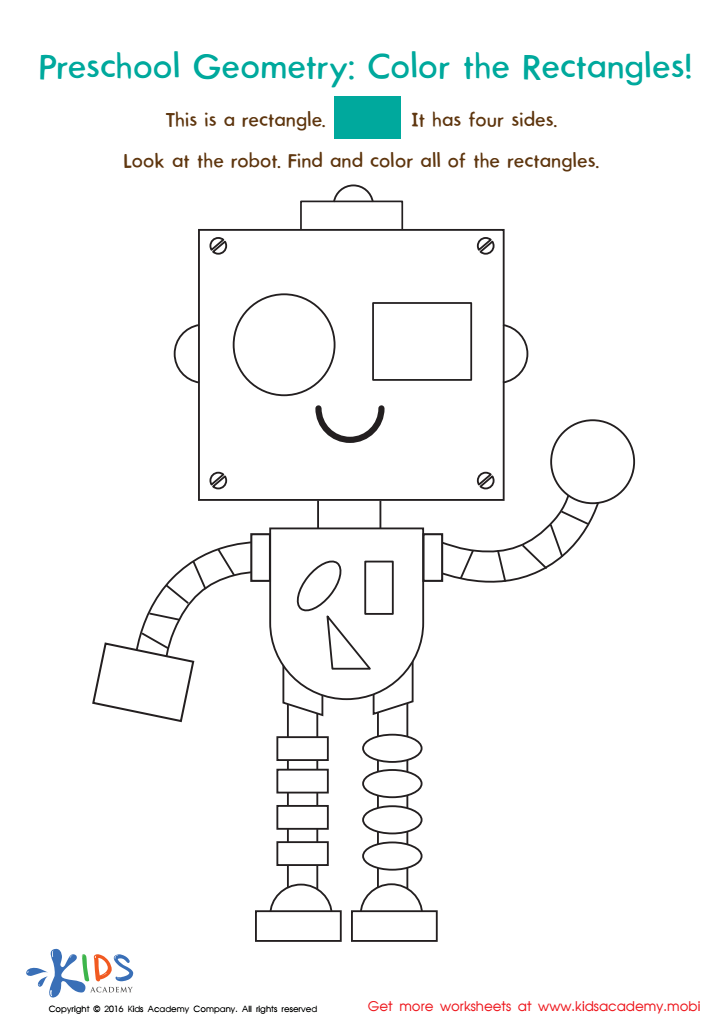
Geometry Worksheet
 Assign to My Students
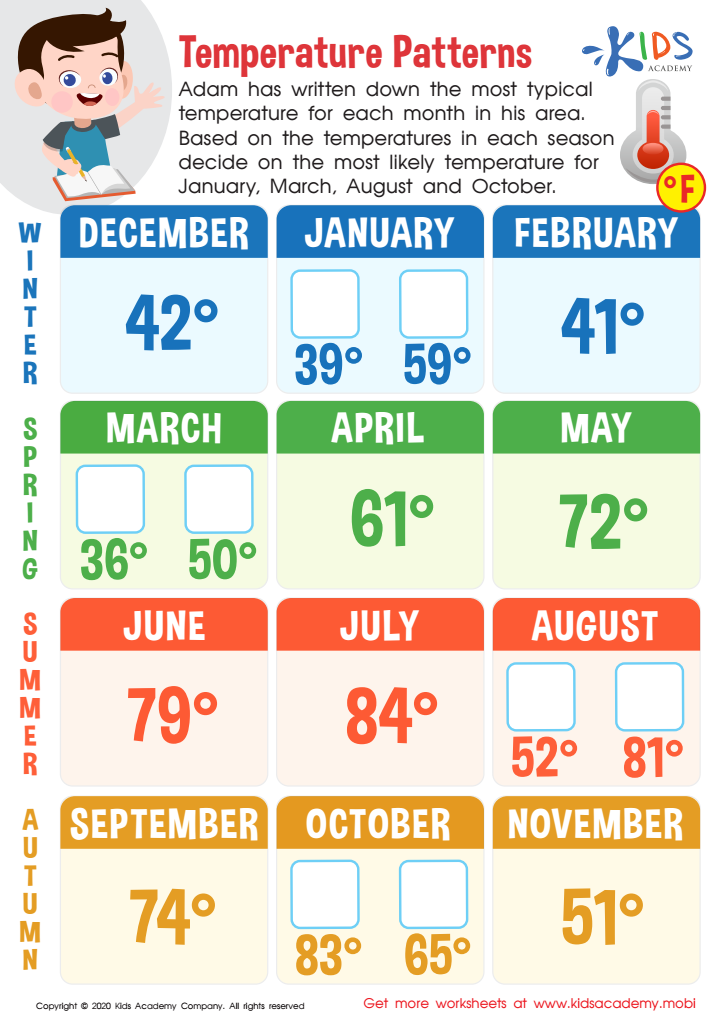
Temperature Patterns Worksheet
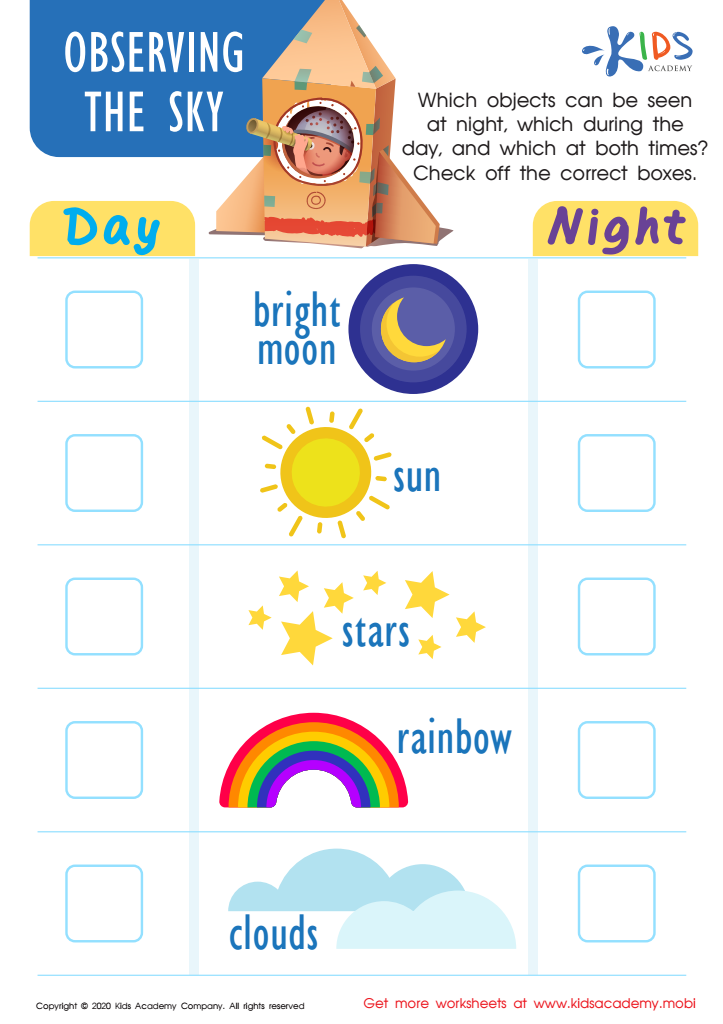
Observing the Sky Worksheet
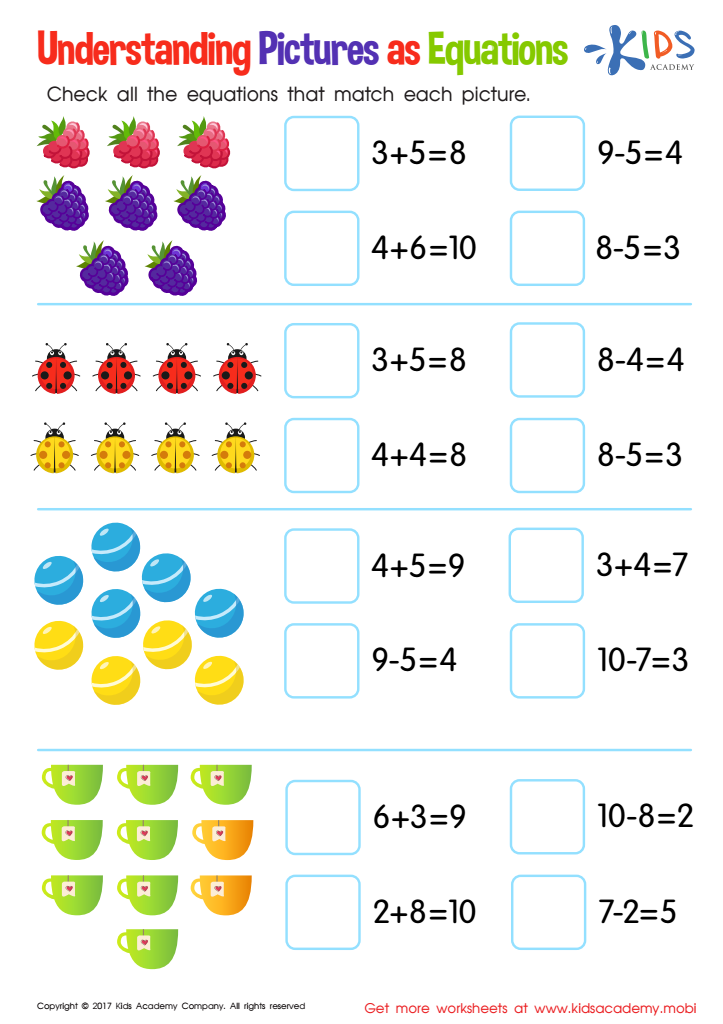
Understanding Pictures as Equations Worksheet
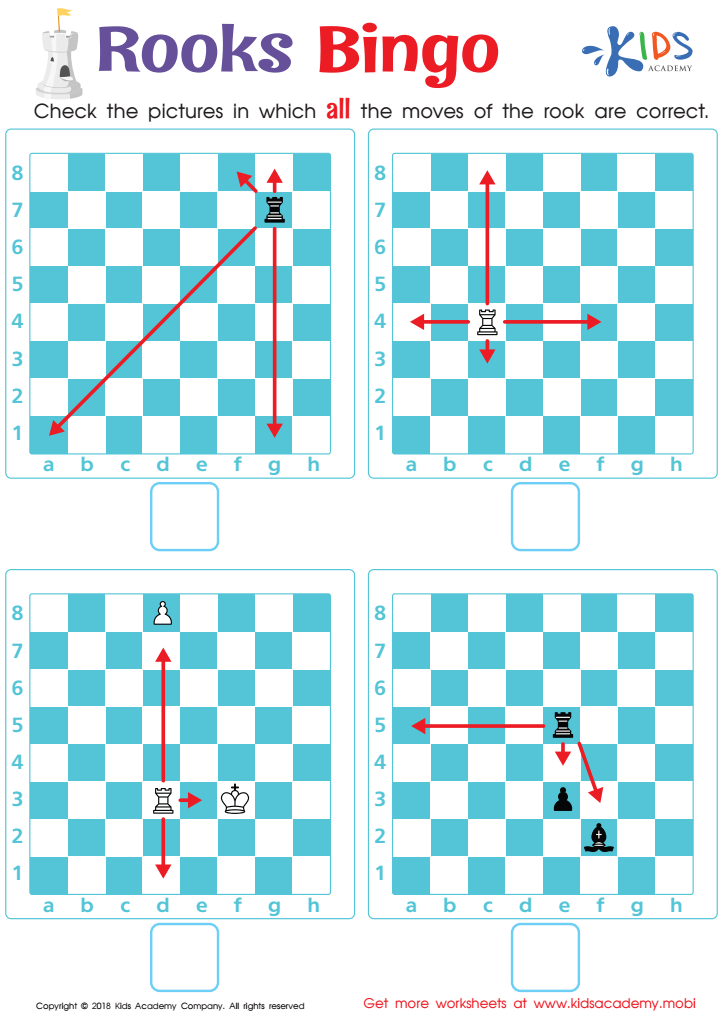
Rooks Bingo Worksheet






Recognizing patterns is a foundational skill in early education, particularly in Grade 1, where students begin to develop critical thinking and problem-solving abilities. For parents and teachers, fostering this skill is essential because it lays the groundwork for more advanced mathematical concepts. Patterns are not just limited to numbers; they appear in shapes, colors, and even in daily routines, making them integral to children's understanding of the world around them.
When children learn to identify, create, and extend patterns, they enhance their cognitive skills and boost their ability to make predictions based on observed phenomena. This also promotes organizational skills and logical reasoning. For instance, recognizing a pattern helps students make connections when they encounter more complex ideas in math and science later on.
Moreover, engaging with patterns encourages creativity and persistence—vital traits for lifelong learning. By emphasizing this skill, parents and teachers can support students' academic journeys while nurturing curiosity and enthusiasm for learning. In essence, recognizing patterns not only enriches a child's education but also fosters a collaborative learning environment where both parents and teachers can play vital roles in guiding their development.