Understanding seasons Normal Grade 1 Worksheets
3 filtered results
-
From - To
Explore our "Understanding Seasons" worksheets designed specifically for Grade 1 students! These engaging and interactive resources help young learners grasp the concept of seasons through fun activities and visuals. Each worksheet encourages students to identify seasonal changes, activities, and weather patterns, fostering critical thinking and observation skills. With vibrant illustrations and simple instructions, our materials make learning about spring, summer, autumn, and winter enjoyable. Whether used in the classroom or at home, these worksheets dramatically enhance knowledge and retention about the seasons. Dive into this seasonal adventure and watch your child's understanding of nature blossom!
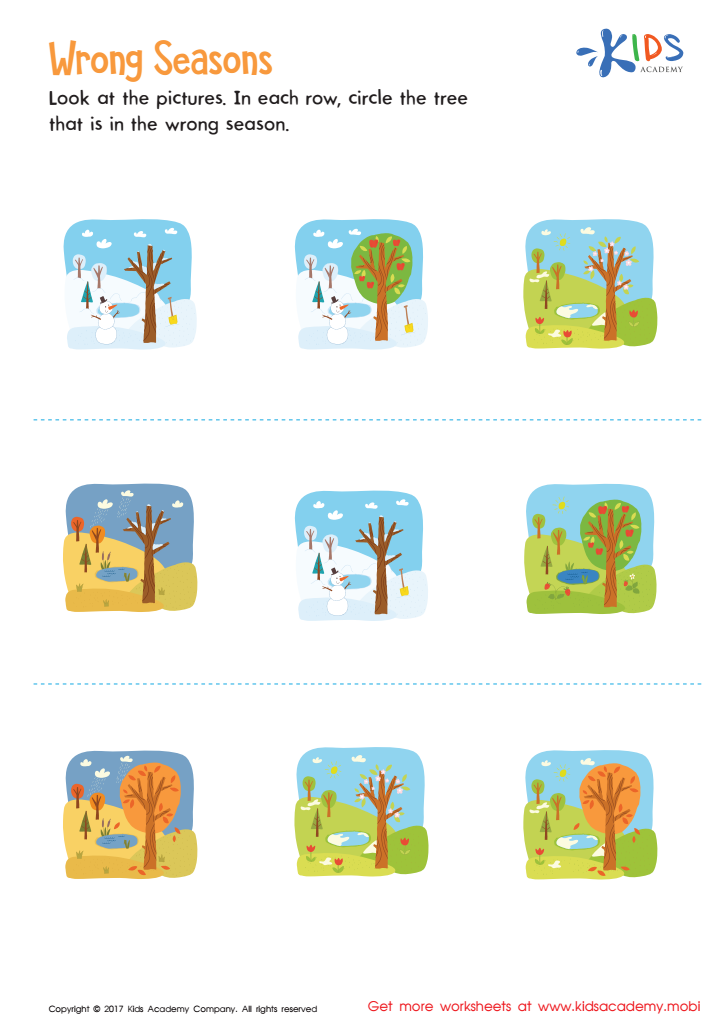
Wrong Seasons Worksheet
 Assign to My Students
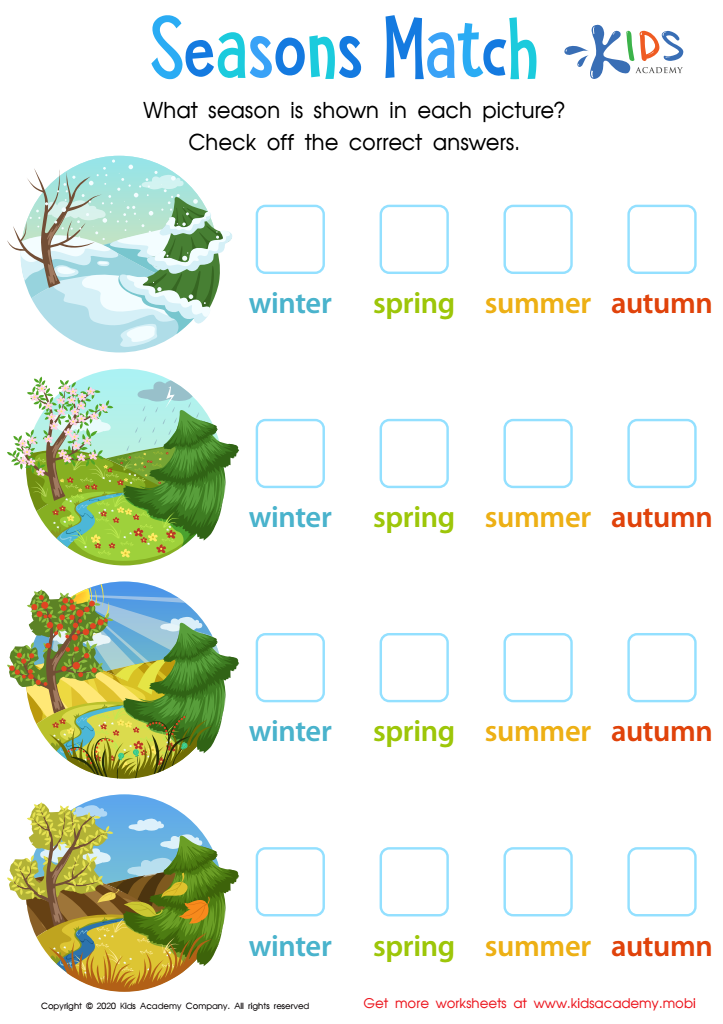
Seasons Match Worksheet
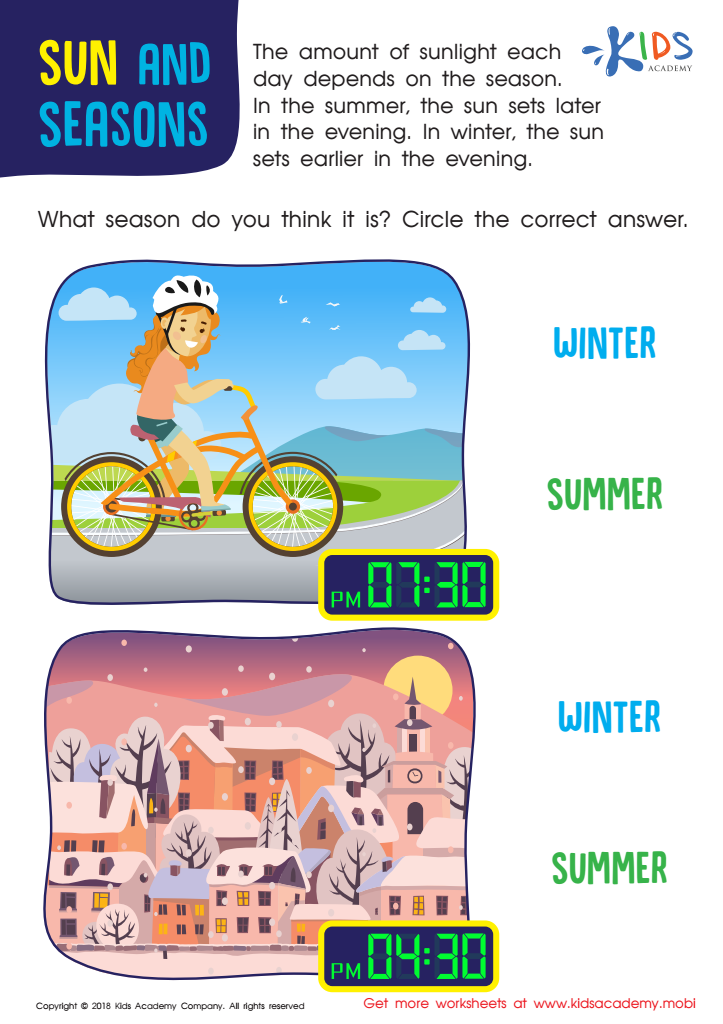
Sun and Seasons Worksheet






Understanding seasons is crucial for Grade 1 students as it introduces them to important concepts in nature and science. Parents and teachers should care because learning about seasons helps children develop observational skills and encourages curiosity about their environment. Each season—spring, summer, autumn, and winter—features unique weather patterns, holidays, and activities, making it easier for children to relate to their experiences.
Seasonal learning also ties to various subjects. For example, in science, students can explore how temperature affects growth in plants and animals. In art and literature, seasons inspire creativity, allowing children to create crafts or stories reflecting their favorite season.
Additionally, recognizing seasonal change enhances children's understanding of time, cycles, and calendars, fundamental concepts in math.
Promoting awareness of seasons can foster appreciation for nature, leading to environmentally conscious behaviors as children grow. Furthermore, discussions about seasons can enhance family and community connection, as parents and children can engage in seasonal activities together, fostering stronger bonds.
Ultimately, understanding the seasons equips young learners with knowledge that enriches their educational experience and everyday lives. That’s why it’s important for both parents and teachers to prioritize this essential topic in early education.