Understanding shapes Normal Grade 1 Worksheets
3 filtered results
-
From - To
Unlock the world of geometry for your first grader with our "Understanding Shapes" worksheets. Designed to develop foundational skills, these engaging exercises help young learners recognize and differentiate between various shapes. Through fun activities and practical illustrations, children will enhance their spatial awareness and critical thinking. Our worksheets are perfect for reinforcing classroom lessons or extra practice at home. Join us in making shape learning an exciting adventure for your little one. Explore our collection today and set them on the path to mathematical confidence and success!
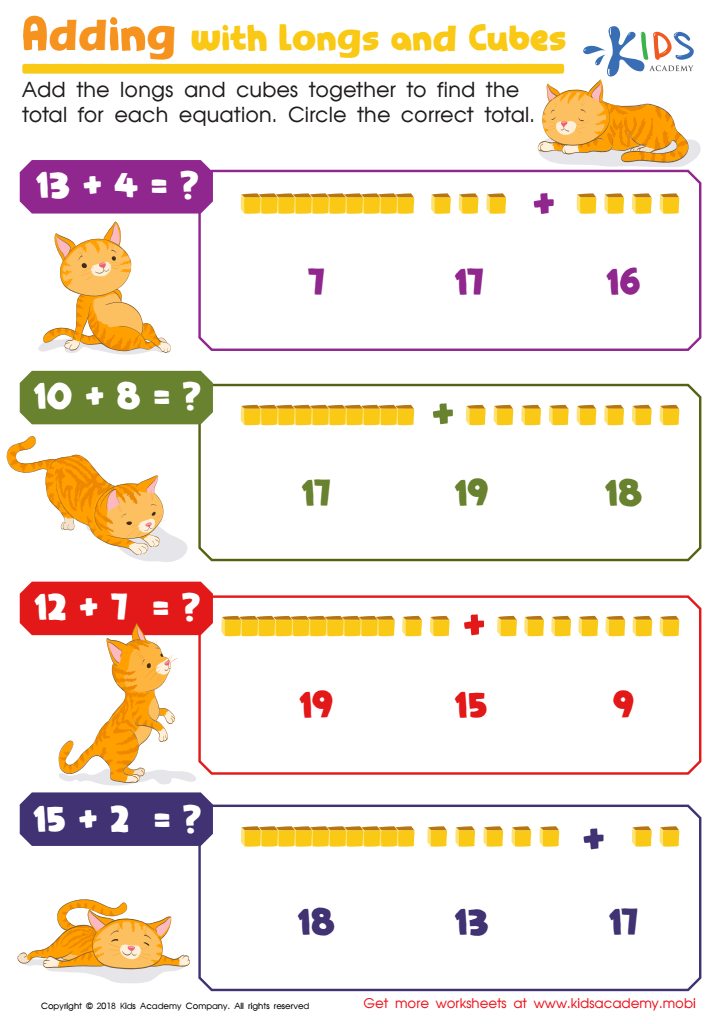
Adding With Longs and Cubes Worksheet
 Assign to My Students
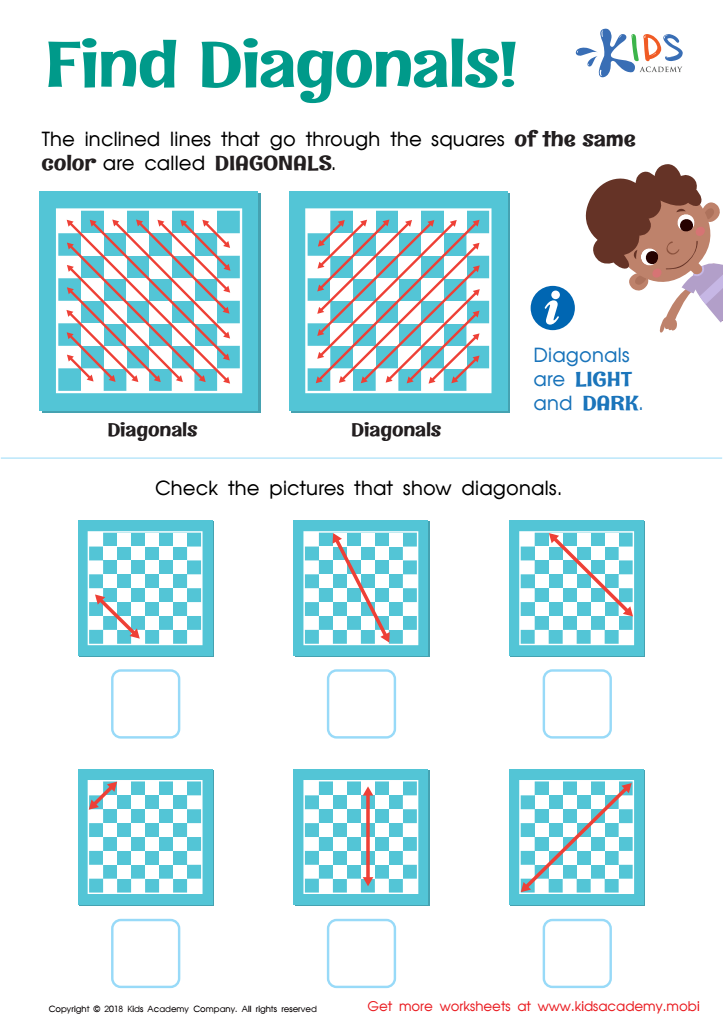
Find Diagonals Worksheet
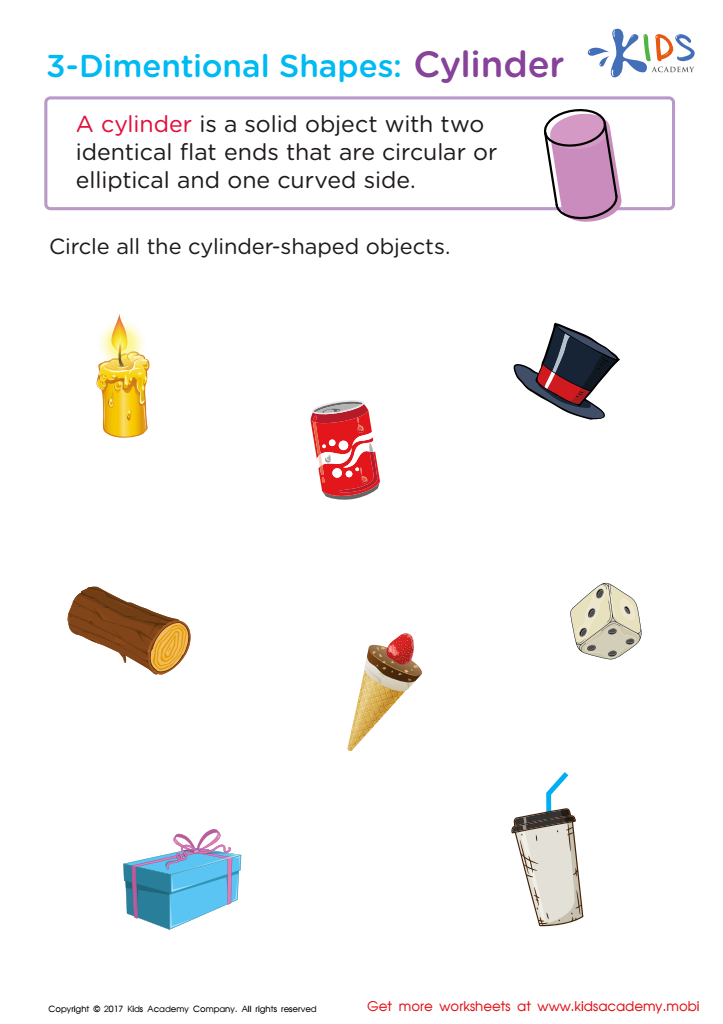
Three–Dimensional Shapes: Cylinder Worksheet








Understanding shapes in Grade 1 is vital because it lays the foundation for numerous skills critical for a child’s development. By learning about shapes, children enhance their spatial awareness, which is the ability to visualize and manipulate objects. This skill contributes to better understanding when reading maps, following directions, or even engaging in physical activities.
Shapes are a fundamental component of early math learning. Recognizing and describing shapes helps children to identify patterns, an essential math skill. Concepts like symmetry, geometry, and proportions begin with understanding simple shapes, which evolve into more complex mathematical ideas in higher grades.
Additionally, learning about shapes bolsters language development. When children describe shapes, they use and expand their vocabulary by introducing terms like "circle,” "square,” "sides," and "corners." This boosts their confidence in expressing concepts clearly and effectively.
Shapes are also used in daily life; everything that children interact with has a shape. By recognizing and naming shapes, children become more observant and curious about the world, which fosters exploration and learning.
Overall, understanding shapes equips children with vital cognitive and motor skills, enhances their problem-solving abilities, and sets a strong foundation for future mathematical and academic pursuits. Therefore, both parents and teachers play a crucial role in nurturing this fundamental aspect of early education.