Enhancing problem-solving skills Normal Grade 1 Numbers Worksheets
3 filtered results
-
From - To
Discover our "Enhancing Problem-Solving Skills Normal Grade 1 Numbers Worksheets," designed to boost your child's math abilities while making learning enjoyable. These thoughtfully crafted worksheets focus on essential problem-solving techniques, enabling first graders to develop critical thinking and numerical skills in a fun, engaging way. With a variety of exercises, including word problems and puzzles, children will refine their ability to analyze situations and explore solutions independently. Our resources also encourage creativity and collaboration, making them perfect for both classroom and home use. Start building a strong foundation in math today and watch your child's confidence soar!
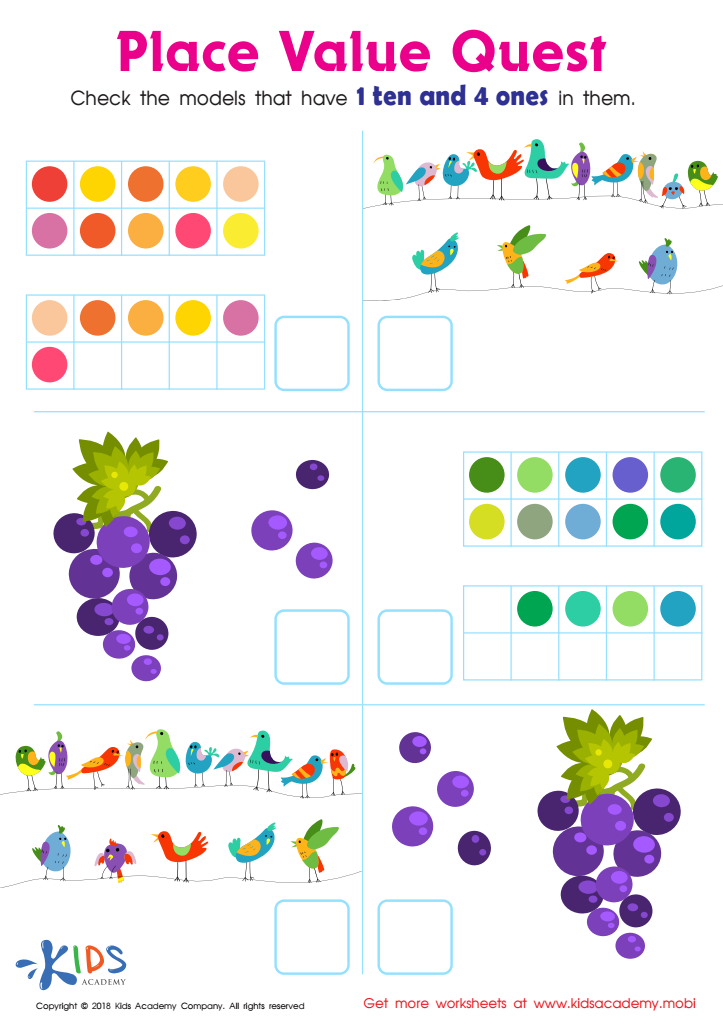
Place Value Quest Worksheet
 Assign to My Students
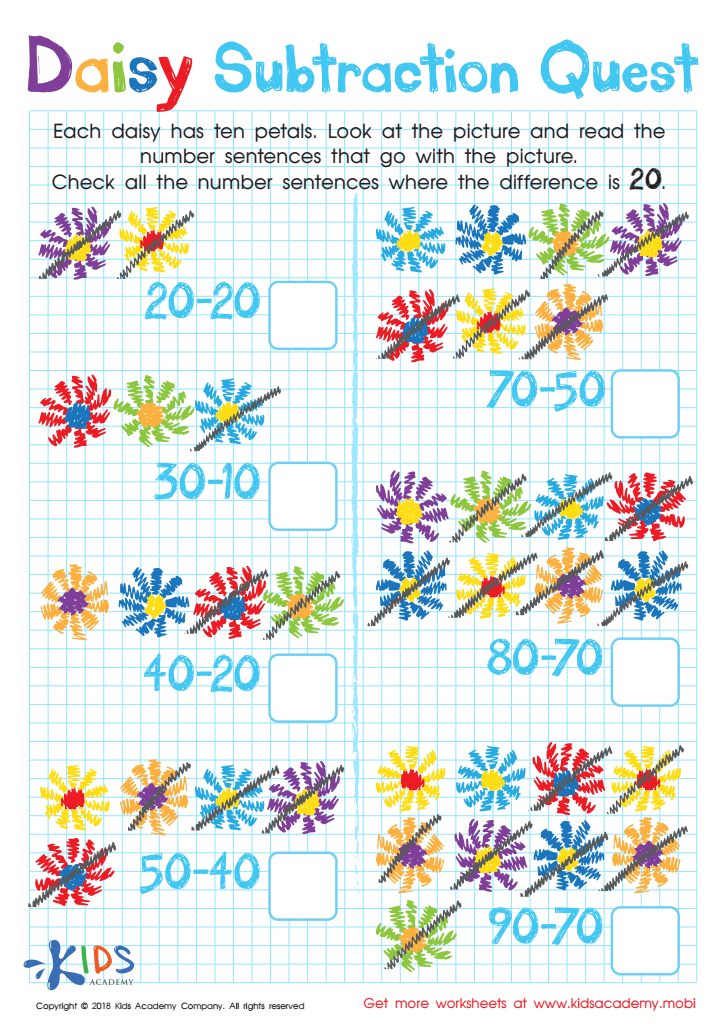
Daisy Subtraction Quest Worksheet
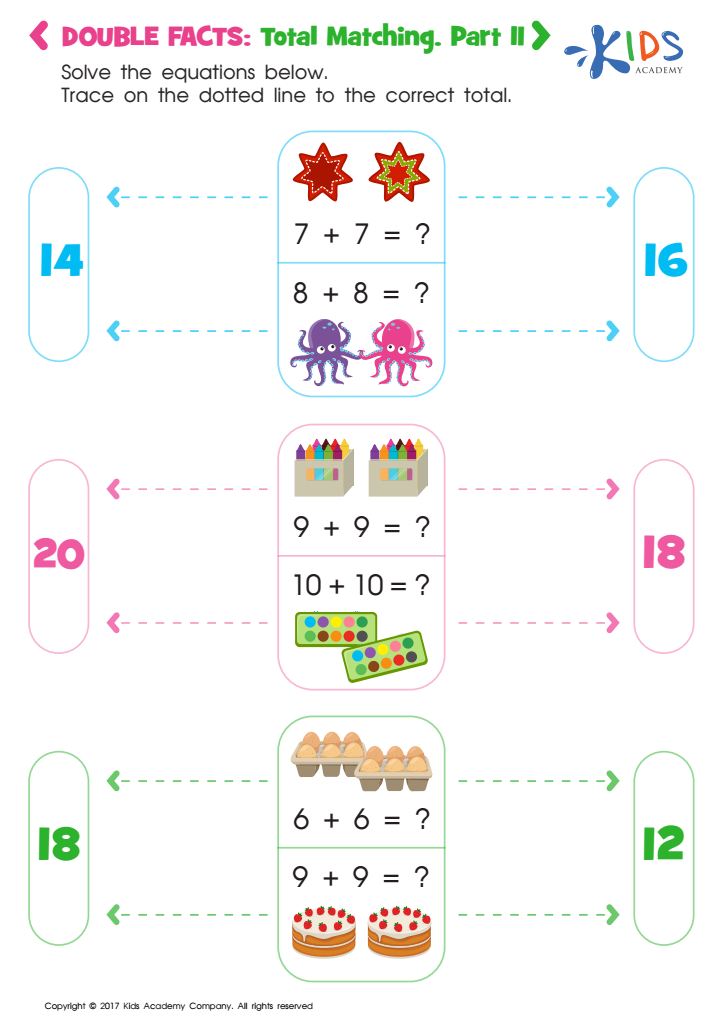
Double Facts: Total Matching 2 Worksheet




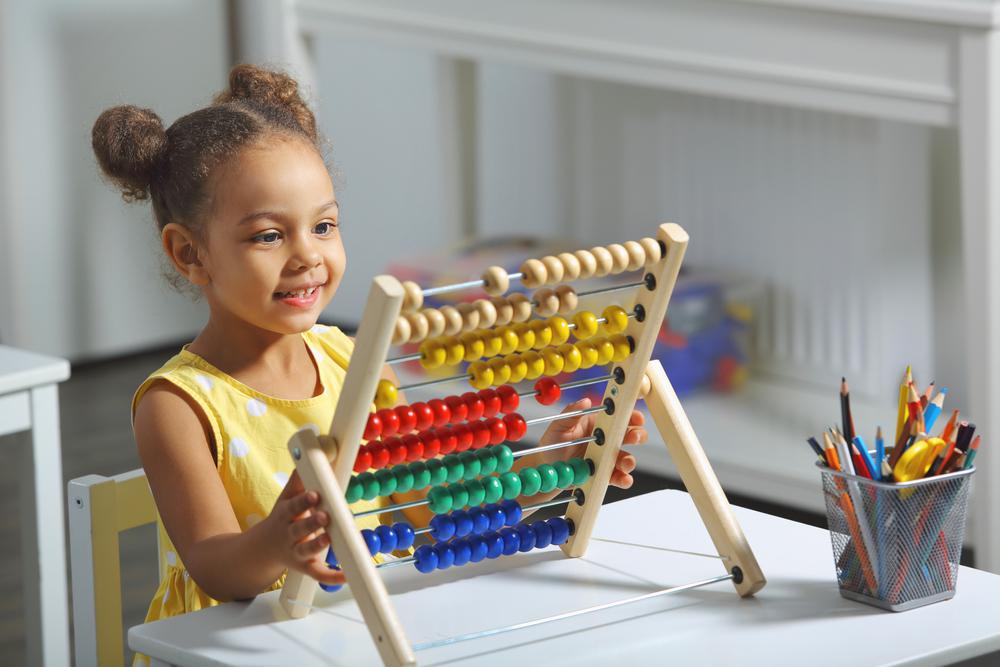



Enhancing problem-solving skills in Grade 1 students is crucial for their overall academic development and lifelong learning. First, early exposure to problem-solving sets the foundation for critical thinking, enabling children to tackle various challenges as they progress through school. In Grade 1, children begin to encounter basic mathematical concepts using numbers. Developing problem-solving skills at this stage helps them understand not just how to perform calculations but also why these calculations matter in real-life situations.
Moreover, fostering problem-solving abilities nurtures a sense of resilience and confidence. When children learn to approach a problem, analyze it, and devise a solution, they develop persistence and self-efficacy. This is essential as they face increasingly complex problems in later grades.
Additionally, strong problem-solving skills promote collaboration. Early classroom activities often involve teamwork, allowing students to share ideas and learn from one another. Teachers and parents should care about this aspect because collaboration is crucial for developing social skills.
Finally, problem-solving in early education influences mathematical literacy. Children who grasp problem-solving techniques tend to perform better in assessments, leading to a positive reinforcement cycle of learning. Investing time in enhancing these skills today means nurturing capable, adaptable learners for tomorrow’s world.