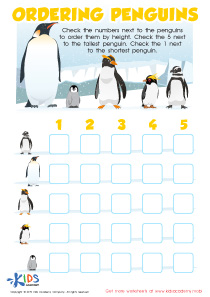
Understanding comparisons Normal Grade 1 Math Worksheets
3 filtered results
-
From - To
Explore our engaging Normal Grade 1 Math Worksheets designed to enhance students' understanding of comparisons! These worksheets provide a fun and interactive way for young learners to grasp the concept of comparing quantities, sizes, and patterns. With a variety of activities, including visual aids and guided questions, students will develop critical thinking skills while learning to identify which objects are greater, lesser, or equal. Perfect for reinforcing classroom lessons or as homework assignments, our worksheets promote independent practice and encourage verbal explanations of their reasoning. Help your first graders master comparisons and build a strong math foundation with our thoughtfully crafted resources!
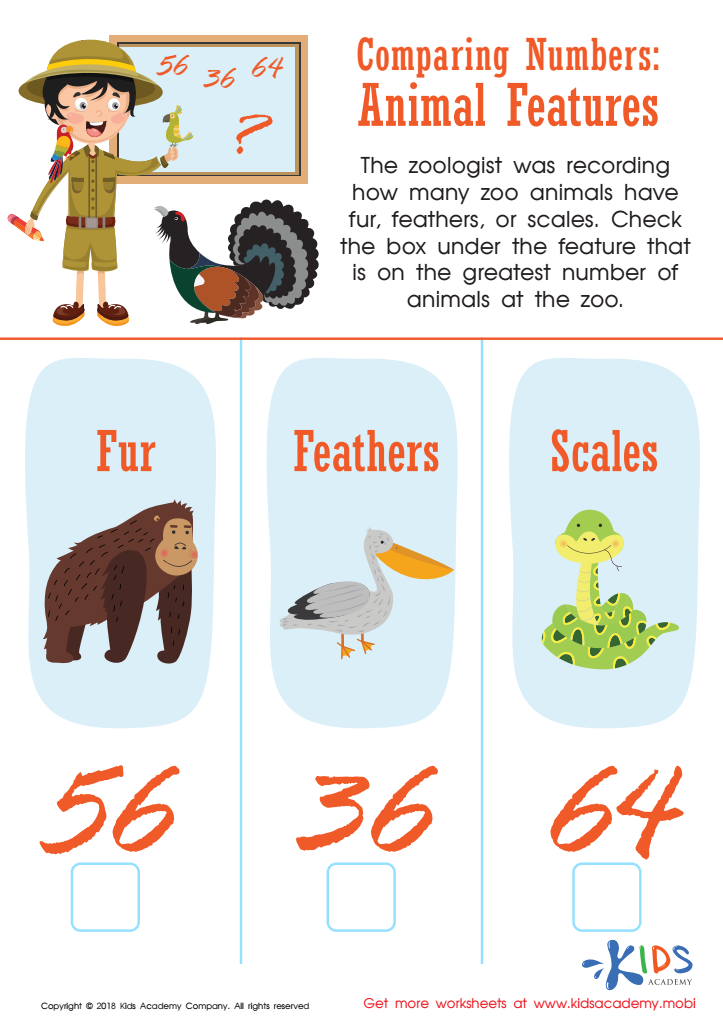
Animal Features Worksheet
 Assign to My Students
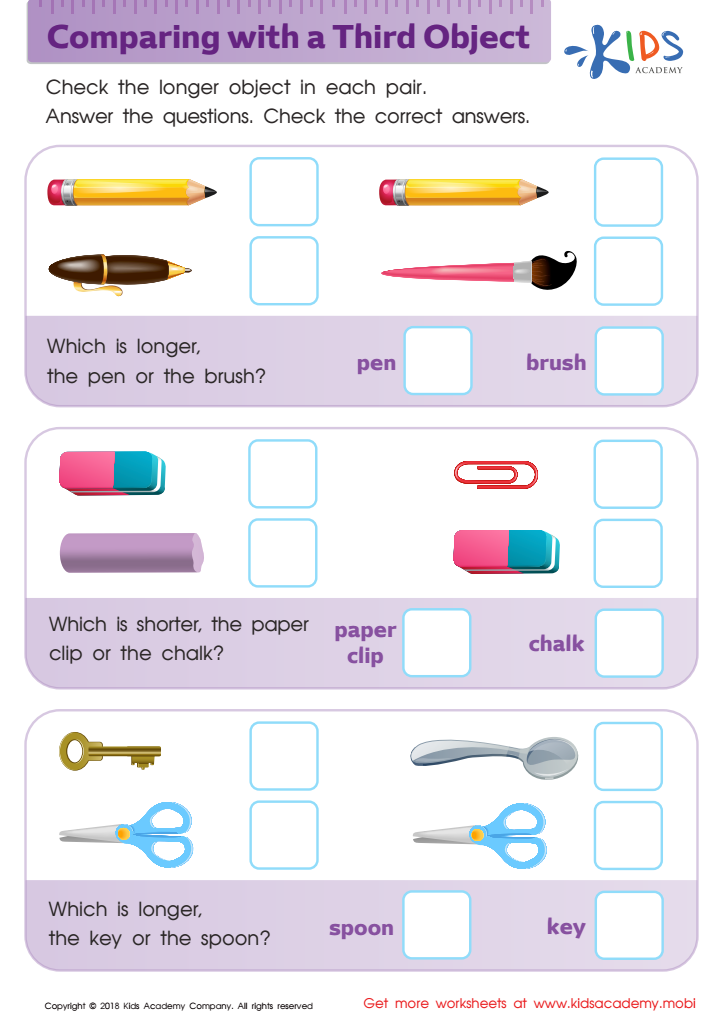
Comparing with a Third Object Worksheet
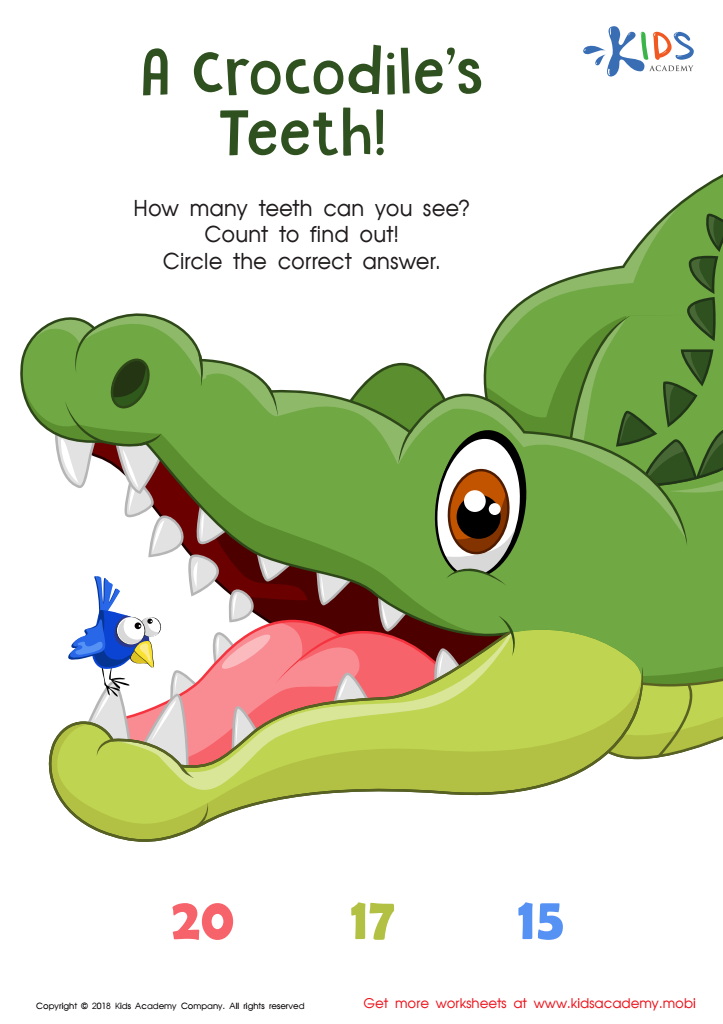
A Crocodile's Teeth Worksheet






Understanding comparisons is a foundational concept in Grade 1 math that parents and teachers should prioritize because it lays the groundwork for various mathematical skills. When children grasp how to compare sizes, quantities, and relativity, they develop critical thinking abilities that extend beyond math. These skills help them discern differences and similarities in everyday situations, contributing to better problem-solving abilities.
Teaching children to make comparisons fosters number sense, enhancing their ability to understand more and less, greater than or less than, and concepts like "most" or "fewest." Mastery of these comparisons prepares students for more complex mathematical operations, such as addition and subtraction, where understanding relative values is key.
Furthermore, comparisons can be integrated with other subjects. For example, in science, children can compare shapes, sizes, and weights, enhancing their observational skills. Socially, it promotes vocabulary expansion and communication, as children articulate their thoughts on various comparisons.
By encouraging an understanding of comparisons, parents and teachers not only support mathematical learning but also cultivate well-rounded critical thinking skills valuable in numerous aspects of life, promoting cognitive development that will benefit children throughout their education and beyond.