Vocabulary Building Normal Grade 1 Reading Fiction Worksheets
6 filtered results
-
From - To
Our "Vocabulary Building Normal Grade 1 Reading Fiction Worksheets" are expertly crafted to enhance your child's language skills in an engaging way. Designed for first graders, these worksheets focus on introducing new vocabulary through fun and age-appropriate fiction stories. Your child will learn to understand and use a variety of new words, aiding in their overall reading comprehension and fluency. Each worksheet includes a captivating story followed by activities that help reinforce the vocabulary learned. Perfect for young learners, these printables make building a strong vocabulary both enjoyable and educational. Start your child's journey to language proficiency today!
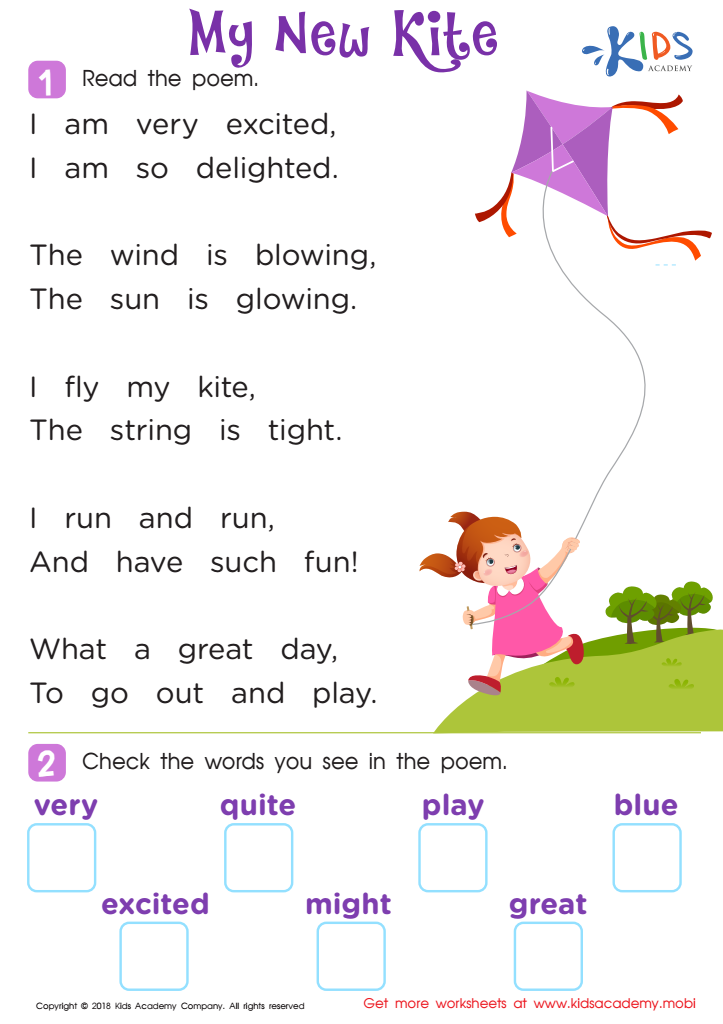
Poem: My New Kite Worksheet
 Assign to My Students
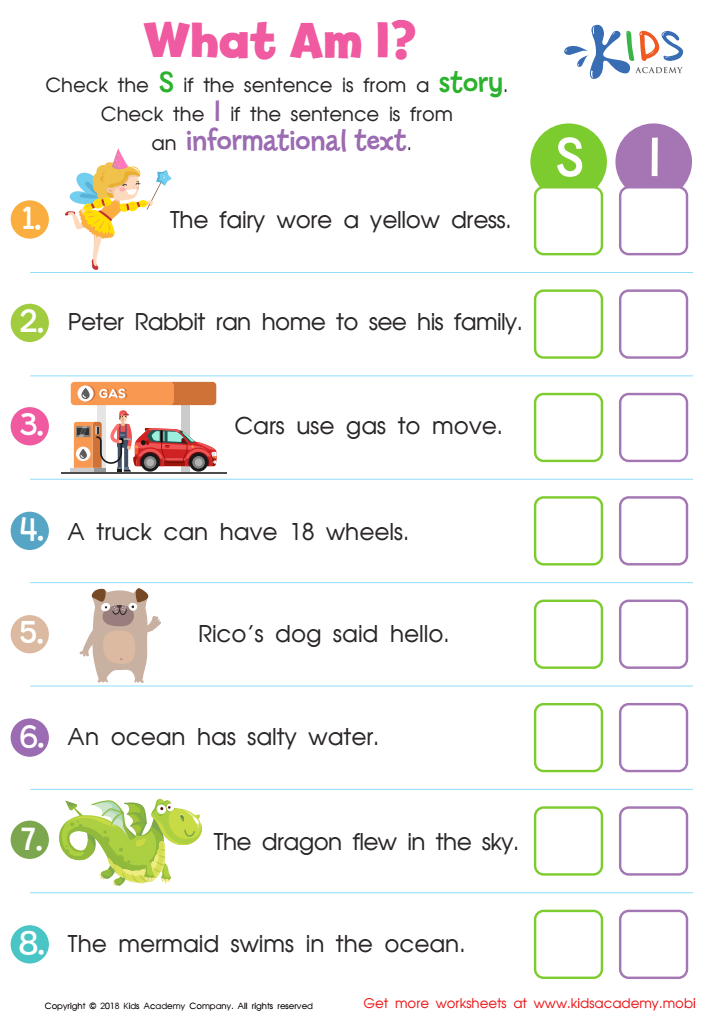
What Am I? Worksheet
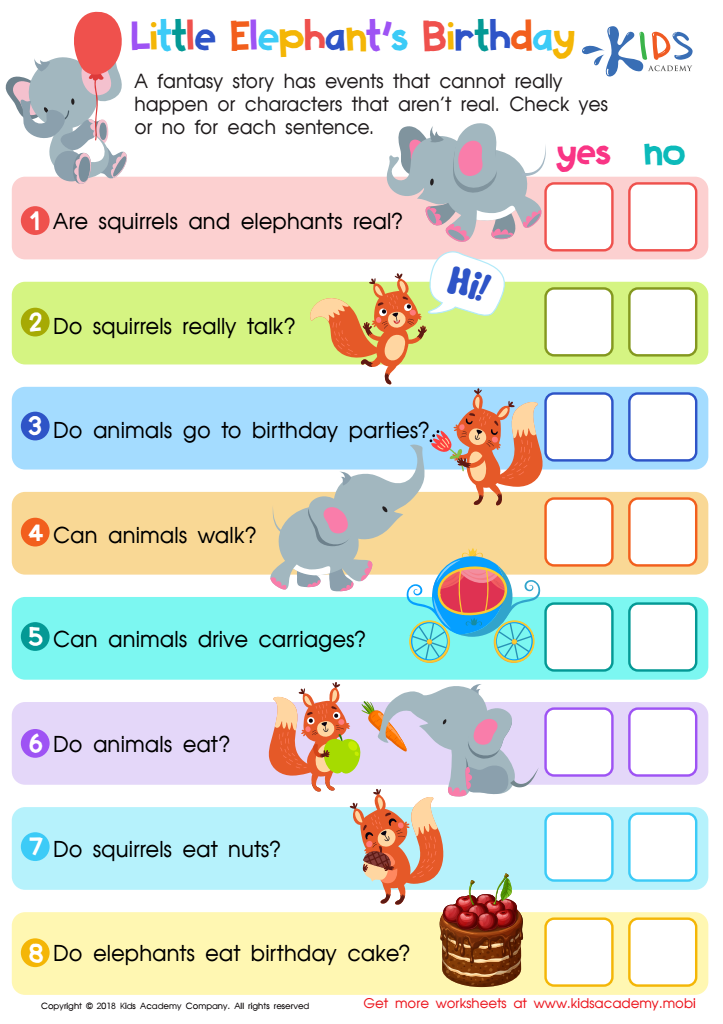
Little Elephant's Birthday Worksheet
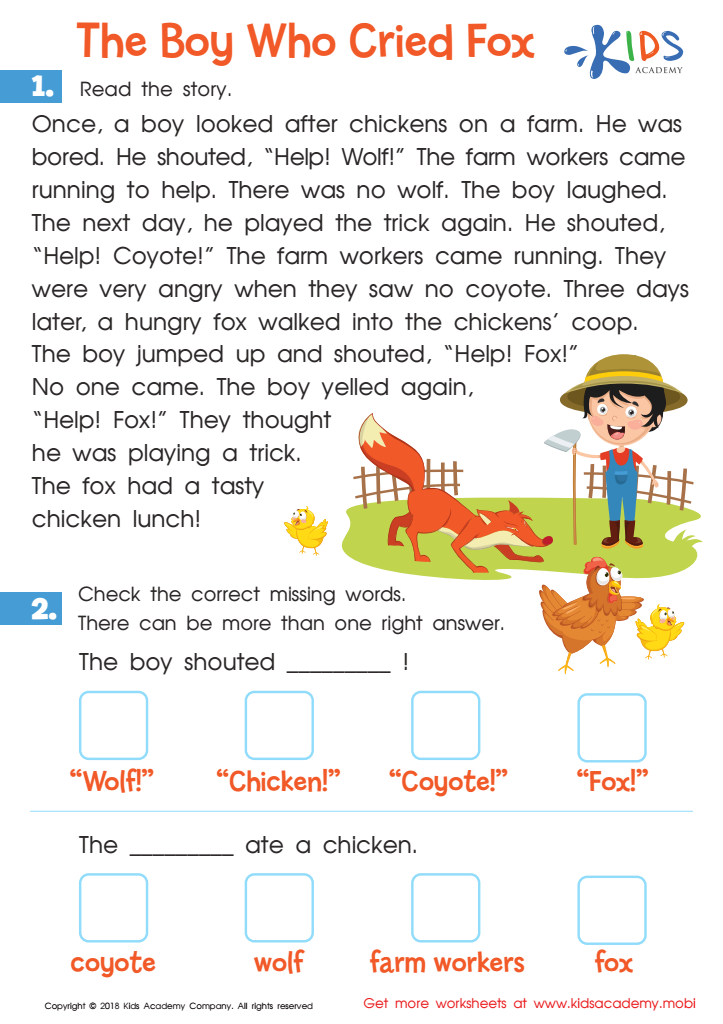
The Boy Who Cried Fox Worksheet
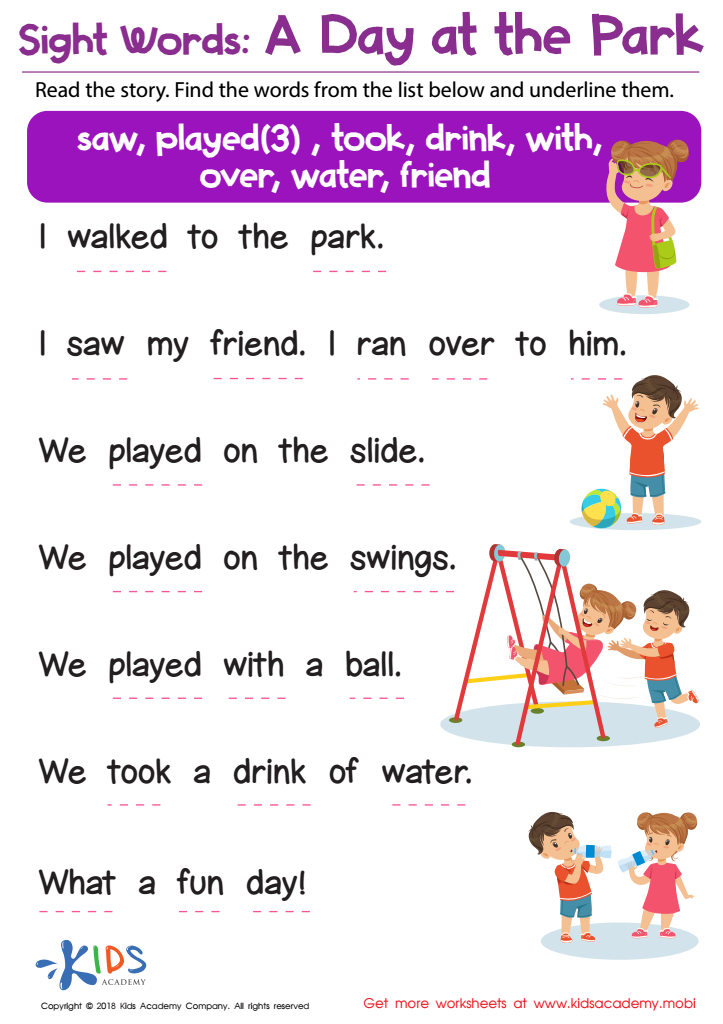
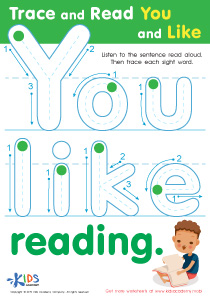
Sight Words: A Day at the Park Worksheet
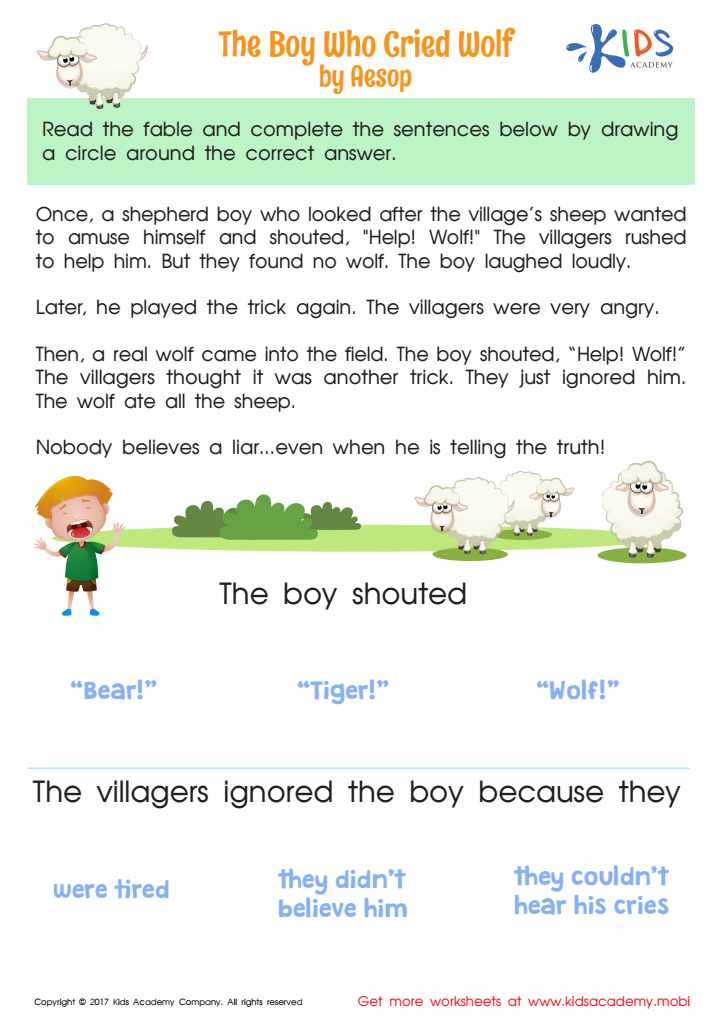
The Boy Who Cried Wolf Worksheet





Parents and teachers should recognize the crucial role vocabulary building plays in the reading development of first graders. At this grade level, children are transitioning from recognizing words to understanding and enjoying whole stories. A rich vocabulary foundation significantly impacts their comprehension, enabling children to decode and grasp the meanings of texts more effectively.
Enhancing vocabulary in Grade 1 serves as a cornerstone for lifelong learning. It boosts children's confidence and encourages a love for reading as they can follow and understand more complex narratives. This enthusiasm for reading in turn promotes academic success, not just in language arts but across all subjects that require strong comprehension skills.
Moreover, building vocabulary early helps children develop critical thinking skills. When young readers encounter new words in fiction, they often derive meaning from context, which teaches them to make inferences and understand subtleties in language.
Parents and teachers can make vocabulary building fun and engaging through interactive storytelling, word games, and daily reading sessions. Consistent exposure to rich language in various contexts lays a solid groundwork for children's future linguistic and cognitive development, enabling them to excel educationally and communicate more effectively. Thus, investing time and effort into vocabulary building in first grade yields lifelong benefits both academically and personally.